The John Charles Meditz College of Arts and Sciences empowers and encourages undergraduate students from all disciplines to conduct innovative, in-depth, and collaborative research under the guidance and encouragement of faculty experts and staff.
Undergraduate Research
Be on the Cutting Edge.
Each year, more than 300 faculty-student research projects are conducted in the areas of STEM (science, technology, engineering, and mathematics), the humanities, arts, and social sciences, more than half of which are presented at national scholarly meetings and/or published in professional journals and manuscripts.
The research conducted within the Meditz College of Arts and Sciences provides undergraduate students the opportunity for faculty mentorship, active learning, and the ability to discover new knowledge while being challenged in new ways. With research being conducted across multiple disciplines, students can join or develop original research projects that allow them to explore their passions while developing important industry connections and making invaluable contributions to their field of study.
The Arts & Sciences Guarantee
Real world. Real network. Beginning with the Class of 2026, the Arts & Sciences Guarantee is a fellowship open to all current Fairfield Meditz undergraduates, which provides funding of up to $2,500 to support approved unpaid internships, research, or fieldwork experiences. Learn more about the Arts & Sciences Guarantee.
Recent Research Projects
In the lab of Shelley Phelan, PhD, professor of biology and director of the Science Institute, students are investigating whether natural, plant-derived compounds could help combat breast cancer, one of the most prevalent and complex forms of the disease. Because breast tumors contain diverse cell types that can respond differently to treatment, Dr. Phelan’s research explores alternatives to traditional chemotherapy, focusing on compounds like oleuropein from olive leaves and punicic acid from pomegranate seeds, both linked to health benefits and long-standing dietary use.
Working alongside Dr. Phelan, biology majors Jenna Walsh ’27, Katie Tirino ’27, Samantha Diiorio ’26, Giovanna Kalin ’26, and Adam Vaz ’26 are studying how these compounds affect a range of breast cancer cells, from less aggressive to more advanced forms. Their early findings suggest that oleuropein may target cancer cells more precisely than healthy cells, while punicic acid shows effectiveness at lower doses in certain cases, offering promising directions for more targeted, less toxic treatments.
Guided by faculty mentor Rob Nazarian, PhD, Ethan Chow ’27 is studying how extreme snowfall events are expected to change across mountain regions worldwide as the climate warms. While rising temperatures are known to intensify precipitation overall, they may also reduce snowfall in many areas by pushing temperatures above the freezing point. This research seeks to better understand this complex relationship and its implications for communities that rely on predictable snow patterns.
Using advanced climate models from the Coupled Model Intercomparison Project Phase 6 (CMIP6), Chow compares simulation data with observational records to ensure accuracy before analyzing future trends. His findings suggest a notable decline in both average and extreme snowfall across most mountain regions, even as overall precipitation increases, with exceptions in the northernmost areas where snowfall may rise. By examining the underlying atmospheric dynamics driving these patterns, the research helps bridge the gap between climate theory and extreme weather events, offering critical insights for infrastructure planning, water resource management, and hazard preparedness in vulnerable regions.
Biology professor Shannon Gerry, PhD is exploring how rising ocean temperatures affect fish movement and muscle function, critical factors for survival. As coastal waters warm, species like cunner and black sea bass, both native to Long Island Sound, are being pushed northward, potentially disrupting food webs and altering predator-prey dynamics. With Long Island Sound warming faster than much of the northwest Atlantic, it offers a unique opportunity to study these changes as they unfold in real time.
Working with Dr. Gerry, students Hannah Snayd ’27 and Matt Shattuck ’28 focus on the “C-start” escape response, a rapid movement fish use to evade predators. Using high-speed cameras, they analyze how fish respond under different temperature conditions after being collected from Bridgeport Harbor and acclimated in a controlled lab environment. Their research shows that while performance may initially improve with warming temperatures, it declines sharply beyond a critical threshold, suggesting that conditions in Long Island Sound could soon exceed what some species can tolerate. Finding noted that continued warming may force species like cunner to migrate further north, with significant consequences for the region’s ecosystem.
Professor of Biology Ashley Byun, PhD and students Thompson Marren ’28, Olivia Taylor ’28, Marlee Dubin ’26 and Isabella Manole ’26 are exploring how science can help save one of the world’s rarest big cats, the critically endangered Amur leopard. With fewer than 80 remaining in the wild and just over 70 in managed zoo populations, successful breeding is essential but has become increasingly difficult due to challenges in identifying when females are in estrus. Dr. Byun is leading efforts to develop more effective, accessible tools for reproductive monitoring.
Working in partnership with the Connecticut Beardsley Zoo, the team is using bioacoustics to study the leopard’s distinctive “saw calls,” which may increase when females are in heat. To analyze nearly a year of continuous audio data, the team collaborated with computer science professor Danushka Bandara, PhD, and students in the School of Engineering and Computing to develop Felidetect, an AI-powered tool capable of identifying these vocalizations with nearly 98 percent accuracy. This approach offers a promising alternative to traditional hormone monitoring, allowing conservationists to better time breeding efforts. Supported by federal funding and in collaboration with the Cincinnati Zoo’s Center for Research of Endangered Wildlife, the project is already expanding to other species, including jaguars, demonstrating how interdisciplinary research at Fairfield is contributing to global conservation efforts.
Vice Provost Jay Rozgonyi has been incredibly encouraging, enthusiastic, and supportive throughout the research project. The project would not have been possible without his immense support. Working with a faculty mentor has enabled me to explore a special interest that I may have not otherwise found if it were not for the opportunities I have been presented with while at the University."
– Taylor Soyland '24
Meditz Research in the News
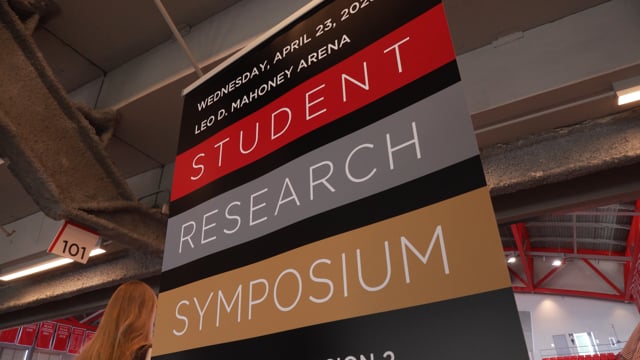
2025 Fairfield University Student Research Symposium
Past Research and Grants
Dr. Catherine J. Anderson and Dr. Aaron Van Dyke lead research students in groundbreaking nutritional science study.
The United States Department of Agriculture’s National Institute of Food and Agriculture (USDA-NIFA) has awarded Fairfield University's assistant biology professor Catherine J. Andersen, PhD, with a $149,419 federal grant to support an innovative faculty-student research study in the area of nutritional sciences. Aaron Van Dyke, assistant professor of chemistry and biochemistry, will join Dr. Andersen as the study’s co-project director.
The two-year research project will investigate the effects of dietary intake on markers of cholesterol metabolism, inflammation, and immune function. As part of the study, healthy adults will participate in a dietary intervention trial to determine whether whole eggs, egg whites, or an egg-free diet can alter the beneficial properties of HDL – carriers of the “good cholesterol” – in the bloodstream. Fairfield’s researchers hope to determine if the bioactive components in the egg yolks will alter the composition and function of HDL, leading to beneficial changes in immune cell activity and inflammation. Their findings could have important implications for the role of nutrition in health and human disease.
Each semester, a total of four to six undergraduate research students from both Dr. Andersen's and Dr. Van Dyke’s labs will conduct experiments and perform data analysis for the study. Research activities will include comprehensive dietary evaluation, cell culture work, molecular biology assays, and biochemical analysis. Fairfield University is uniquely equipped for this research, thanks in part to a $271,407 instrumentation grant from the National Science Foundation (NSF) which Dr. Andersen and Dr. Van Dyke helped secure.
Through the study’s collaborative and interdisciplinary approach to nutritional sciences, both Dr. Andersen and Dr. Van Dyke hope to develop exciting new lab techniques that can be applied to future research projects. “By working together we are able to leverage our expertise in nutritional sciences, molecular biology, and chemical biology to address novel research questions,” Dr. Andersen stated. “This grant serves as evidence that our work is competitive in the national arena, allowing us to continue developing our research programs in exciting new areas.”
“Asking scholars to reach beyond the boundaries of their own field is built into the DNA of Jesuit institutions,” said Dr. Van Dyke. “This grant offers further external validation that our student-faculty research teams are among the best nationally.”
Professors Angela Biselli, PhD, and John Miecznikowski, PhD, will spearhead new initiatives to engage undergraduate students in cutting-edge research experiences.
The National Science Foundation has awarded the College of Arts and Sciences School of Natural and Behavioral Sciences and Mathematics at Fairfield University with more than $450,000 in grant funding to support faculty-student research initiatives in the fields of chemistry, biochemistry, and physics.
Physics professor Angela Biselli, PhD, was recently awarded a $148,413 grant for a three-year research study on the fundamental structure of protons and neutrons. The study, which will be conducted in collaboration with the Thomas Jefferson National Accelerator Facility in Virginia, will examine how quarks, the sub-particles of protons and neutrons, directly affect the particles’ macroscopic properties.
Throughout the study, Dr. Biselli will travel to Jefferson Lab, where she and her fellow researchers will take shifts running experiments and analyzing findings that will impact scientists’ fundamental knowledge of what matter is made of. The professor’s undergraduate students will participate in weekly virtual meetings with the research collaborators at Jefferson Lab, as well as travel to the facility during the summer, affording them the unique opportunity to gain knowledge in nuclear and particle physics, obtain practical experience in data analysis, and develop broader skills such as coding and statistics.
“I am deeply honored to receive this grant and am happy I can share this opportunity to conduct research in a nuclear physics lab with our undergraduate students,” Dr. Biselli said. “Not all undergraduate institutions can offer this type of research to their students, and the skill sets they gain will be very valuable for any science/technology related job they have in the future.”
In addition to Dr. Biselli, associate professor of chemistry and biochemistry John Miecznikowski, PhD, with the support of his colleagues Matthew Kubasik, PhD, Jillian Smith-Carpenter, PhD, Aaron Van Dyke, PhD, and Lawrence K. Steffen, PhD, received a $306,950 Major Research Instrumentation grant from the National Science Foundation to acquire a Nuclear Magnetic Resonance (NMR) spectrometer for the Department of Chemistry and Biochemistry.
One of the most powerful tools available to chemists carrying out frontier research, the NMR spectrometer will be used by Fairfield chemistry and biochemistry faculty and students to identify unknown substances, characterize the arrangements of atoms within molecules, and study the dynamics of interactions between molecules in solution. The ability to carry out these experiments is essential to the study of biologically relevant species, as well as research studies that require the acceleration of chemical reactions.
Scheduled to arrive in May 2019, the 400 MHz NMR spectrometer will provide critical instrumental support for at least six faculty-student research groups, five of which originate from Fairfield University, and the sixth from a collaborative partnership with the Department of Chemistry at nearby Iona College. The instrument will also be used by Bridgeport high school students participating in the University’s Upward Bound and BASE Camp outreach programs.
Dr. Miecznikowski believes that this cutting-edge technology will help university students gain confidence in using the same scientific instruments utilized by chemists working in government laboratories, pharmaceutical and chemical companies, and top graduate schools around the world.
“Having advanced instrumentation on campus leads to more high-quality research opportunities, and prepares students for successful career and graduate program outcomes,” Dr. Miecznikowski said. “The acquisition of the NMR spectrometer will allow Fairfield University faculty and their collaborators to continue making frequent, scholarly contributions to the fields of chemistry and biochemistry.
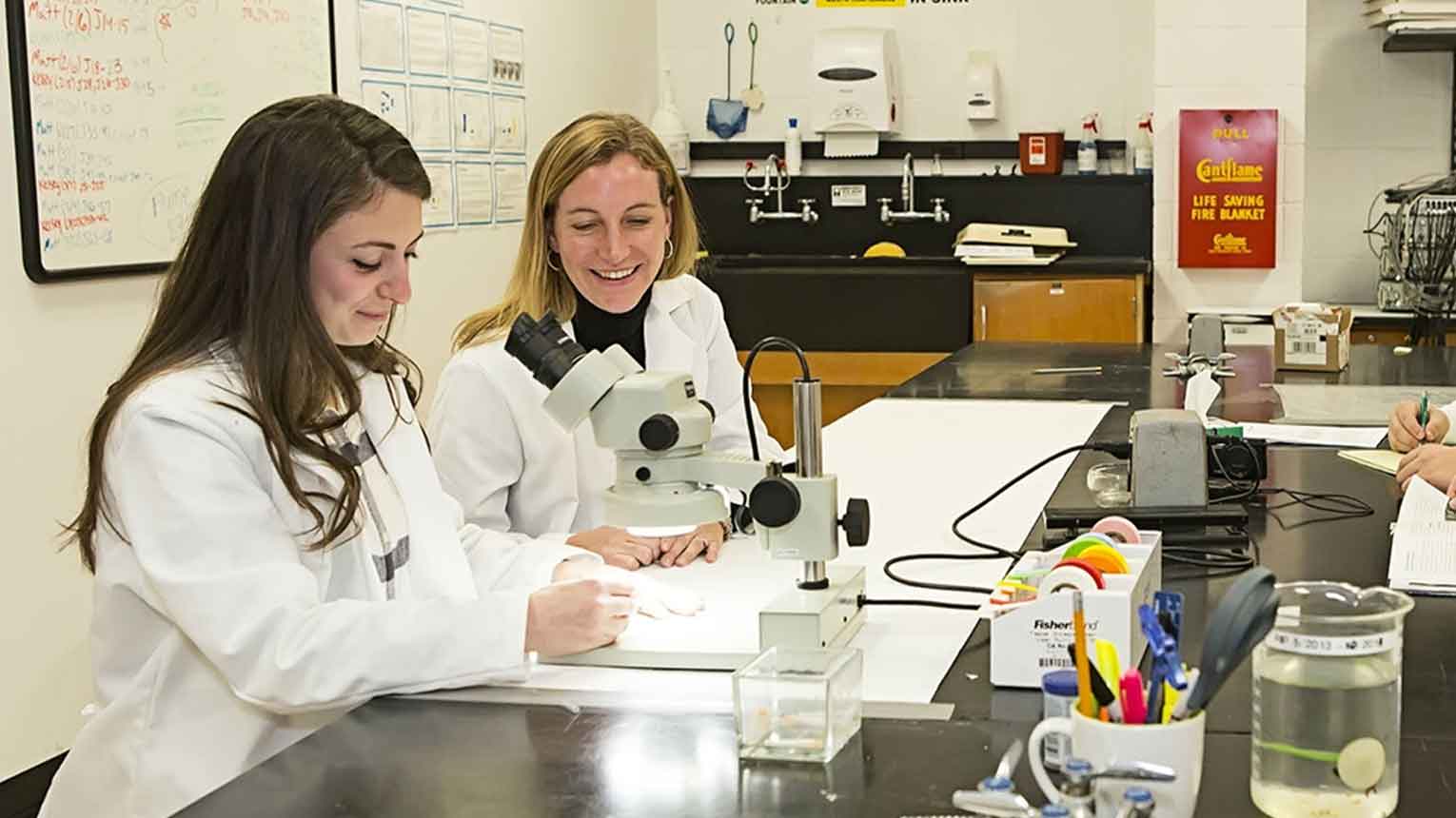
Physics Professor Min Xu, PhD, and Biology Department Chair and Professor Shelley Phelan, PhD, lead students in innovative, three-year study on the growth and aggressiveness of cancer cells.
College of Arts and Sciences faculty members Min Xu, PhD, associate professor of physics and Shelley Phelan, PhD, professor and chair of the Biology Department, have been awarded a three-year, $238,000 grant from the National Science Foundation, to conduct an interdisciplinary study on the physical principles behind the growth and aggressiveness of cancer cells.
The innovative research project is scheduled to start at the end of the fall 2017 semester and will use microscopic imaging to determine whether or not it is possible to identify specific cell properties, such as nuclear structure or cellular metabolism, that control the rate of a cancer cell’s growth. If these factors can be identified, scientists would be able to predict cancer aggressiveness directly from cell imaging, which would provide breakthrough advances in cancer screening, diagnosis, and treatment.
“The determination of the aggressiveness of cancer is key in choosing the optimal treatment strategy for a patient,” explained Dr. Phelan, who also serves as the director of the College of Arts and Sciences School of Natural and Behavioral Sciences and Mathematics. “This method of predicting aggressiveness could provide new avenues in cancer diagnosis and prognosis, and would be especially helpful in treating cancers that are more difficult to diagnose with surgical or other invasive methods.”
Employing an interdisciplinary approach to research, the new study will be facilitated by motivated students enrolled in the University’s physics, biology, engineering, and other natural science departments. Dr. Xu and Dr. Phelan believe these multi-disciplinary perspectives allow for a unique point of intersection that is essential to understanding cancer biology.
“There are many researchers within the field who have traditional training in biology or chemistry, and while they have contributed to great progress, some of the most complex issues are not being addressed by single fields,” Phelan explained. “This is being seen in a wide variety of areas, and that is why diagnostics and therapies in the cancer field now include contributions from physics, engineering, and materials science.”
Dr. Xu's and Dr. Phelan’s upcoming study is just one of a large number of active research projects taking place on Fairfield’s campus. Faculty members within the natural science departments conduct research alongside undergraduates on a daily basis, providing them with the essential training needed to become the next generation of scientists and critical thinkers.
“The most exciting advances in science and technology are interdisciplinary nowadays,” said Dr. Xu. “Interdisciplinary research involving undergraduates offers these students training in broad skill sets and perspectives that are invaluable to their future careers.”
Existing work linking empathy with social behavior has focused overwhelmingly on empathy for the negative emotions of others. But recent research suggests that feeling along with others’ negative emotions is a capacity distinct from feeling along with others’ positive emotions. In Study 1, we demonstrate the separability of positive and negative empathy by showing that although both relate to some of the same foundational empathic processes, each has a number of distinct correlates. In Study 2 we take an experimental approach and show that encouraging participants to empathize with the positive versus negative emotions of a suffering yet hopeful social group results in distinct patterns of vicarious emotion. Finally, Study 3 shows that although both positive empathy and negative empathy are associated to a similar degree with helping behavior directed toward others in need, positive—but not negative—empathy is related to “everyday” prosocial behaviors aimed specifically at increasing others’ positive emotions (e.g., random acts of kindness). Together, these results provide what to our knowledge is the first demonstration of the causal potency of positive and negative empathy as well as the first evidence that positive and negative empathy relate to different types of social behaviors.
Read more about a journal published by students and faculty in Fairfield’s psychology department.
“Characterization of the Conductive Properties of Self-Assembling Peptides Including Tyrosine Amino Acids”
Faculty visiting students at the annual Student Research Symposium
“The Gender of Addiction: Janis Joplin, Stevie Nicks, and the Rock Music Industry”.
2024 Student Research Symposium in the Leo D. Mahoney Arena