Earning a Doctor in Educational Leadership (EdD) is a rewarding step for professionals ready to take their leadership to the next level. But for many, one of the first questions is practical: Can I manage this degree while balancing work, family, and personal commitments?
The good news is that many EdD students successfully complete their educational leadership doctorate while working full-time. With thoughtful planning, faculty support, and a flexible program design, it’s possible to advance your education and career without pausing your life.
What Is an EdD and Who Pursues It?
An EdD doctorate—or Doctor in Educational Leadership—is a doctoral program focused on developing educational leaders who can translate research into practice. Unlike a PhD, which often emphasizes theory and academic research, the EdD program centers on applied research and real-world problem-solving in educational administration, policy, and organizational leadership.
Designed for Experienced Educators
Most EdD students are mid-career professionals—principals, higher education administrators, nonprofit directors, or corporate trainers—seeking to deepen their leadership skills and advance their career path. Many are drawn to the program’s focus on equity, innovation, and transformation across teaching and learning contexts.
Balancing Professional and Personal Commitments
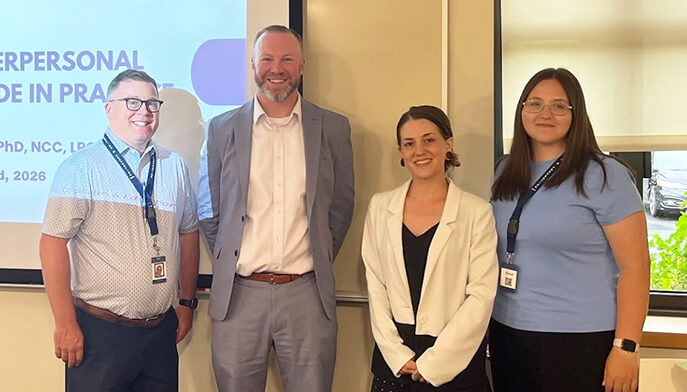
Because these candidates are typically managing full-time careers, the educational leadership doctorate is intentionally structured to accommodate adult learners. Fairfield’s program, for example, combines online coursework with limited on-campus residencies, ensuring that working professionals can stay engaged without sacrificing their other responsibilities. Dr. Emily Smith, a university professor specializing in secondary education, educational leadership, psychological and educational consultation, and mentoring, notes that because her students are educators, they are used to being organized, multitasking, and being accountable. “It’s in their training that they are constantly having to balance things, so pursuing an EdD is no different for them. They know how to do school, and they know how to manage their time.”
Program Structure and Candidate Backgrounds
Every EdD program varies slightly, but most share a three- to four-year structure that integrates coursework, educational research, and a capstone project or dissertation focused on a “problem of practice.”
Typical Program Timeline
- Year 1: Core courses in leadership theory, educational research, and policy analysis.
- Year 2: Advanced courses in theory and practical application, plus research design.
- Year 3: Dissertation or applied research project, guided by faculty mentors.
Residency Experience
Many educational leadership programs include short, intensive residencies that allow EdD students to connect with peers and faculty in person. These sessions often feature workshops, collaborative discussions, and opportunities to refine applied research projects.
Who Are the Students?
The EdD program attracts a wide range of professionals:
- K–12 administrators and superintendents seeking district-level leadership roles.
- Higher education leaders such as deans, directors, and advisors.
- Nonprofit and community education professionals focused on social impact.
- Corporate trainers and human resources professionals interested in leadership development.
This diversity creates a dynamic learning environment where students learn not just from coursework but from one another’s real-world learning experiences.
Work and Workload Expectations
Earning an EdD doctorate while working full time is certainly rigorous—but it’s achievable with structure and support.
Coursework and Assignments
Typical courses combine readings, online discussions, reflective writing, and leadership-focused projects. Assignments often invite students to apply concepts directly to their organizations—for example:
- Conducting a case study of team decision-making processes.
- Designing a professional learning initiative aligned with strategic goals.
- Analyzing how institutional policies impact equity and inclusion.
This integration of theory and practice ensures that every assignment supports your growth as both a scholar and a leader.
Research and Dissertation
In the final stages, students complete an educational research dissertation or capstone focused on a real challenge within their professional context. The goal is to create actionable recommendations that drive change in schools, districts, or higher education institutions.
Because the Ed.D. program is a professional doctorate, research is rooted in lived experience rather than abstract theory—making the process both relevant and rewarding.
Balancing Work, Life, and Study
This is the heart of the experience—and one of the biggest questions for prospective students. How do people manage it all?
Many doctoral programs, including Fairfield University’s Ed.D. in Educational Leadership, are structured with this balance in mind, offering low-residency formats and asynchronous coursework that allows busy professionals to complete their doctoral degree part-time.
A Program Built for Working Professionals
Most educational leadership programs today are designed for experienced educators who balance demanding jobs and family commitments. The structure includes flexible scheduling, asynchronous learning, and supportive advising to help students stay on track.
Part-time pacing allows you to take fewer courses per term while still progressing steadily toward degree completion. “The asynchronous nature allows students to work at their own pace,” says Professor Smith.
Peer Support and Cohort Connection
The EdD program model often includes a cohort format, meaning students progress through courses with the same group of peers. This creates a built-in support network—classmates who understand the challenges of balancing teaching, leadership, and personal life.
Students often report that their cohort becomes a source of motivation and accountability: a community of leaders learning together. “The sense of community is such that students lean on each other in ways that help them through the program,” says Dr. Smith.
Faculty Mentoring
Faculty play an essential role in helping EdD students manage workload and maintain balance. Professors in doctoral programs recognize that most students are full-time professionals, and they design courses with realistic expectations. Advisors provide personalized feedback and help students align their research projects with their professional goals. Dr. Smith, whose research focuses primarily on mentoring and faculty development, says, “Most faculty will meet with students outside of the 9 to 5 business day and are flexible with assignment due dates when students’ personal or professional lives require attention.”
Strategies for Success
Current EdD students often share similar advice for success:
- Create a weekly schedule that designates time for reading and writing.
- Communicate with family and supervisors about your commitments.
- Leverage your professional environment as your research site—it keeps your coursework relevant and efficient.
- Lean on your cohort and mentors when challenges arise.
The key is to see your work, life, and study as interconnected. What you learn in class will help you become a better leader at work—and that makes the workload feel purposeful.
What to Expect in the Program
Day to day, life as an EdD student involves a mix of independent reading, virtual class discussions, writing assignments, and ongoing reflection. The workload is steady but predictable, which helps students plan around their professional and family schedules.
Cohort Culture
The EdD program community is typically tight-knit, with collaboration at its core. Students share ideas, give feedback on projects, and discuss how to apply concepts in real time. This sense of community helps sustain motivation throughout the doctoral degree journey.
Applying Learning Immediately
Because most EdD programs serve working professionals, coursework often aligns directly with current leadership roles. Students might apply new leadership skills to team management, strategic planning, or curriculum development.
This immediate application reinforces learning and helps students see the tangible benefits of their studies from the very first semester.
Professional Growth and Reflection
The educational leadership doctorate also provides structured opportunities for self-assessment and growth. Through reflection journals, leadership portfolios, and peer discussion, students gain deeper insight into their strengths and leadership style.
These learning experiences help position graduates for leadership positions in K–12, higher education, and beyond.
Achievable, Flexible, and Transformative
Pursuing an EdD doctorate is a serious commitment—but it’s also an achievable and life-changing one. With a well-designed education program, supportive faculty, and a strong peer network, it’s entirely possible to balance full-time work, family life, and doctoral study.
Graduates often describe the experience as transformative. They not only earn an educational leadership doctorate but also grow as reflective practitioners and change-makers ready to lead with confidence.
If you’ve ever wondered whether you can manage an Ed.D. Program while maintaining your career and personal life, the answer is yes—with commitment, structure, and the right support system, it’s absolutely within reach.
Programs like Fairfield’s Educational Leadership Doctorate are built for working professionals who want to keep advancing, learning, and leading—without stepping away from the work that inspires them.