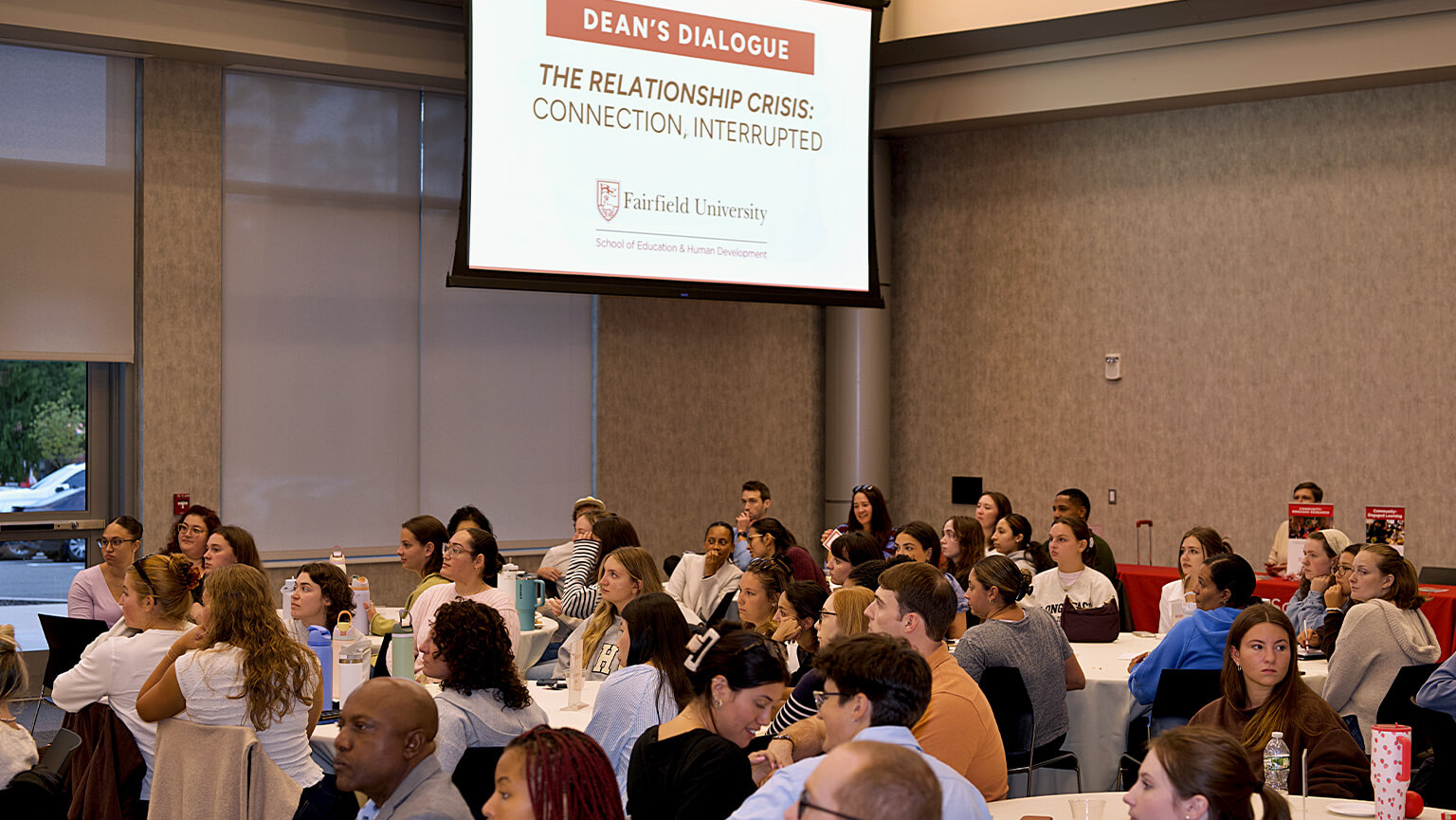
Experts and community voices from education, child and family advocacy, marriage and family therapy, law, and faith examined the complexities of human connection at the annual School of Education and Human Development Dean’s Dialogue on Sept. 21.
Relationships can be challenging, Dean Evelyn Bilias Lolis, PhD, acknowledged as she opened this year's conversation. But they also have an “extraordinary capacity to transform us.” Drawing on the Jesuit idea of accompaniment, she said, “We are not meant to simply encounter one another. We are called in some measure to journey with one another.”
Creating a Sense of Belonging

That concept of connection carried into the evening’s keynote by Isabella Morales, a senior at P-TECH Norwalk. Morales was one of three students nationwide recently selected to speak at the National Middle School Magnet Association conference in Washington, D.C.
Bringing her message about belonging from the national stage to the Fairfield community, Morales called on educators and leaders to foster school communities that connect authentically with students, expand access to education, and prevent students from feeling isolated. “Belonging is not something students should have to earn," she said. "It is something schools should help create.”
In the panel discussion that followed, Giselle Acevedo, JD, MA, MFT’16, president and CEO of the Child and Family Guidance Center, emphasized the importance of children having caregivers who can tolerate distress and teachers who recognize disruptive behavior as a cry to be seen. “Healthy relationships are not relationships without conflict," she noted. "Rupture is part of relationships. Repair is what determines what happens next.”
Navigating Relationships in a Digital World
Michele Parker, PhD, LMFT, an associate professor in Fairfield's Marriage and Family Therapy program, drew on scientific research to examine how technology and social media shape relationships. Citing attachment theory and the human need for safety and security, Dr. Parker explained how behaviors such as catfishing, phubbing, and micro-cheating matter less for the actions themselves than for what they communicate to the other person.
For example, choosing to look at a phone instead of engaging with someone can send an unintended message about where that person falls in our attention and priorities. Parker connected these everyday digital interactions to a deeper relational question: “Am I important to you?”
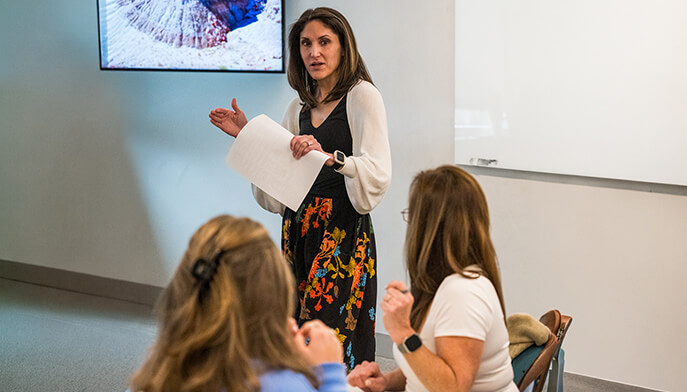
Katherine Bakes, Esq., founder and family law attorney at Bakes Law, focused on the role of communication when relationships fracture. Too often, she noted, people listen to respond, defend themselves, or prove they are right—rather than to understand.
Repair, Bakes argued, requires humility, accountability, curiosity, and a willingness to engage in difficult conversations. “You will not get through life without hurting people,” she said. “The question is what you choose to do after it.”