Across Fairfield University, a thoughtful dialogue is taking shape around AI and the ways it is transforming education, work, and what it means to be human.
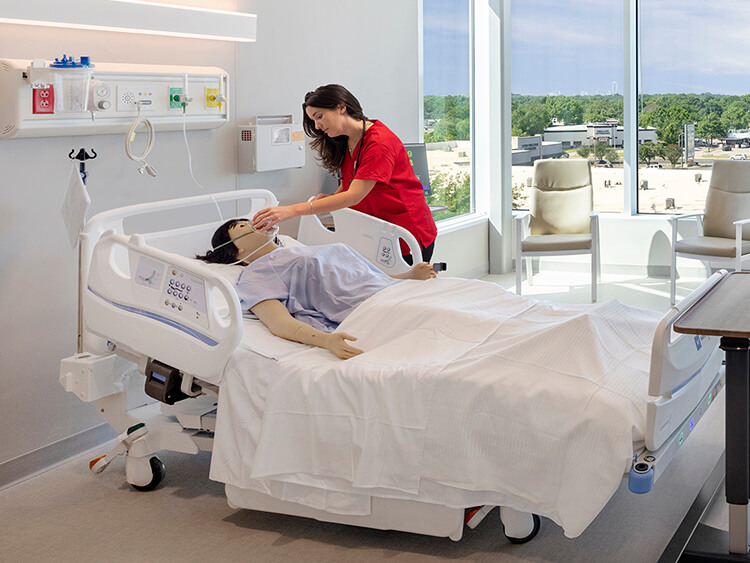
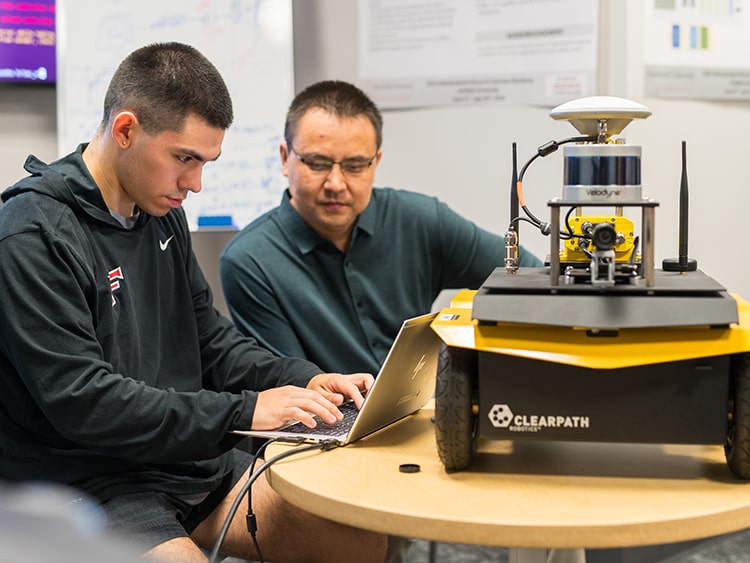
In the Fairfield Egan simulation lab, the vital signs of an AI-powered manikin “patient” respond in real time to a nursing student’s interventions. Next door in the Bannow Science Center, engineering students decode the logic and data behind an AI decision-making program. Across campus, a humanities seminar debates whether AI can enrich our understanding of what it means to live with purpose.
In each of these settings, artificial intelligence is shaping the way our students think and learn—about their world and about themselves. AI has arrived not just as a technology, but as a shared invitation for the entire Fairfield community—students, faculty, and staff—to reflect, to question, and to imagine the possibilities together.
Preparing students to “meet the world where it is,” especially when that world defies prediction, is a campus-wide endeavor. Three interconnected dialogues are shaping the path forward: how we teach and learn in an AI-driven landscape, how we work and lead alongside intelligent systems, and how we preserve the essence of what it means to be authentically human.
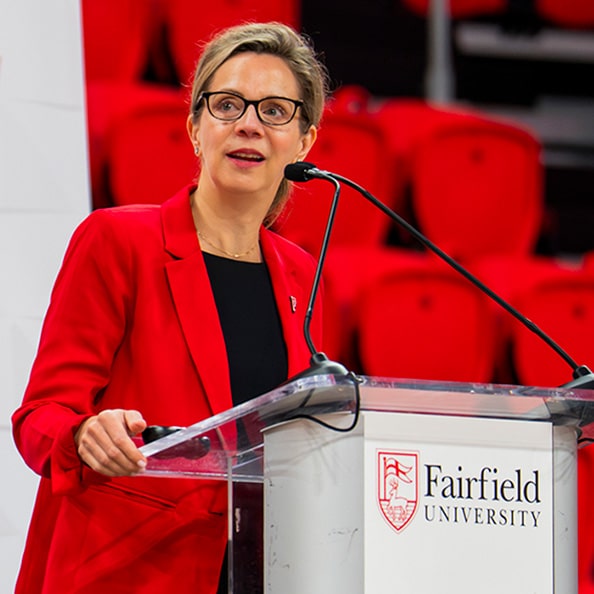
While life in the era of artificial intelligence is evolving faster than any syllabus can capture, Provost Christine Siegel, PhD, holds fast to her belief that Fairfield’s 500-year-old Ignatian pedagogy—which invites students to think critically, reason logically, imagine boldly, and act ethically—offers a steady compass amid the shifting terrain. Addressing the incoming Class of 2029 at Orientation this past June, she said, “I can’t, with confidence, say what the world of work is going to look like in May of 2029, but I can, as chief academic officer, say with confidence that you will be prepared for it.”
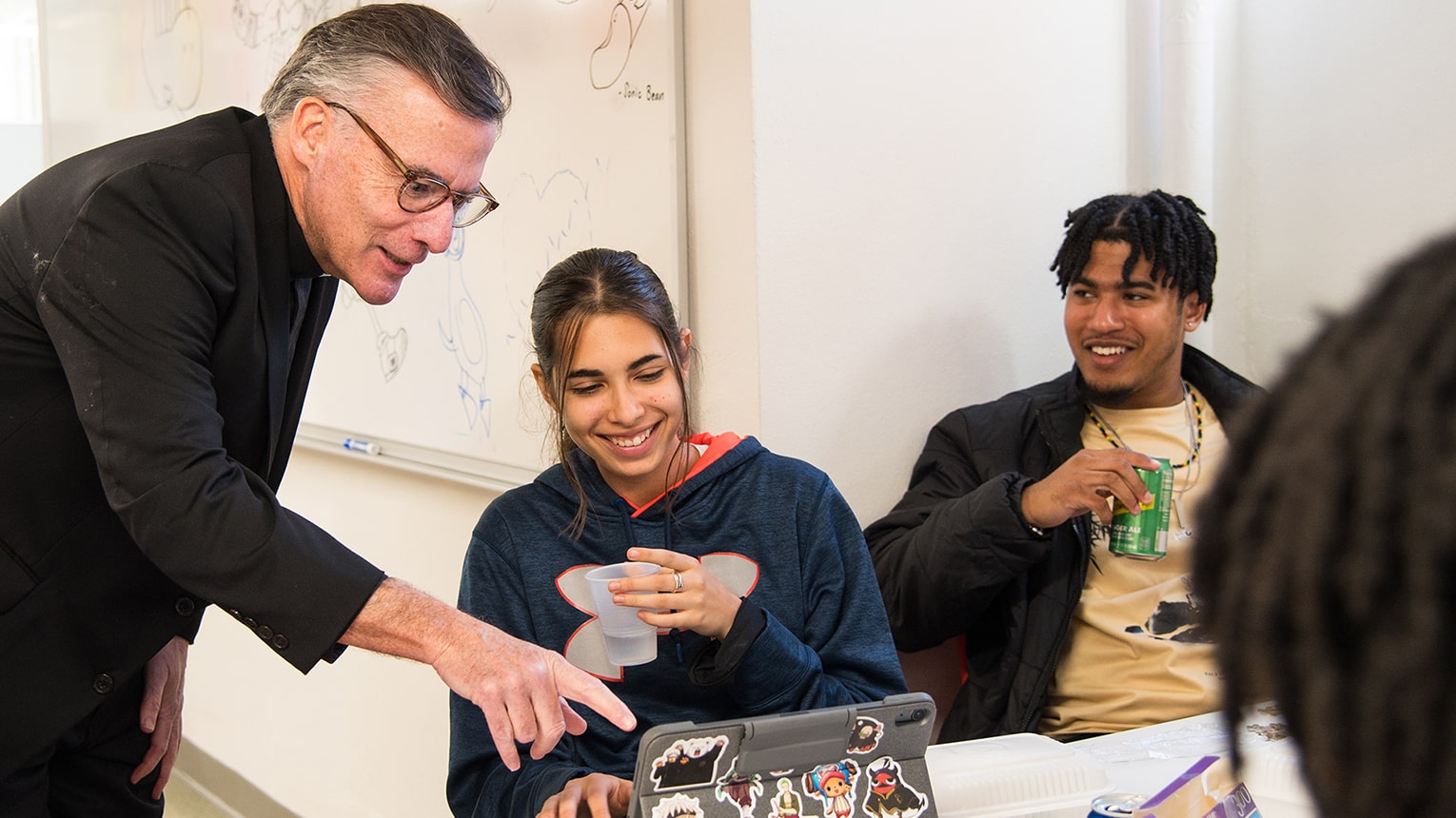
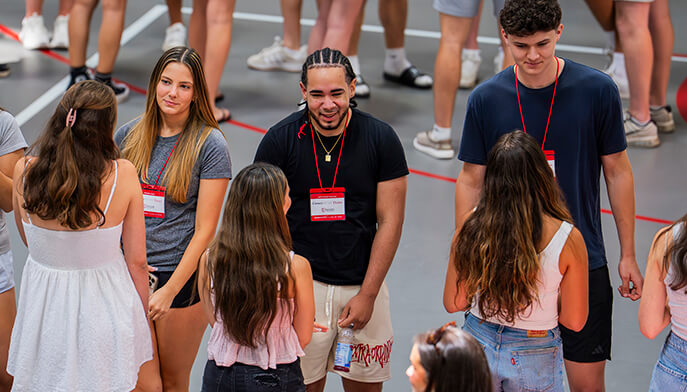 At Orientation, first-year students practice the most enduring skill of all—connecting through face-to-face conversation.