Innovations In Dining

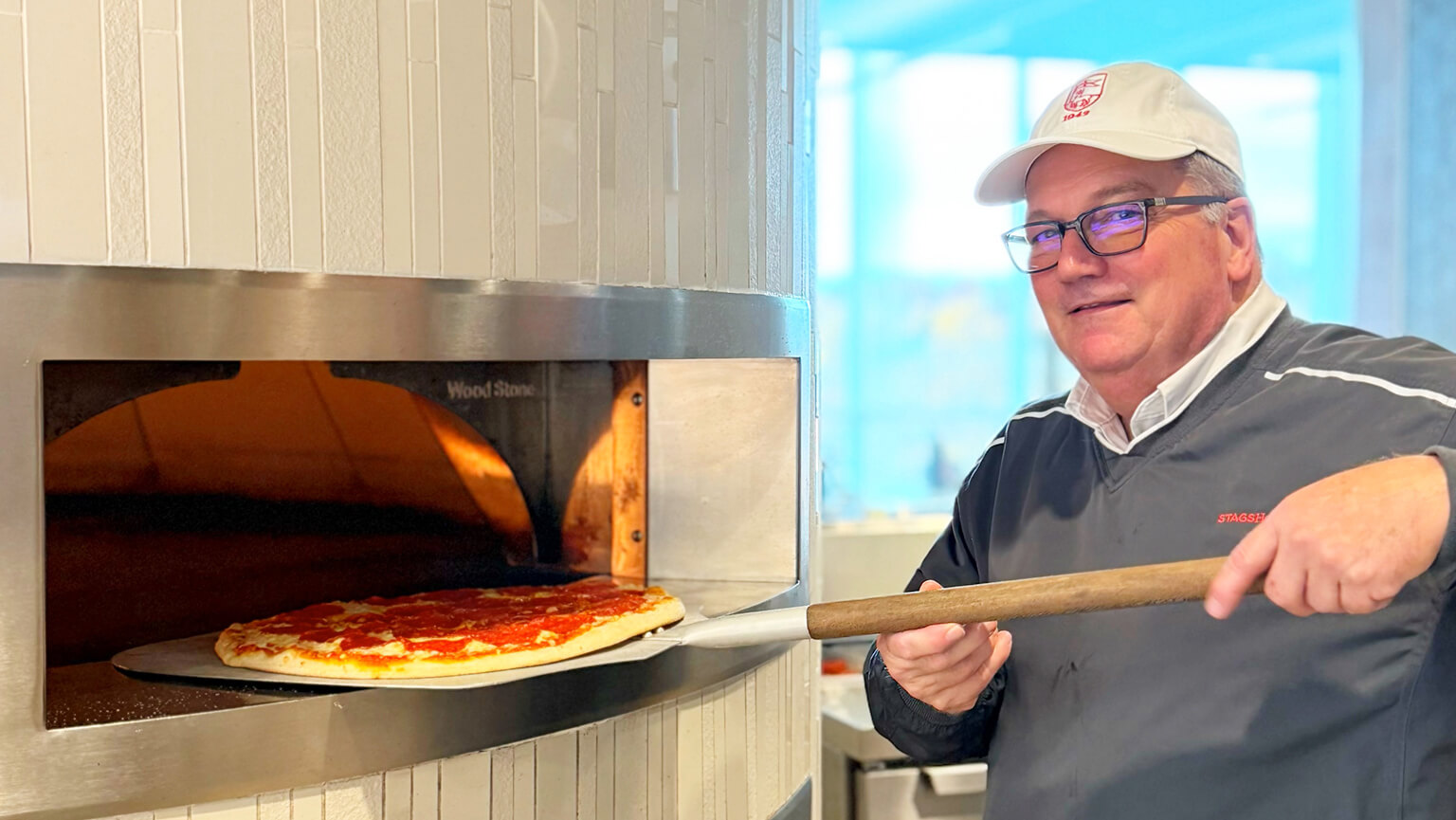
Jay DeGioia wearing a gray shirt and glasses placing a pizza into a pizza oven.
Jay DeGioia is the director of Aramark’s Stags Hospitality and a proud member of Fairfield’s Class of 1980.
By Sara Colabella ’08, MA’11

Alumnus Jay DeGioia ’80 has spent the better part of a decade reimagining Fairfield University’s collegiate dining experience.

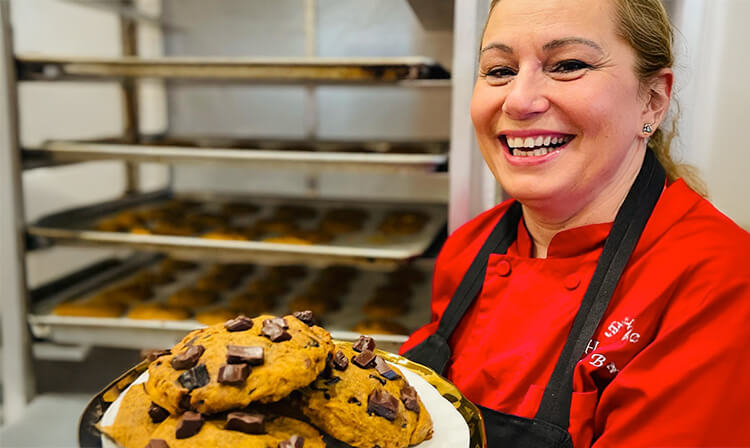
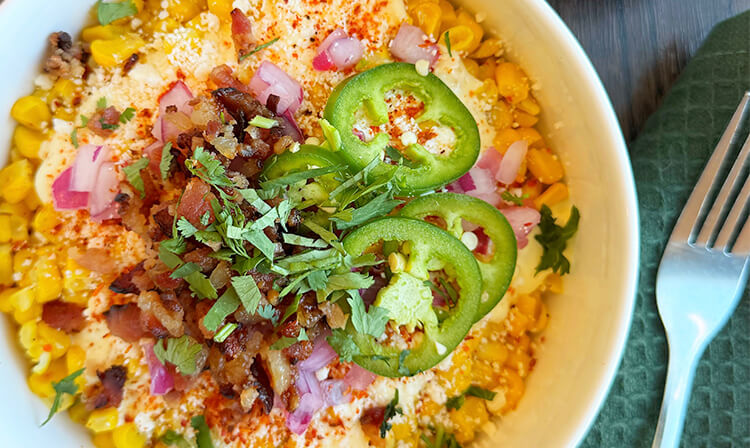
It is lunchtime at Fairfield University’s Tully Dining Commons, and the space is buzzing with students, faculty, and staff. The sound of sizzling grills mixes with the talking and laughter of friends waiting in line at the food stations. The air is rich with the smell of spices, garlic, and onions. As hungry diners move from station to station, they study the day’s offerings, debating what to try next. At the Sazón station, students create their own burrito bowls with toppings that range from mojo chicken to carne asada, guacamole, beans, and salsa options. At the omelet station, a chef flips eggs with nimble precision. Nearby, students assemble personalized avocado toast. On the way out, many stop at the dessert station to top off their meal with a warm, freshly baked chocolate chip cookie.

This is not your ordinary dining hall. It is a culinary hub with a marketplace feel and diverse offerings, even for those with food allergies—a striking evolution from the campus cafeteria alumni once knew.
At the center of this transformation is alumnus Jay DeGioia ’80, director of Aramark’s Stags Hospitality, who has spent the better part of a decade reimagining the collegiate dining experience and on-campus hospitality services at Fairfield.

For DeGioia, coming to work feels like coming home. Having shaped dining experiences at James Madison University, University of Massachusetts Dartmouth, Merrimack College, Brandeis University, and Florida State University, he arrived with a vision to make Fairfield’s program as dynamic as its students. “When I was here as a student, it was just the Campus Center cafeteria and the StagHer Inn,” he recalled. “Now, dining at Fairfield is an experience that matches the energy of campus life.”

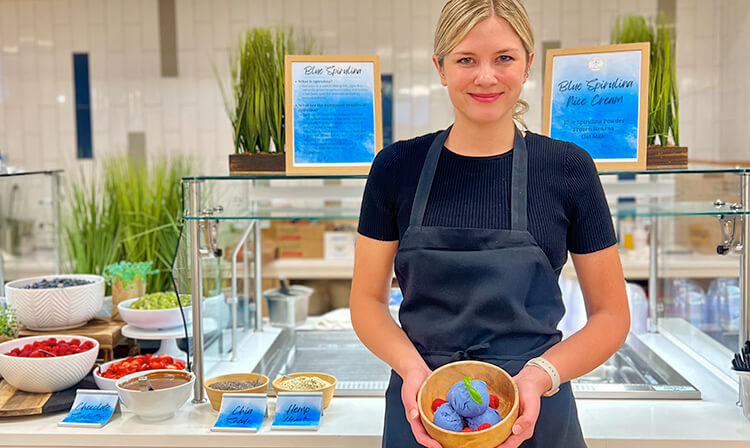
Fairfield’s culinary offerings continue to evolve to meet students’ diverse tastes and dietary needs. The Tully Dining Commons features more than 15 stations, including gluten-free, vegan, and allergen-sensitive options. On-staff nutritionists collaborate with chefs to craft balanced, flavorful meals, while visiting celebrity chefs like Art Smith bring distinctive menus and professional flair to campus.

“We want every student to feel like there’s a place for them here,” DeGioia said. “Whether you’re gluten-free, vegetarian, or just craving something new, we make sure you’re taken care of.”

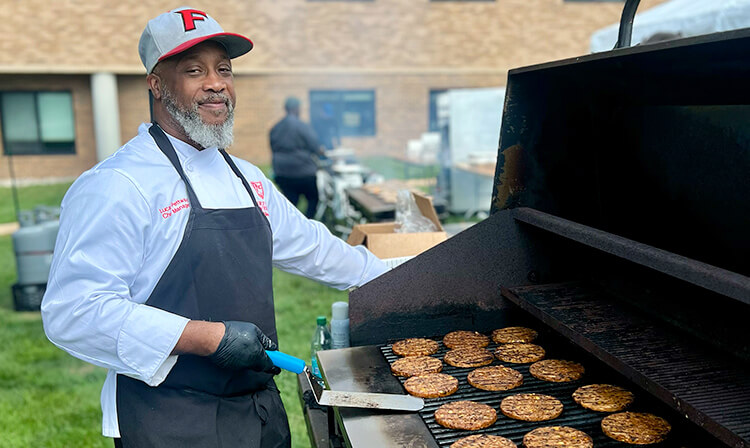
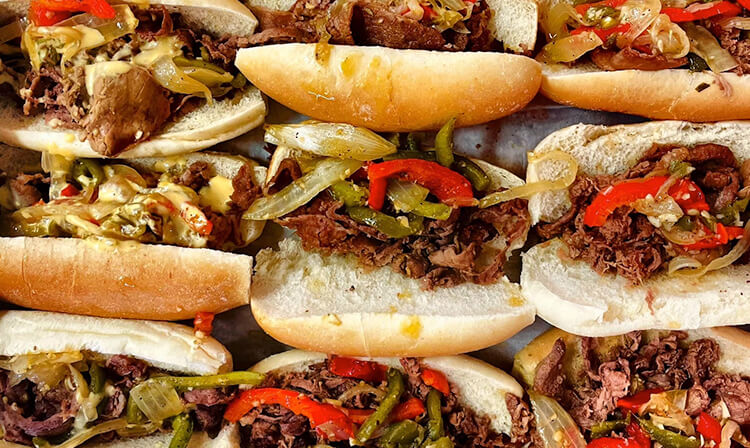
According to DeGioia, the omelet station remains a standout favorite, with chefs cooking up more than 20 crates of eggs daily. They also serve more than 400 pounds of grilled chicken every day. Other top menu picks include avocado toast, chicken parmesan, the salad bar, items from the Tex-Mex station, and smoothies.

One of DeGioia’s earliest priorities was broadening the meal plan system to open an unlimited plan to all students. The results speak for themselves: meal swipes are up across campus for the inclusive plan, as students enjoy items from Starbucks, The Levee, Peet’s Coffee, and Sambazon Acai Bowls, in addition to meals at The Tully. Meal exchanges and coffee shop upgrades allow students to move freely between locations, try different options, and discover new favorites. Last year, Fairfield recorded more than one million meal swipes for the first time ever—participation well above the industry standard. This year, that number is tracking 10 to 12 percent higher, a reflection of the program’s growing appeal.

One of Fairfield’s most beloved dining innovations in recent years is the Food Truck Village, a cluster of mobile dining options parked across from Loyola Hall, complete with a tent and picnic tables. Stags Hospitality operates two trucks and a rotation of off-campus options, including Zuppardi’s and Liberty Rock Tavern.

Initially introduced a few years back as a temporary solution during the dining hall’s full remodel, the food truck concept quickly became a campus favorite. “It started small,” DeGioia said, “but the students loved it so much that it grew. Now we have rotating trucks, including some local family-run businesses that got their start again here after losing their restaurants during Covid. That’s been really rewarding.”

In 2024–25, The Tully received 56.4 percent of meal swipes, followed in popularity by The Stag Snack Bar and the Food Truck Village.

Thanks to the variety of options and high-quality offerings, David Frassinelli, vice president of facilities and auxiliary services, noted that the number of voluntary meal plans is well above peer institutions. “These are students with kitchens who don’t have to be on meal plans, but who prefer to eat on campus.”

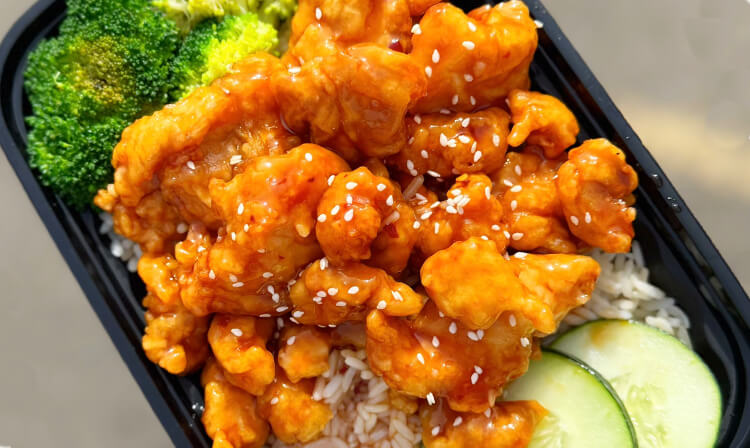
This year, Stags Hospitality has introduced several new initiatives, including a quesadilla station in The Tully, a food truck at Dulles Hall, and a Botrista Boba Tea location.

Innovation also extends to technology and sustainability. A robot delivery system that accepts meal swipes, hydroponic gardens, and other pilot programs have offered valuable learning opportunities, even if not every idea is successful. “We’re not afraid to try things,” DeGioia said. “Some work, some don’t. But the key is that we listen to students and keep innovating.”

Through composting, waste reduction, and portion-awareness initiatives, the dining team also encourages students to think critically about sustainability and food choices. “We want them to enjoy what they eat,” said DeGioia, “and also understand what it takes to create it.”

Equally central to Fairfield’s dining success are the Aramark chefs who bring creativity and expertise to meal planning. “Our chefs have the freedom to try new things,” DeGioia said, which has led recently to popups featuring chefs’ regional cuisines, farmer’s market-style events, and a new smoothie bar, which originated from a student’s suggestion. “That flexibility,” he added, “is part of what makes Fairfield’s dining so vibrant.”

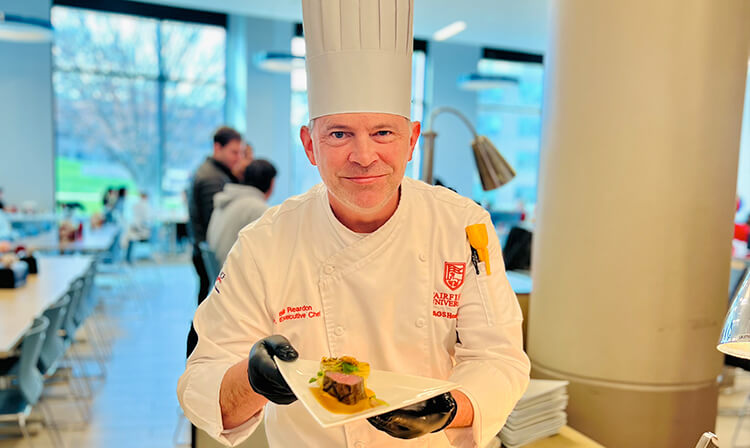
Chef Reardon’s award-winning dish, a masterfully prepared chicken galantine with winter vegetables and a port wine reduction, also earned him a prestigious American Culinary Federation (ACF) gold medal. “It was an honor to represent Fairfield University at such a prestigious event,” he said. “This win is a testament to the incredible work happening across the University’s dining services.”

Stags Hospitality also received Bites of the Year and the Local Restaurant Row Growth Award from Aramark Collegiate Hospitality. And in 2025, Spokin, a food allergy platform that publishes an annual list of the top food allergy- friendly colleges, ranked Fairfield at #39, highlighting the University’s commitment to inclusive dining experiences.

Last spring, Fairfield partnered with renowned chef Art Smith, a two-time James Beard winner, philanthropist, and restauranteur, to launch Varsity Bird, a new and first-in-the-nation concept featuring Smith’s signature Southern-inspired cooking. Serving up fare such as his famous Cluckin' Hot Chicken Sandwich, Varsity Bird fare is on the menu at The Levee and available from a food truck.

Creativity and cooking skills have earned Fairfield’s culinary team recognition on the national stage. Chef Bill Reardon was named the Regional NACUFS (National Association of College and University Food Services) Chef Competition Gold Medalist and National Silver Medalist, while Chef Myles Hamilton earned the Northeast Regional Gold Medal and National Gold Medal for Aramark Culinary Excellence.

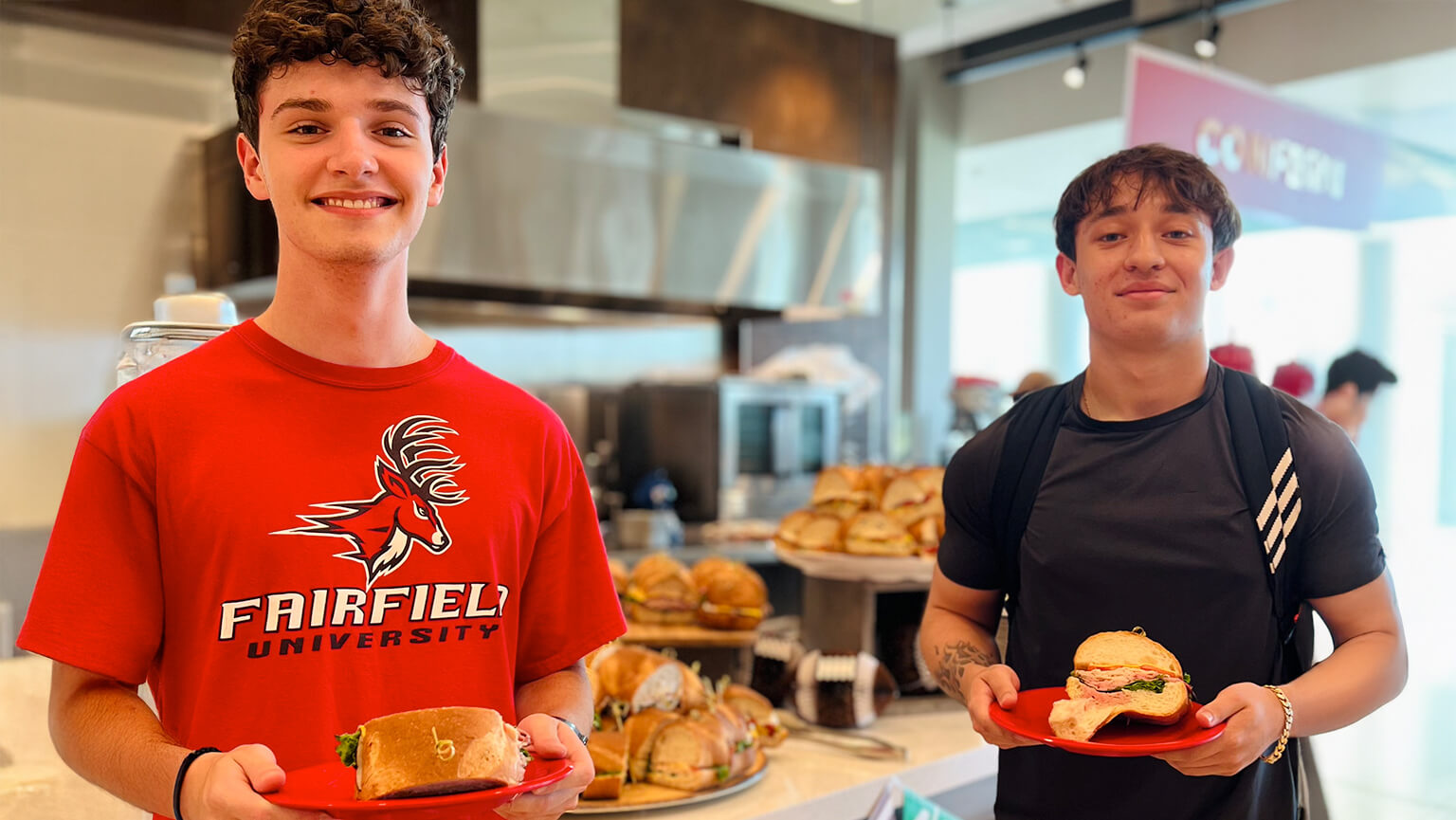
What stands out most about Fairfield’s dining transformation is the spirit of collaboration and shared purpose—one that draws heavily on student feedback. Stags Hospitality’s partnership with the University has become a national model for how a university and its dining provider can cocreate meaningful student experiences. “Fairfield gives us the liberty to take care of the students,” DeGioia said. “Every decision we make—from what’s on the menu to where we serve it—is about the student experience.”

For DeGioia, dining innovation at Fairfield is also deeply personal. His alma mater has grown, but the sense of community remains the same. “Being an alumnus drives me,” he said. “Fairfield’s students deserve the best, and we’re going to keep trying new things until they have it.”

Related Stories

More In