Fairfield Researchers Highlight Infant Nutrition Knowledge Gaps

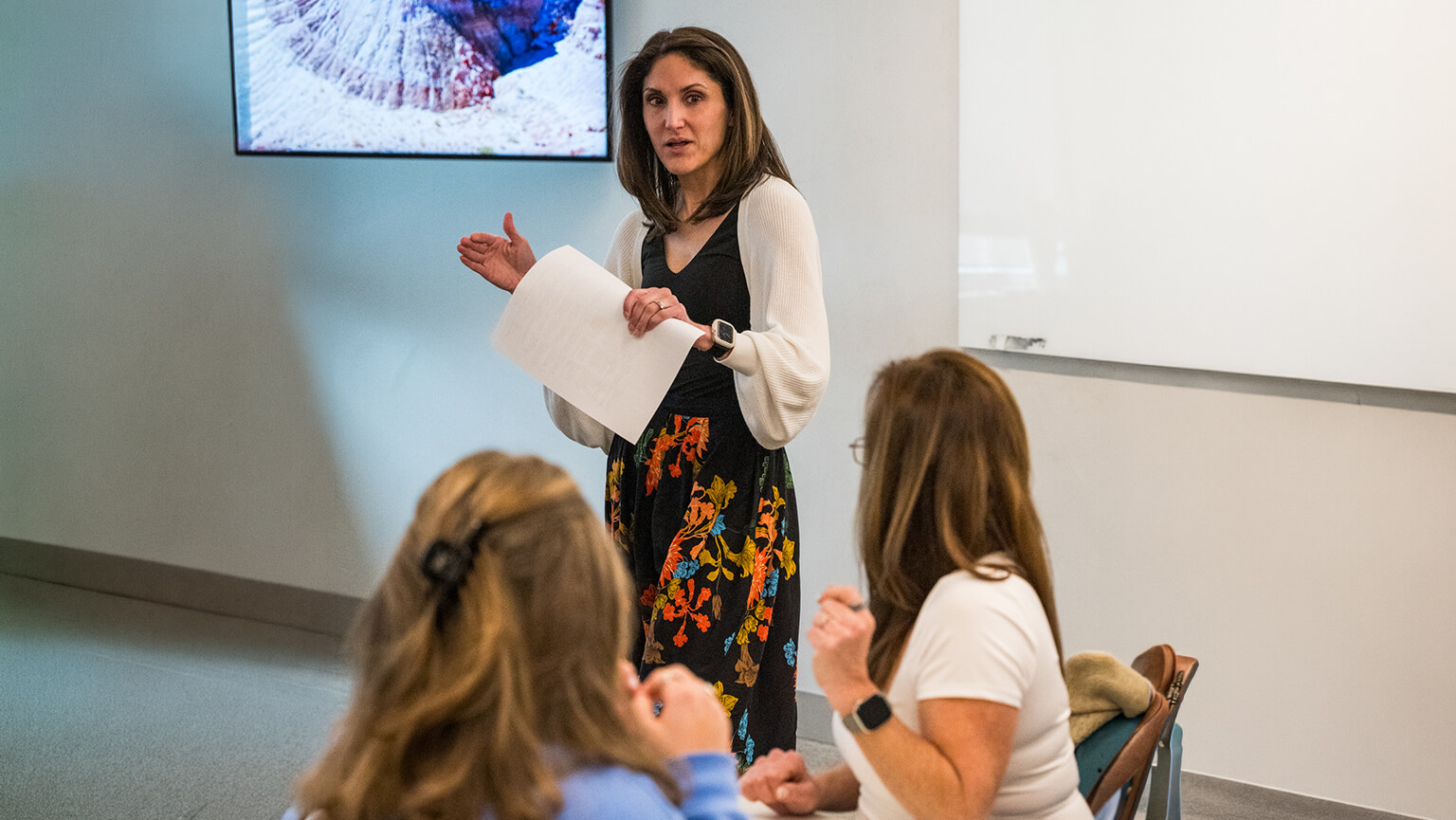
Dr. Kimberly Doughty presents to a small seated audience, holding papers and gesturing beneath a wall-mounted screen; the attentive discussion feels informal and focused.
Dr. Kimberly Doughty, associate professor of public health at Fairfield University, studied early nutrition knowledge gaps with implications for children’s long-term health.
By Brad Thomas

A recent study by public health experts at Fairfield University examines how well parents understand early feeding guidance and how clearer education could improve children’s long-term health.

When parents make decisions about how and when to feed their babies, those choices are rarely small. Nutrition in the first two years of life can influence growth, development, and long-term health. But new research from Fairfield University’s Marion Peckham Egan School of Nursing and Health Studies suggests that many mothers may not be receiving or retaining the guidance they need about early childhood feeding.

The Fairfield Egan study examined how well mothers of young children understood national nutrition recommendations for infants and toddlers. Developed by Associate Professor Kimberly Doughty, PhD, and analyzed by Assistant Professor Bridget Hussain, PhD, the research focused on several common but important questions:

  • When should babies begin eating solid foods?
  • Should breastfed infants receive vitamin D supplements?
  • Is it helpful or risky to add baby cereal to a bottle?
  • When should potentially allergenic foods such as eggs or peanuts be introduced?

The study also compared responses from mothers who participated in the Special Supplemental Nutrition Program for Women, Infants, and Children, better known as WIC, with those who did not. WIC provides nutritional support, healthy foods, and education to pregnant women and their children through age 5 in families that meet income eligibility guidelines.

“Our findings suggest that there is still a meaningful gap between national feeding guidance and what many families believe or practice,” said Dr. Hussain. “That matters because the first two years of life are a critical window for establishing eating patterns and supporting healthy development.”

Understanding Early Feeding Misconceptions

In 2020, the Dietary Guidelines for Americans included for the first time specific recommendations for infants and toddlers. Yet the Fairfield study found that many parents remain unsure about key aspects of early childhood nutrition.

Only about half of the respondents correctly identified that infants should begin eating solid foods around six months. Knowledge gaps also emerged around supplemental vitamin D for breastfed infants, the risks of adding cereal to a baby’s bottle, and the benefits of introducing potentially allergenic foods during infancy rather than delaying them.

These are not simple matters of parenting preference. Pediatric and dietary guidance in these areas is connected to important health outcomes, including infant safety, allergy prevention, healthy growth patterns, and obesity risk later in life.

A Closer Look at WIC and Public Health Education

The study found that mothers who participated in WIC had lower overall nutrition knowledge scores than non-participants. In fully adjusted models, WIC participants had lower odds of correctly answering questions related to adding cereal to bottles, understanding the health implications of rapid infant weight gain, and identifying the appropriate timing for introducing potentially allergenic foods.

The authors were careful to note that these findings should not be interpreted as evidence that WIC is failing families. Previous research has associated WIC participation with important benefits, including reduced household food insecurity and improved diet quality. Instead, the Fairfield study points to a more nuanced public health challenge: families who qualify for nutrition assistance may navigate circumstances that make accessing and applying health information more challenging.

“These results highlight an opportunity to strengthen how evidence-based feeding guidance is communicated to families, especially among families who use WIC,” Dr. Hussain said. 

Fairfield Research with Real-World Impact

For Fairfield University, the project demonstrates how faculty research can address urgent questions with direct community relevance. By identifying where misunderstandings persist, the study contributes evidence that can help inform clearer nutrition messaging, stronger caregiver education, and more effective public health interventions.

The study also reflects the mission of Fairfield’s Egan School, where teaching and scholarship are grounded in a commitment to improving health outcomes and advancing care across communities. In examining early childhood nutrition knowledge among mothers—including those participating in WIC—the research points to opportunities for health professionals and public programs to better support families during a critical stage of child development.

As clinicians, educators, and public health leaders continue working to improve early childhood outcomes, Fairfield researchers are helping identify where communication can be strengthened and where small changes in knowledge may have lifelong effects.

Related Stories