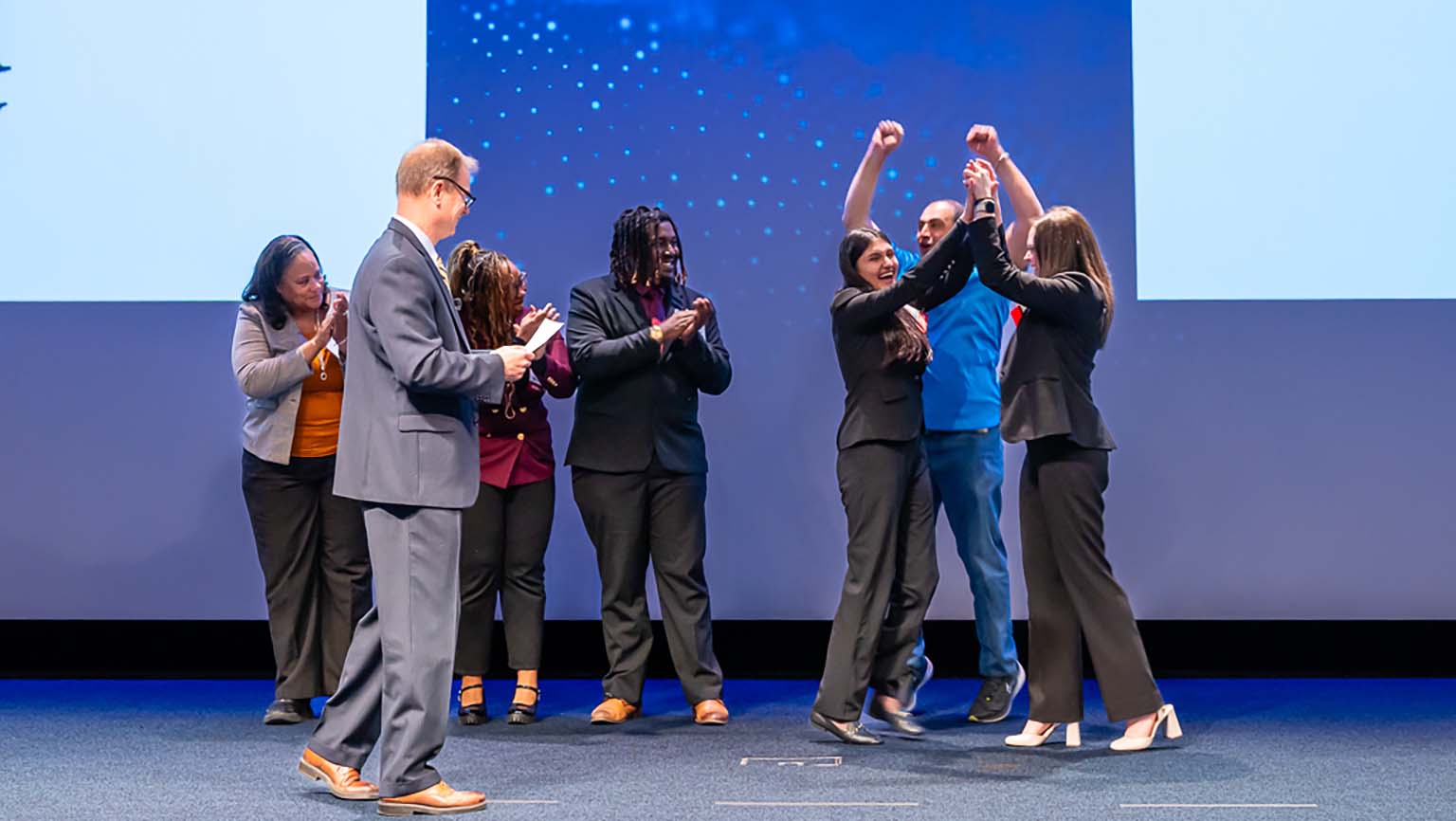
On Feb. 26, Elia Haghbin ’26, a computer science and biology major, and Lauren Von Hassel ’26, a computer science major in the School of Engineering and Computing, won first place at the Lockheed Martin Ethics in Engineering Case Competition in Washington, D.C. This marks the first time a Fairfield University team has taken the competition’s top prize.
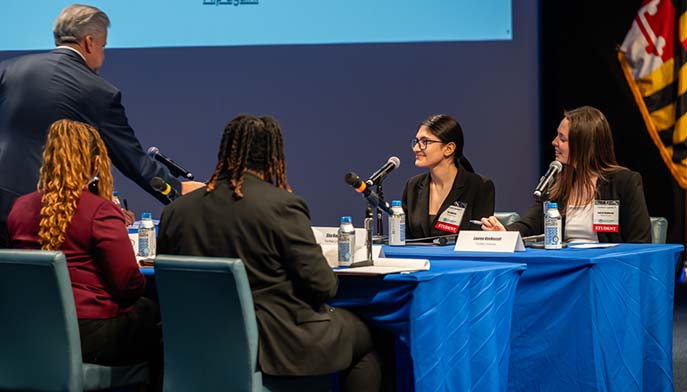
Facing competitors from 72 universities, the Fairfield team analyzed a fast-moving national crisis scenario centered on artificial intelligence (AI) governance and national security risk. As new complications emerged throughout the case, teams were required to defend technical, ethical, and operational decisions in real time.
Well-Prepared
Haghbin and Von Hassel began preparing for the competition during the fall semester. Through weekly sessions focused on argumentation, ethical reasoning, and presentation skills, the students were mentored by Naser Haghbin, PhD, assistant professor of mechanical engineering. Associate professor of ethics David Schmidt, PhD, also provided guidance and feedback ahead of the competition.
“Their win came from consistent preparation and disciplined execution,” said Dr. Haghbin. “They practiced continuously, refined their messaging through iterative feedback, and memorized key sections so they could communicate clearly under time pressure.”
Ethics & Decision-Making
Working through the case underscored for the students how closely ethics and technical decision-making are intertwined.
“We were evaluating the use of AI-driven threat detection systems within the Department of Defense infrastructure, where mistakes could affect real people and critical systems,” Haghbin said. “It reinforced that ethics is present in every decision, not just the obvious ones.”
Examining competing perspectives also shaped the team’s approach. “Learning how to stay composed, adapt under pressure, and build a well-rounded solution from multiple viewpoints is something I will carry with me as I continue in computer science and cybersecurity,” Von Hassel said.