Capstone Project Examines Food Support Experiences on Campus

Public health senior posing with her healthy snack program organizational shelf.
Alana Planas ’26 has focused her senior capstone project on improving food access at the Egan School.
By Brad Thomas

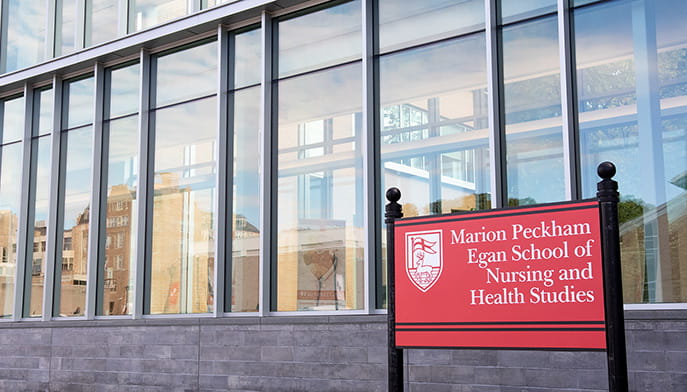
Senior public health major Alana Planas received a $500 research grant from the Office of the Provost to support the implementation and evaluation of a cupboard project at the Marion Peckham Egan School of Nursing and Health Studies.

Food insecurity is a widespread but often hidden issue on U.S. college campuses. According to a 2023 study by the National Center for Educational Statistics, it affects 23 percent of undergraduate and 12 percent of graduate students. The figures are stunning, and no college is immune. As a research assistant, Alana Planas ’26 explored the topic of food insecurity across Fairfield’s two Connecticut campuses; now, she is devoting her senior capstone project to improving food access and reducing stigma around food support programs at the Egan School.

“For my capstone, I am evaluating a universally accessible ‘grab-and-go’ snack program on campus,” Planas said. “The project looks at how access and perceptions of stigma influence students’ experiences with food support.”

Identifying Barriers to Resources

Despite high rates of food insecurity on college campuses, students do not always take advantage of food resources because of social stigma, lack of awareness, and concerns about judgement. Planas is addressing those impediments by implementing inclusive messaging alongside the snack cupboard and by surveying users about their experiences. Specifically, she is attempting to normalize access by using the phrase “Give one, take one, help yourself!”

“I’m collecting data through a QR-code survey using questions adapted from the Food Support Experience Scale to measure perceptions of stigma, comfort, and overall experiences,” Planas explained. “Ultimately, I hope to learn whether a universally accessible, stigma-conscious model can reduce barriers to food support and help students feel more comfortable accessing resources.”

By design, the cupboard program aims to optimize food access for everyone at the Egan School, improving overall nutrition and consistent food intake for all students, faculty, and staff, not just those experiencing food insecurity.
Forming an Interest in Food Resources

Planas became interested in her topic while serving as a research assistant for Bridget Hussain, PhD, RDN, CDCES, CDN, assistant professor of public health. During that time, she worked on several initiatives aimed at food insecurity—an event with community partners to connect students with local resources, a conversation with the Bellarmine community about student food access, and last semester’s Quick Center comedy show with Pulitzer Prize finalist and self-proclaimed food bank influencer Kristina Wong.

While each of those events nurtured Planas’s interest in food insecurity, what really sparked her passion was the cupboard project that she and Dr. Hussain piloted at the Egan School.

“We built a strong foundation for the cupboard during my assistantship, but it needed more work,” Planas said. “I wanted to take what we had learned from piloting the program and make it more student-friendly, more accessible, and less stigmatized.”

She added: “That’s really what led me to my senior capstone—I don’t just want the resource to exist; I want students to actually feel comfortable using it.”

Narrowing the Scope of the Project

Planas enlisted Dr. Hussain as her capstone advisor and immediately began to plan her project. Dr. Hussain encouraged Planas to narrow the scope of the research to what she could realistically measure. That advice led Planas to concentrate on evaluating stigma and food experience and identifying a validated survey for her study.

“Dr. Hussain’s guidance was essential because it strengthens the credibility of my research, ensuring that my measurements are evidence-based and reliable,” she said.

Securing Research Support

With a strong and focused research proposal in hand, Planas applied for a research grant from the Office of the Provost and was awarded $500 to fund her project. After surveying students about their snack preferences, she used the funding to purchase a snack rack and to stock the cupboard.

The student survey is a key aspect of the project because Planas wants it to be responsive, not imposed. “An important part of public health is when communities are part of the solution,” she said. “I strongly believe that local problems deserve local, collective responses, and this project has allowed that to happen in a small but meaningful way on our campus.”

Related Stories