Leaning Into Learning

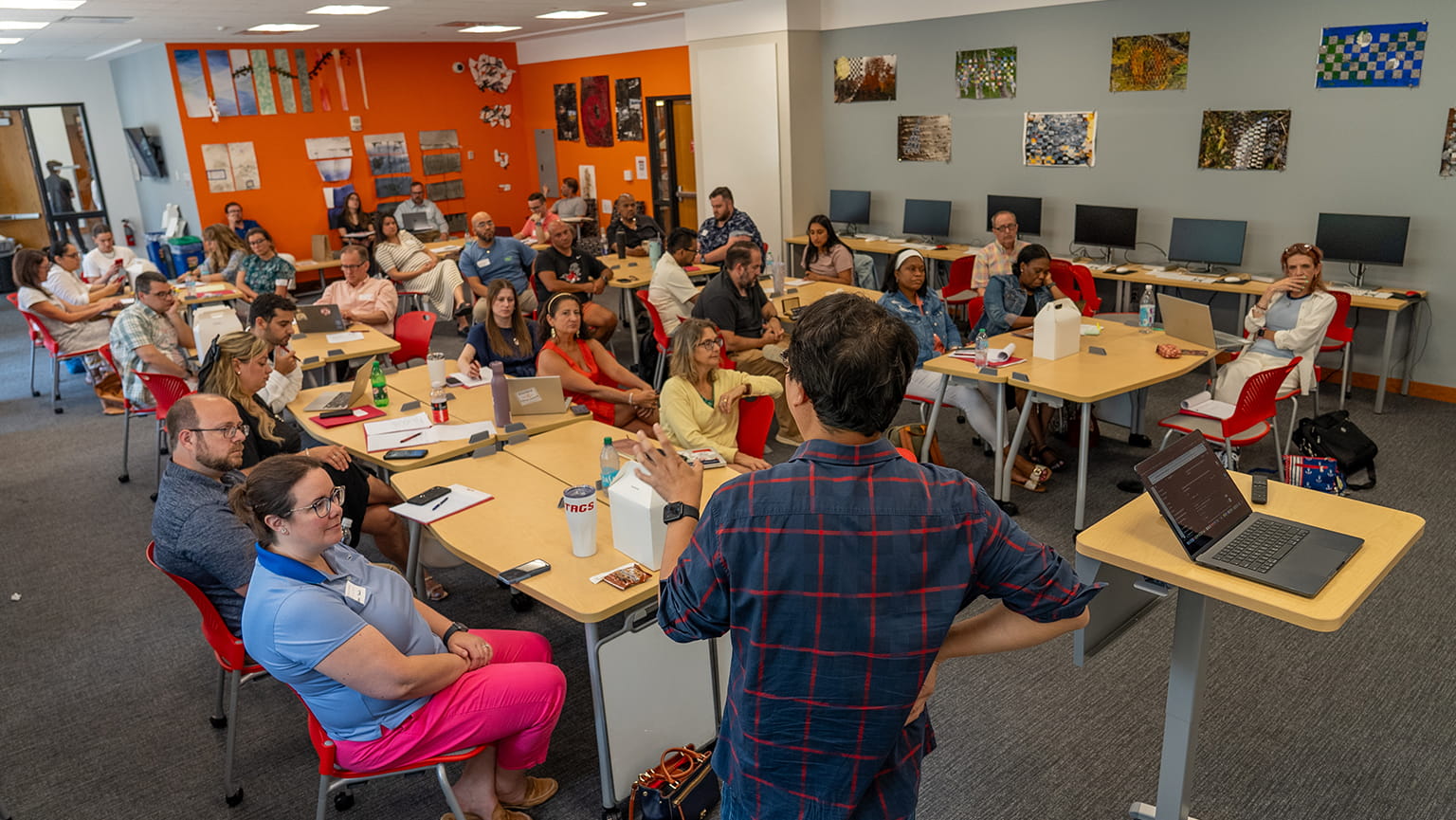
A classroom scene with a group of students seated at tables, engaged in discussion and learning activities. The scene is educational and professional.
Fairfield's Doctorate in Education in Educational Leadership is a three-year online, low-residency program.

For a fulltime working professional, making the decision to plunge back into a graduate program can be overwhelming.

But for those in the School of Education and Human Development’s EdD program, the struggle to balance work, family and class has been made easier by the program’s structure—mostly asynchronous, online courses, with three-day residencies each summer.

“You always think to yourself that it’s not a good time,” acknowledges Meghan Troy, EdD’26, a mother of three and the assistant superintendent for Human Resources and Leadership Development in the Scarsdale, NY, school system. “Sometimes, we talk ourselves out of what we think is insurmountable, but [at Fairfield] the professors are here to help you. They want you to succeed, and you learn to chip away at the work you need to do.”  Looking back, she recalls one weekend away at her daughter’s soccer tournament. “Between games, I spent three hours in the car typing. Personal hotspots saved me!”

Laura Whitacre ’02, MA’12, assistant dean of SEHD, wanted a terminal degree to help her move forward in her career and to effect change at the University level. As a single mother of two, she shared the same worries about diving deep into another graduate degree but found her children – then aged 11 and 14 – were very supportive of her decision. As for classes, “the first one met online every other Wednesday for two hours, and while I found that difficult, it helped me get back into being a student. With subsequent classes, we met online occasionally, but the asynchronous format made it manageable.”
Learning for a Lifetime

Over and over, those in both the Higher Education Administration and Teacher Leader tracks of the program said that they considered themselves to be lifelong learners.

“I did my master’s degrees early in my career, before I had children, and I found I was missing the ‘learner’ side of me,” admits Troy. “Now, I have more lived experiences, and I was curious about going back to school with all these years of practice behind me.”

Her colleague Colby Lemieux, EdD’26, senior assistant dean of John Charles Meditz College of Arts and Sciences, agrees. “The Higher Education Administration track seeks to understand how administration can support the college students of today. It’s provided professional, personal and mission-driven opportunities to make that support happen, and it’s aligned with my passion for learning.”

Lemieux has “a big job which I absolutely love,” as well as a son who was just three when she started the program. “My classmates online got used to seeing him come in to say goodnight in his Monsterjam jammies. But what’s really important is that he sees that I’m never too old to keep learning.”

Low Residency, High Impact

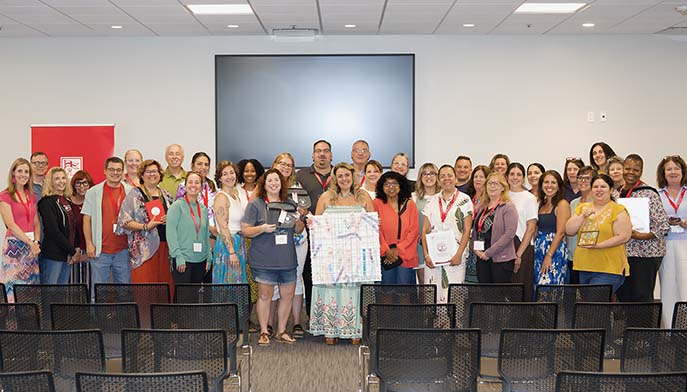
Far from being difficult to manage, the three-day residency each summer was for many the most enjoyable facet of the program, as cohorts from both tracks gathered for robust conversation and an exchange of ideas.

“It’s one of the few times we got to meet with the other track,” says Matthew Schirano, EdD’26, University librarian and a graduate of the Higher Education Administration track. “I’m a big believer in cross-pollination and I really enjoyed seeing what the Teacher Leader group was learning.”

For Troy, the residency “felt celebratory. It made you feel connected to the campus, and I liked that some of our classes overlapped with the other group.” As an administrator, working alongside K-12 teachers and hearing of their problems of practice was powerful, she said. She’s now resolved to take what she’s learned, particularly regarding the challenges that female teachers face, and work to support aspiring leaders within her district.

Perhaps not surprising, students found that many of their dissertation topics focused on topics that reflect the Jesuit-inspired nature of the curriculum. Schirano’s, for example, examined the disclosure experiences of neurodivergent library staff, while Whitacre is looking at the development of a special education residency program within a high needs school district. The opportunity to share their topics and the research they found was another benefit arising out of the residency.

Related Stories