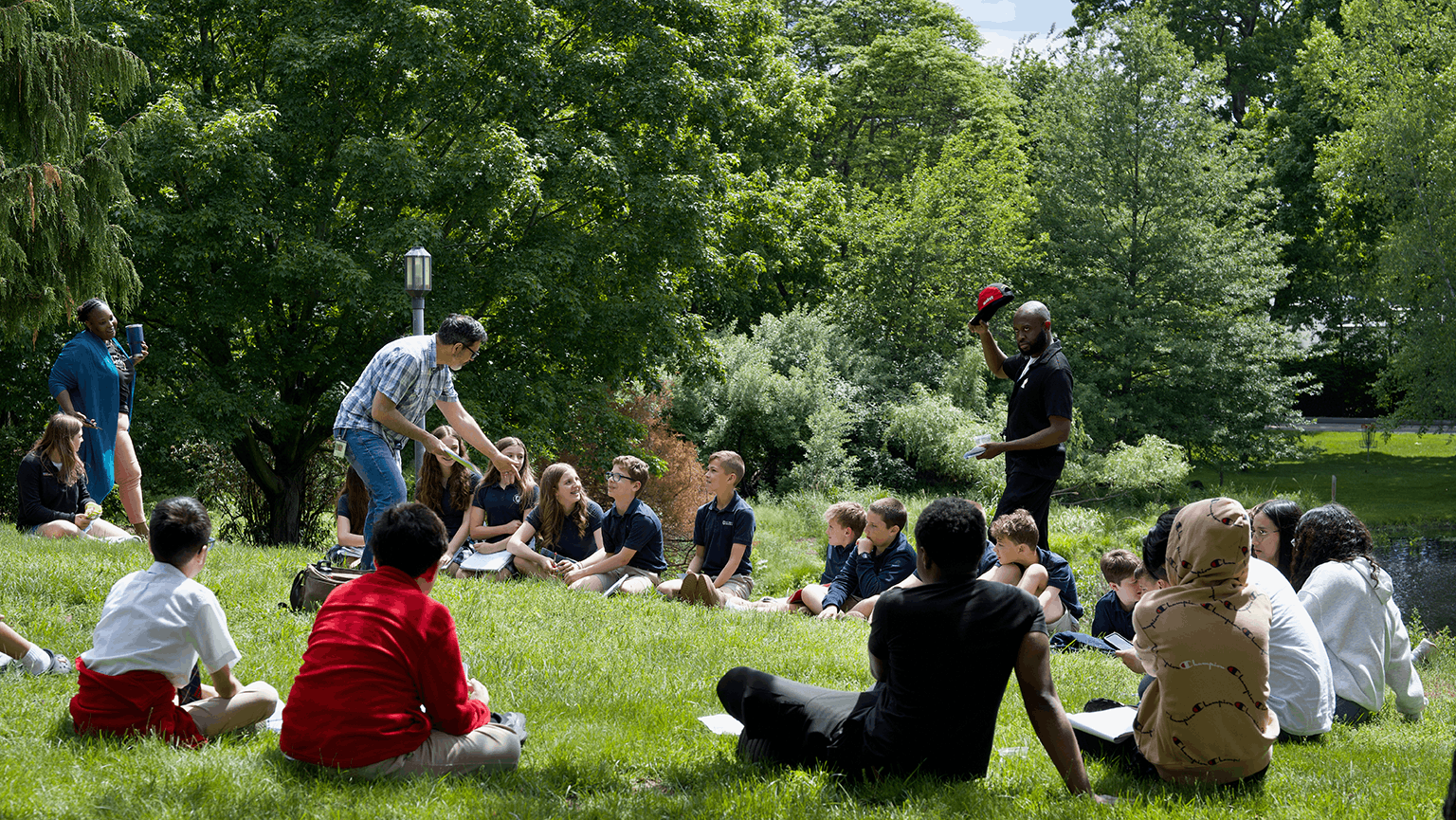
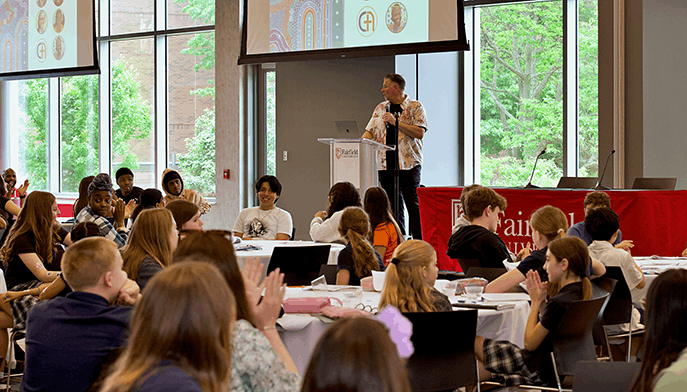
More than 130 middle and high school students and their teachers from eight Connecticut schools gathered at Fairfield University in May for the Writing Our Lives Conference, an annual program of the Connecticut Writing Project–Fairfield (CWP-Fairfield).
This year's theme, “Writing Our Lives & Bravely Belonging: Home is Where the Heart Is,” invited students to explore identity, belonging, and self-expression through writing workshops and author presentations.
The conference was organized by Bryan Ripley Crandall, PhD, director of the Connecticut Writing Project–Fairfield (CWP-Fairfield) and professor in Fairfield University’s School of Education and Human Development, where the program is housed. An award-winning initiative focused on improving student writing and literacy, CWP-Fairfield hosts conferences, young adult literacy labs, and teacher professional development programs throughout the year. Through these experiences, the program aims to inspire young people to pursue higher education and achieve their long-term goals.
Dr. Crandall praised the Writing Our Lives conference for empowering young people as experts in their own lives. “It levels the playing field and helps students to see that, like adults, they have ideas that matter,” he said.
Public and private school students from Ansonia, Bridgeport, Fairfield, Greenwich, Stratford, and Westport spent the one-day event engaging with Fairfield University faculty, staff, students, and authors. The grant-funded conference is part of a yearlong initiative that supports writing clubs in participating schools and culminates with students coming together on Fairfield's campus to learn from one another and celebrate the power of storytelling.
The conference featured keynote presentations by James Bird, an Ojibwe author, screenwriter, and director known for his middle-grade novels, and Rose Brock, PhD, professor at Sam Houston State University, co-founder of the North Texas Teen Book Festival, and editor of the essay collections Hope Nation and Hope Wins, Dr. Brock encouraged the students to embrace their unique voices and recognize the power of stories to build understanding and connection.
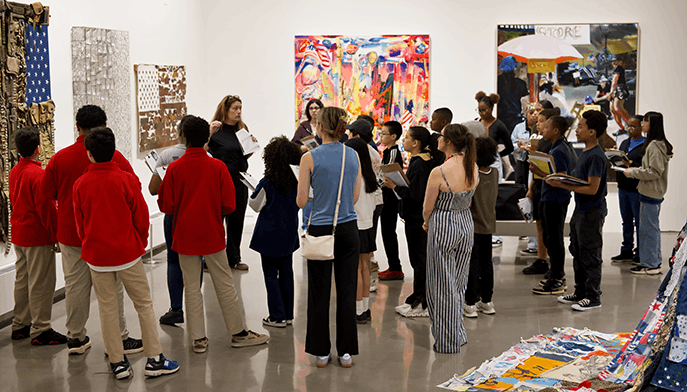
Throughout the day, students participated in a variety of workshops. Session titles included “For Which it Stands: The Art-Inspired Writer” at the Walsh Gallery, and “Finding a Home: Finding Advocacy & Belonging Within Mind, Body, and Spirit, Of Book Spines and Poetry,” among others.
The conference also reflected Fairfield's commitment to interdisciplinary learning. Presenters included faculty from the John Charles Meditz College of Arts and Sciences, the Marion Peckham Egan School of Nursing and Health Studies, the School of Education and Human Development, the DiMenna-Nyselius Library, and the Fairfield University Art Museum.
This year's event carried special significance as CWP-Fairfield celebrates its 40th anniversary. Established at Fairfield University in 1995 through a partnership between the Department of English and the School of Education and Human Development, the organization is part of the National Writing Project, a nationwide network dedicated to improving writing instruction and developing teacher leadership.
Today, CWP-Fairfield supports educators and students throughout Connecticut through professional development programs, youth writing initiatives, school partnerships, publications, and summer institutes. Teacher-leaders affiliated with the program serve thousands of students annually, helping young people develop confidence as writers and critical thinkers.
"Writing is deeply connected to identity and it’s the National Writing Project way to help teachers to read the scholarship that supports effective practices for teaching writing,” said Dr. Crandall. “A community of writers helps not only to build written outcomes for individual success, it also builds a human collective. It unites our humanity.”