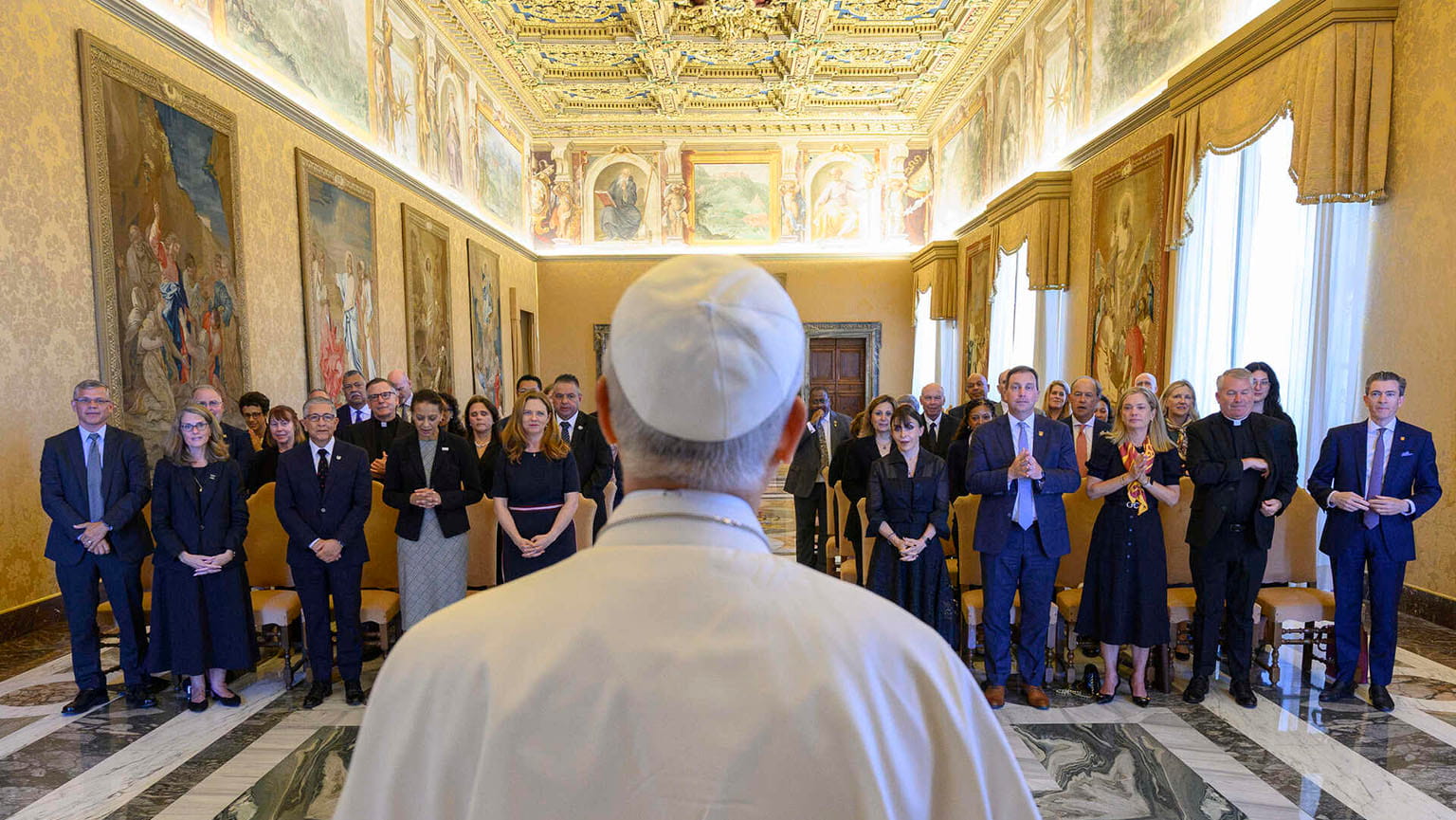
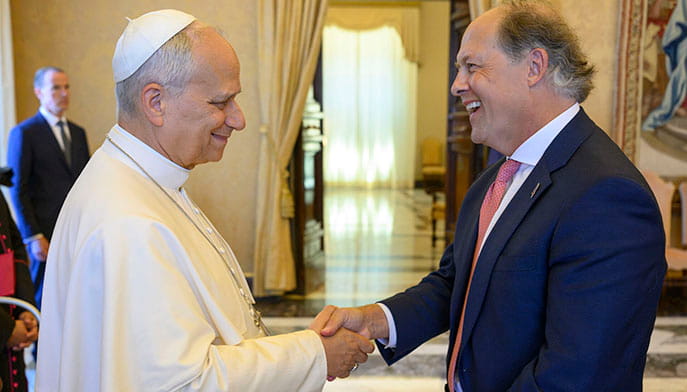
On June 25, President Mark R. Nemec, PhD, and Rev. Kevin O’Brien, S.J., joined a delegation of university presidents and senior leaders from the Association of Jesuit Colleges and Universities (AJCU) for a private audience with Pope Leo XIV. The gathering included prayer, individual greetings, and a reflection in which the Holy Father called on those in attendance to continue forming students with wisdom, hope, and commitment to the common good.
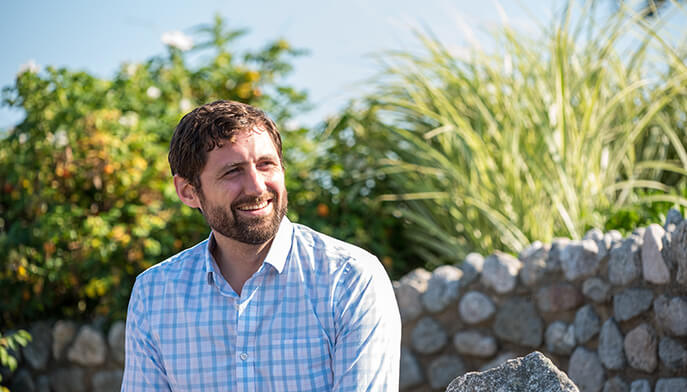
“We were grateful for the opportunity to be in that room among colleagues who are engaged in the same mission to educate young people,” said Dr. Nemec. “It’s a purpose that we’ve dedicated our lives to and that the Church does so well.”
In his remarks, Pope Leo observed that those who do research and seek truth “are ultimately seeking God, whether they realize it or not.” He encouraged AJCU leadership to address current challenges facing higher education through the Society of Jesus' four Universal Apostolic Preferences: showing the way to God, walking with the excluded, accompanying young people in a hope-filled future, and caring for our common home. He then spoke of a fifth challenge: addressing the consequences, “both positive and negative,” of new technologies such as artificial intelligence.
The tone of Pope Leo's remarks communicated a quiet assurance that Jesuit Catholic higher education has met moments of profound change over its 500-year history and is up to the task of meeting today’s challenges as well. “I think one of the subtle points the pope made by adding AI to the list of apostolic priorities was this idea that we need to recognize disruptions, but with a sense of optimism,” Dr. Nemec said.
“We left Rome with a deep sense of responsibility, missioned to make the centuries-old tradition of the Church meaningful for people today,” said Fr. O’Brien, “particularly for those most on the margins of society and those seeking to make sense of the rapid innovations of artificial intelligence.”
The pope’s message reflected a vision of higher education that closely aligns with Fairfield’s mission: educating students in the pursuit of truth while preparing them to meet a rapidly changing world with wisdom and hope. “Everything we do at the University is geared toward the students in our care,” said Dr. Nemec, “and that's how Pope Leo framed his remarks too—toward all those who seek education.”
The papal audience was one of several meetings that took place during a pilgrimage in Rome coordinated by the AJCU in partnership with the AJCU Board of Directors. The group, which represented universities and colleges in North and Central America, also met with the V. Rev. Arturo Sosa, S.J., Superior General of the Society of Jesus, who discussed the need for discernment and formation among university trustees and the value of collaboration among global Jesuit institutions.