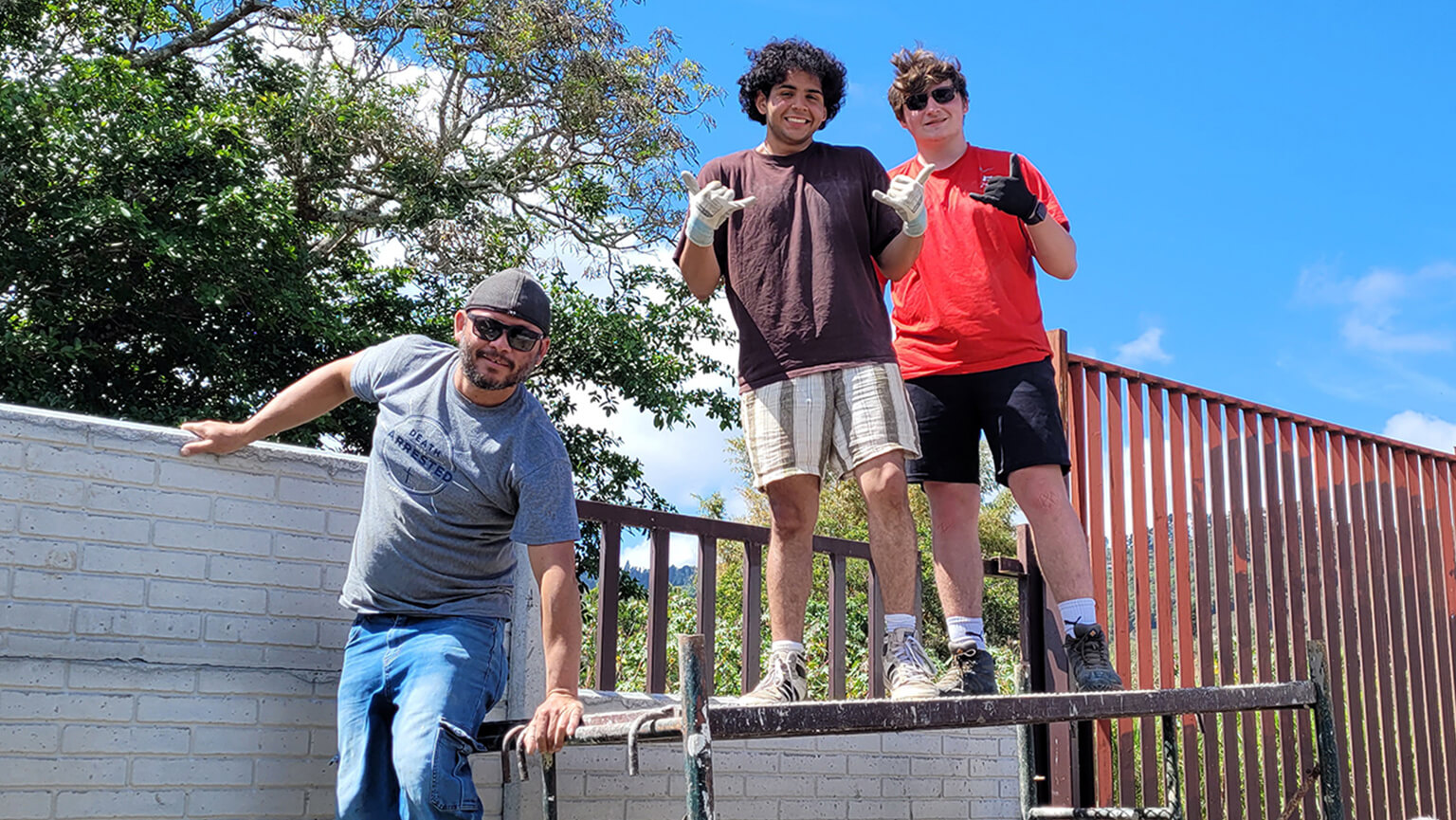
A service-immersion trip to Costa rica challenged Fairfield students to use their engineering skills to build, solve problems, and make a lasting impact.
Handmade wooden mugs, local coffee beans, chocolates— these were the physical mementos of a week of service, growth, and community, tucked into the suitcases of Fairfield undergraduates returning home from a life-changing Spring Break experience.
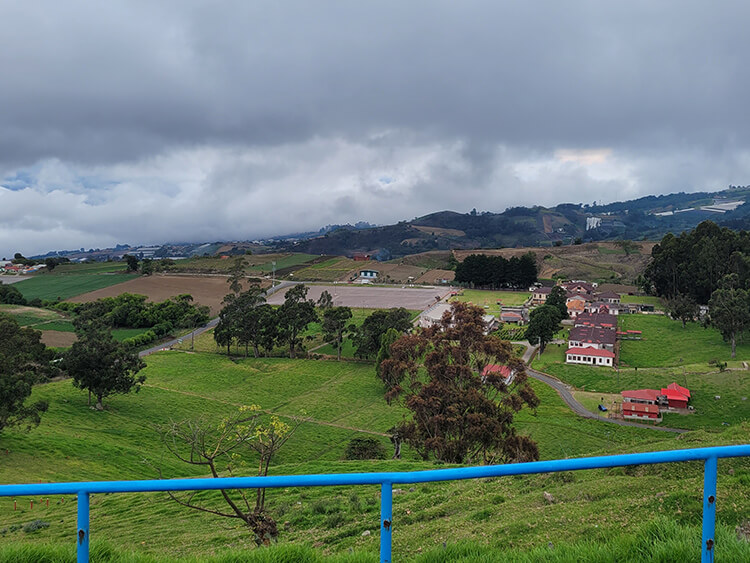
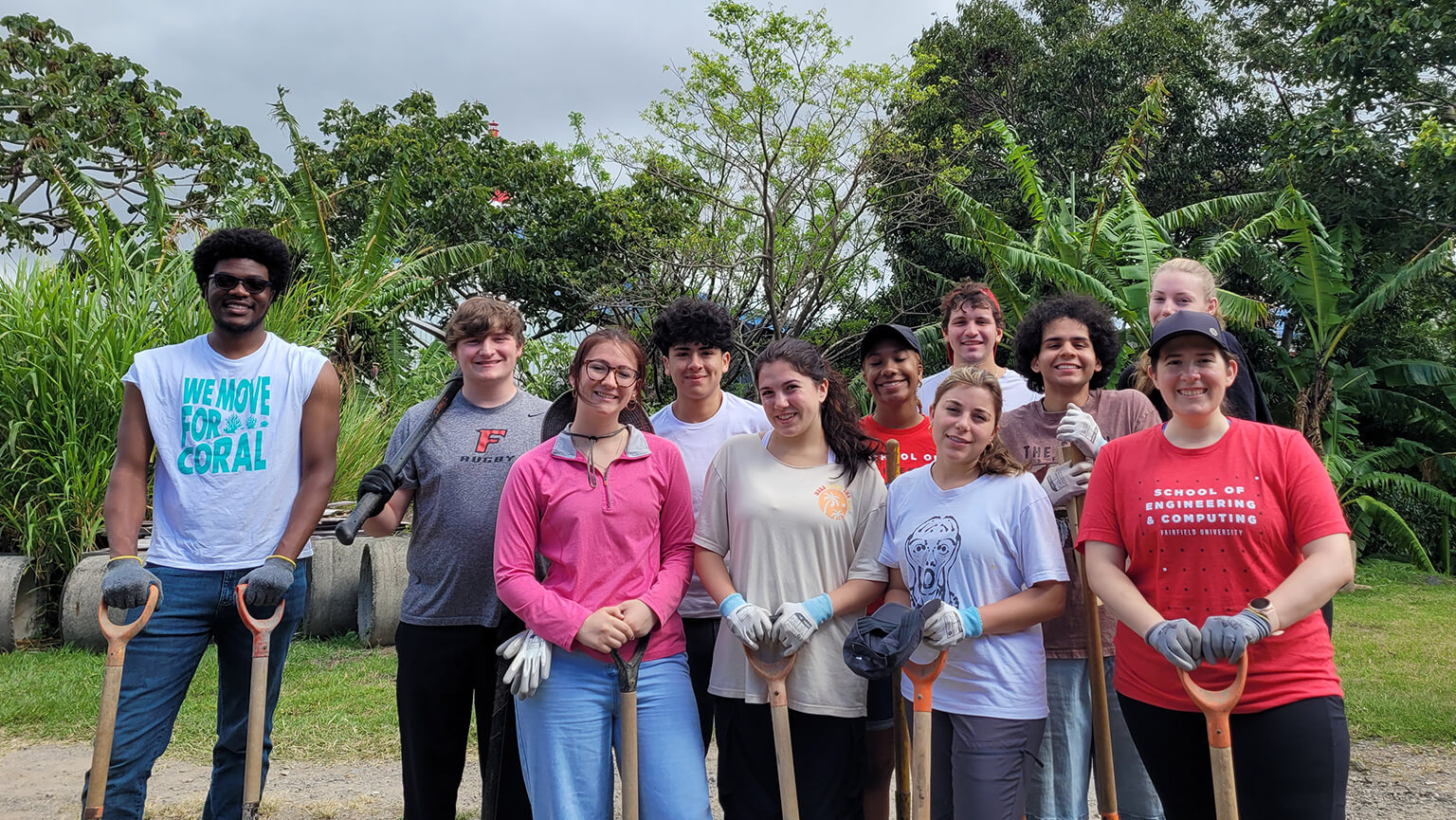
Ten mechanical, biomedical, and electrical engineering students from Fairfield’s School of Engineering and Computing journeyed to San José, Costa Rica, on a service-immersion trip. Among them was Caroline Gardner ’28, a biomedical engineering major with a minor in humanitarian action. As president of Fairfield’s Engineers Without Borders (EWB) Club, Gardner had been looking for an experience that would lean into cultural immersion, build on the momentum of the growing EWB Club, and provide a way for engineers at Fairfield to give back.
“I think it is especially important for engineers at Fairfield to have the opportunity to apply some of our skills through service, particularly with our Jesuit mission,” Gardner said.
The group of excited, albeit nervous, engineers departed for Costa Rica knowing that they would be volunteering on a construction site—they’d specifically chosen the trip and destination because it offered hands-on engineering project work—but they had no idea the actual tasks or scope of work they might be assigned. Although a few had experience with basic construction, most were simply ready to get their hands dirty and to help others.
The days began around 6:30 a.m. in the home of the host family where students stayed. The mother of the family prepared a traditional Costa Rican breakfast each morning, usually rice, a protein, fruit, coffee, and juice, before the group boarded a bus to the worksite.
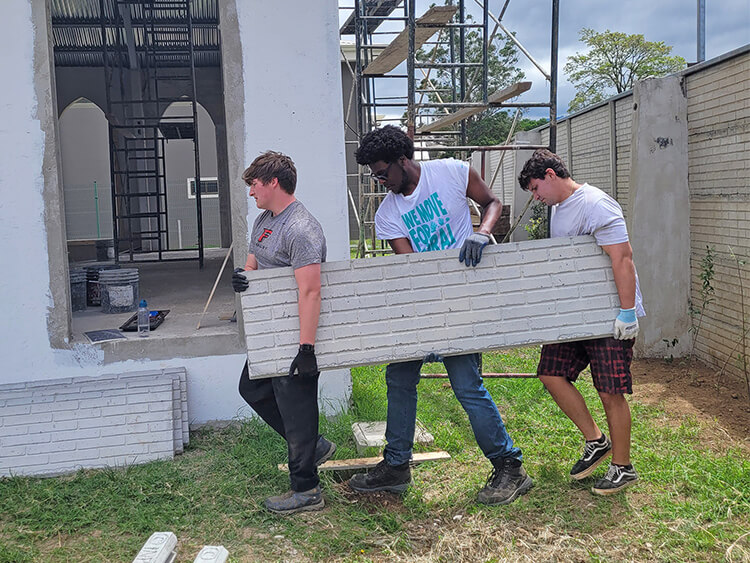
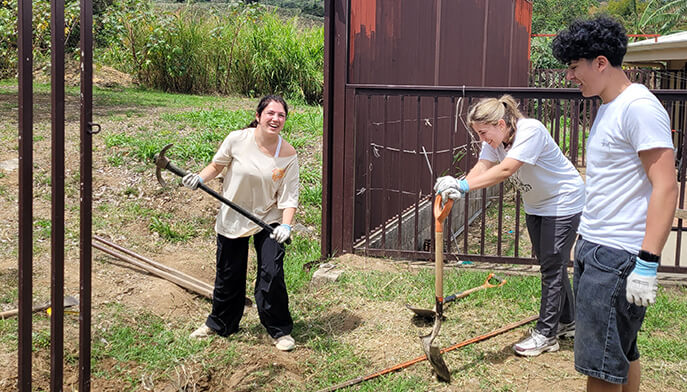
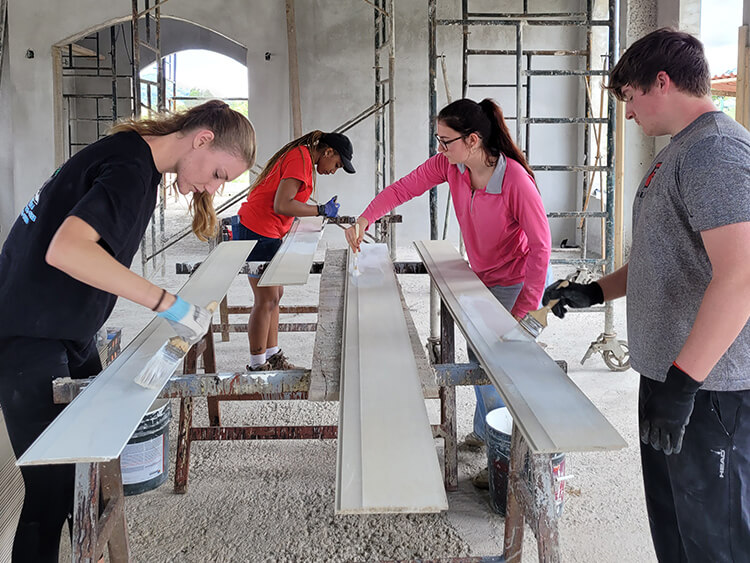
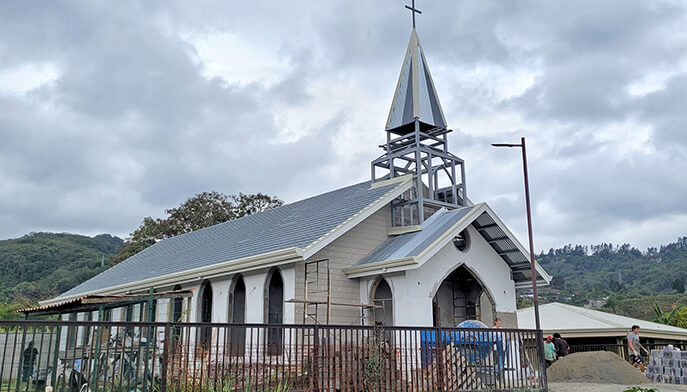
Volunteering alongside local staff, students contributed to construction projects on the campus of Proyecto Bethany, an organization that provides housing, childcare, and community resources to single mothers pursuing an education. They helped install drainage systems, painted church siding, carried roofing materials, and completed a concrete wall that had remained unfinished for two years.