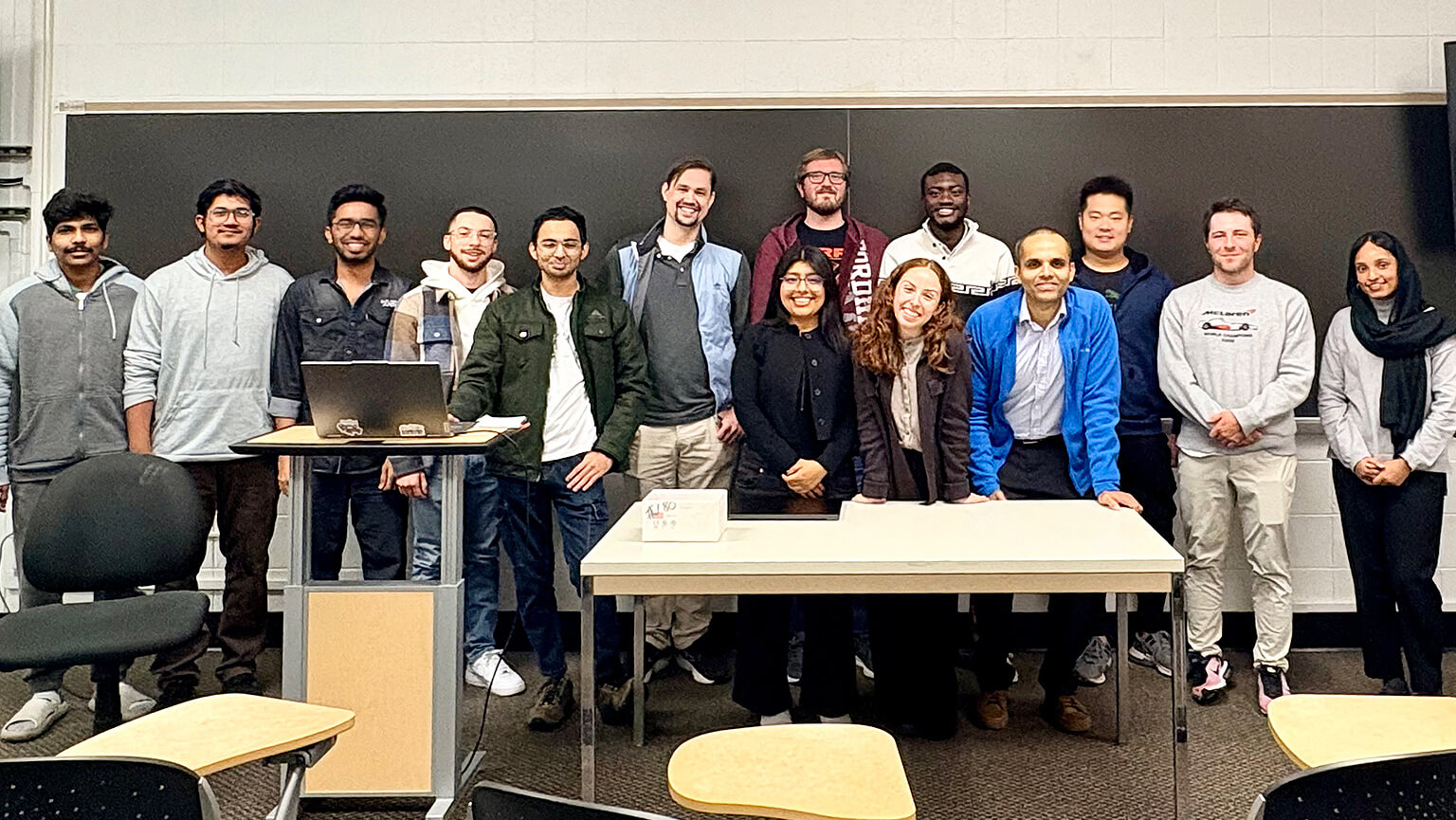
For 11 graduate students in the School of Engineering and Computing, a two-semester partnership with the City Bar Justice Center (CBJC) offered more than an opportunity to complete a capstone project. It provided hands-on experience developing technology solutions for an organization working to expand access to civil legal services.
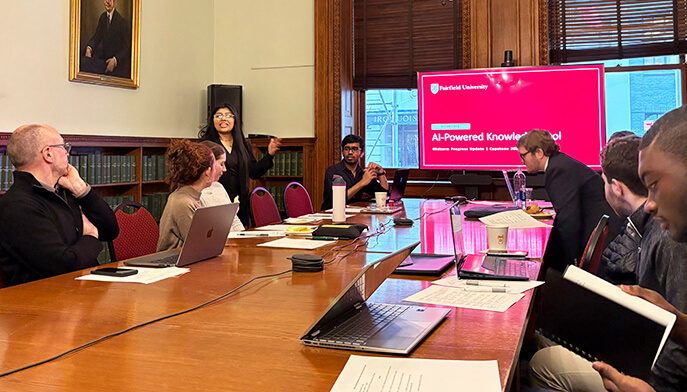
Through three projects focused on artificial intelligence, data analytics, and organizational efficiency, Fairfield graduate students collaborated directly with CBJC staff to develop tools designed to strengthen operations and improve access to legal resources for underserved communities. The software engineering and data science graduate students included Adrian Gallant, Angus Chen, Anthony Crocco, Arshad Faraz Mirishkari, James Geib, John Stow, Josue Syvelsaint, Naqibahmed Kadri, Obedur Rahman, Sania Seyal, and Venkatesh Nunna.
According to Danushka Bandara, PhD, assistant professor of computer science and engineering, the collaboration "provided students with real-world experience working with a client and delivering value on a set time schedule to the client.”
Improved Efficiency to Better Serve the Community
The students’ three capstone projects addressed needs identified by the City Bar Justice Center. One team developed a Microsoft Teams-integrated chatbot powered by Copilot to help staff access internal policies, training manuals, guides, and frequently asked questions.
A second team created a prototype for a client-facing chatbot designed to connect community members with legal self-help information and referrals to legal services.
The third project integrated CBJC’s LegalServer case management system with Microsoft Power BI to streamline data collection and reporting.
Each project relied on the students' understanding of the organization’s existing systems. “All of the projects required deep knowledge of how the CBJC systems work and how a solution could be crafted and deployed within their organizational and budgetary constraints,” Dr. Bandara said.
The work also challenged students to consider the practical costs of deploying artificial intelligence. Teams customized their AI solutions to minimize token costs and explored open-source models that were less expensive to host than proprietary alternatives.
For Anthony Crocco, collaborating at CBJC demonstrated how engineering can directly improve an organization’s ability to serve its community. “My team was in charge of integrating their case management software, LegalServer, with Microsoft Power BI,” he said. “We developed an interactive dashboard that automated data visualization like financials and other important case information to improve their ability to assess impact, track trends, and identify service gaps.” The dashboard reduced an hours-long manual reporting process to just a few clicks, allowing CBJC staff to spend more time providing legal services.
Crocco appreciated the chance to take a project from start to finish. “I feel like I gained valuable experience throughout the whole software development lifecycle," he said, "from identifying client needs to delivering a finished product and everything in between.”
Engineering for a Higher Purpose
Dr. Bandara said working with the Justice Center gave students more than technical experience. "I have personally seen these projects impact our students in positive ways,” he said. “They gained an appreciation of the type of work that CBJC and other nonprofits do and how this work impacts the community in a positive way. I believe that these projects further the social justice mission of the University as well, creating collaborations that benefit humanity.”