This past semester, associate professor of economics Helena Glebocki, PhD, led her students beyond the classroom through a community-engaged learning course that partnered with Fairfield University’s Center for Social Impact (CSI) and Our Woven Community (OWC) to support the fair-trade nonprofit’s e-commerce efforts.
Students enrolled in Dr. Glebocki’s “Fair Trade and Microfinance” class applied economic concepts to practical challenges at OWC and discovered how business tools can advance social impact.
Our Woven Community is a Burroughs program that empowers resettled refugee women by building entrepreneurial skills and pathways to economic self-sufficiency. Partnering with the Connecticut Institute for Refugees and Immigrants (CIRI), OWC provides six months of training for referred participants, leading up to a celebration of newly established artisans who receive sewing machines and supplies to continue their work from home. This model allows women to support their families while creating meaningful, flexible employment.
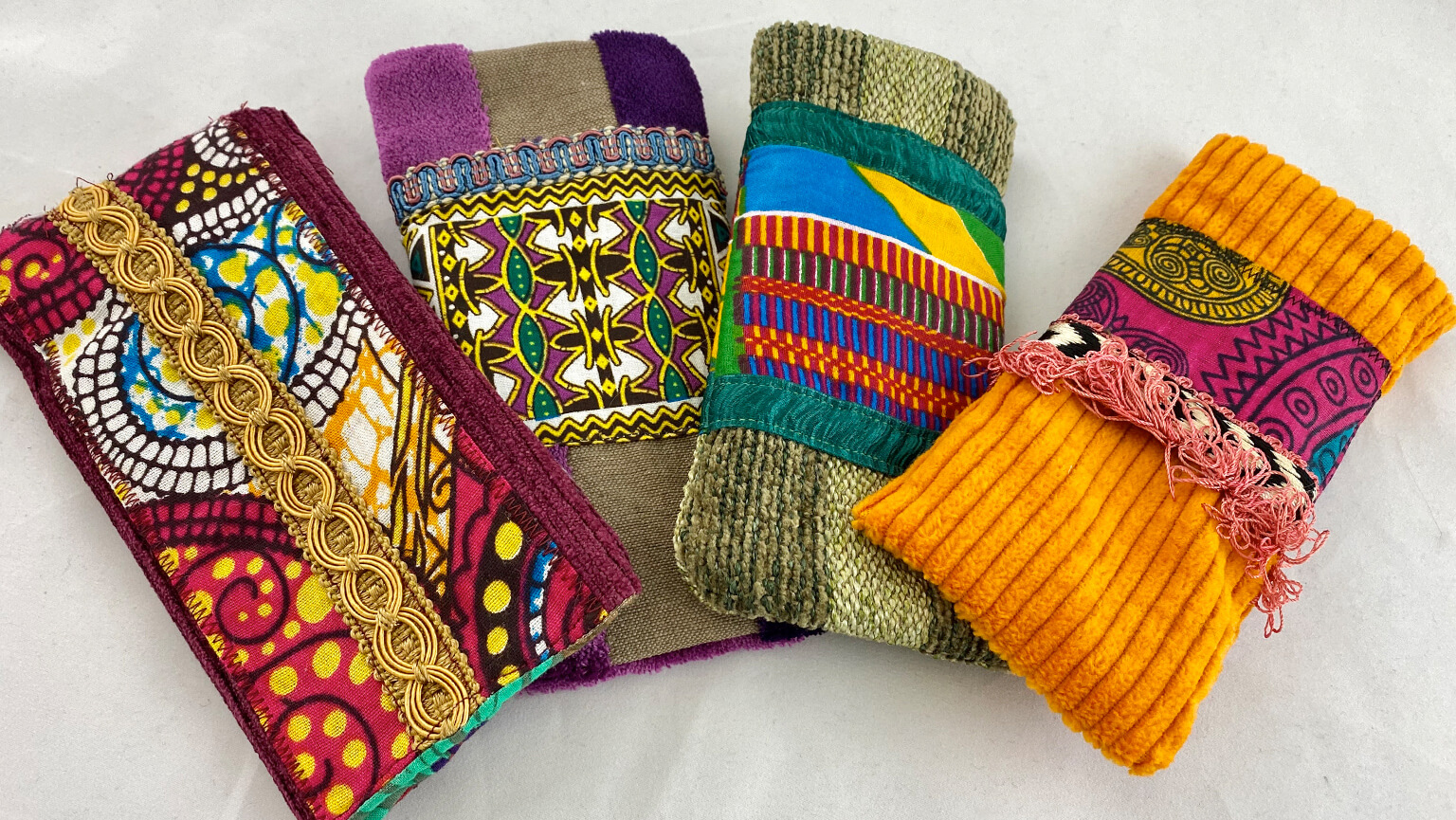
OWC artisans produce one-of-a-kind, handcrafted items—things like eyeglass cases, wallets, purses, yoga bags, computer sleeves, and belts—using donated fabrics, with each piece reflecting care, craftsmanship, and individuality.
The thread connecting OWC and Professor Glebocki’s classroom is Fairfield University’s cross-campus hub for community engagement: the Center for Social Impact. CSI plays a central role in all of Fairfield’s Community-Engaged Learning courses, working closely with faculty across all schools to design academically rigorous courses that integrate meaningful community partnerships. By facilitating relationships among faculty, students, and community organizations, CSI ensures that coursework aligns with real-world needs while creating mutually beneficial outcomes for students and partners alike.
Dr. Glebocki’s students supported OWC’s e-commerce efforts by developing social media posts, blog entries, articles, and press release templates. They created Instagram posts to highlight the artisans’ stories, promoted pop-up events, and showcased the OWC catalog.
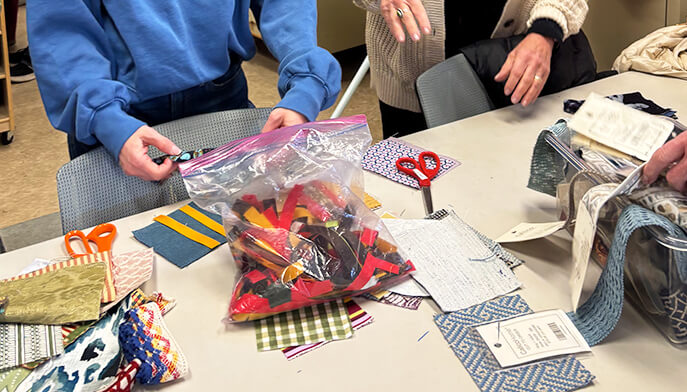
Members of the “Fair Trade and Microfinance” class also updated the OWC Shop webpage with new products available for purchase online. Students attended OWC workshops to get a firsthand look at the process of creating a unique item. During the final weeks of the semester, they wrote reflections on the personal and academic impact of the experience.