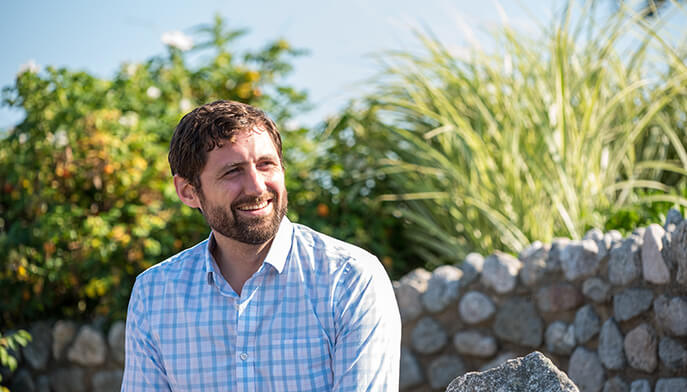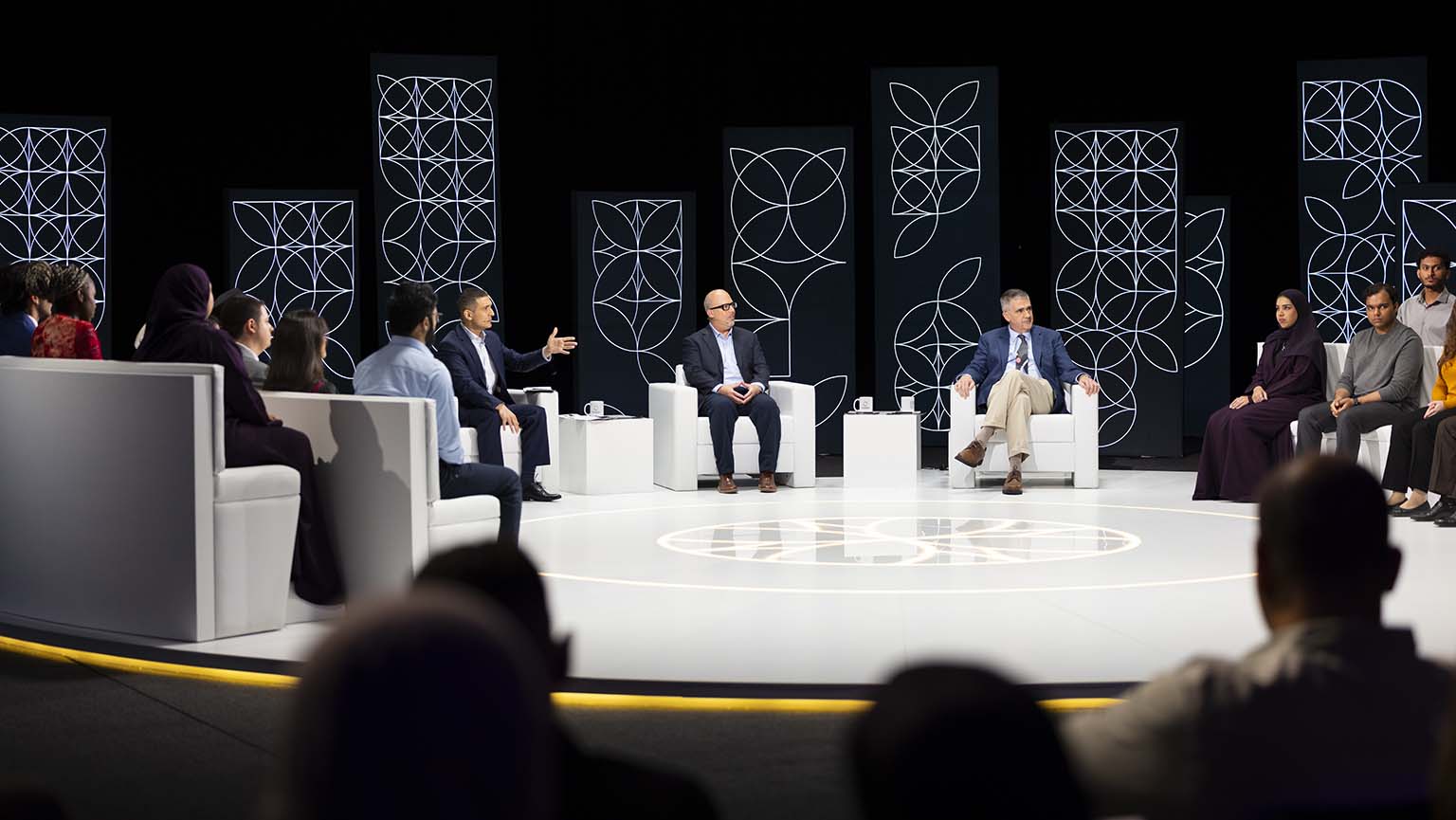
On Nov. 15, Gregg Caruso, PhD, director of Fairfield University’s Patrick J. Waide Center for Applied Ethics and professor of management in the Charles F. Dolan School of Business, participated in a sold-out town hall debate in Doha, Qatar. The debate, organized by the Doha Debates media organization, explored the question: “Do we really have free will?”
Global Dialogue
Through a global lens, the panel discussion examined the implications of free will for everyday ethics, the justice system, and forgiveness. Dr. Caruso shared the stage with Jeremy Koons, a professor of philosophy at Georgetown University in Qatar, and Omar Suleiman, an internationally recognized scholar and activist for human rights. The debate was moderated by Imran Garda, a South African journalist, and featured 20 students who engaged with the panelists and asked questions.
According to Dr. Caruso, the students asked insightful and challenging questions about the real-world implications of different views on free will—particularly as they relate to punishment, criminal justice, morality, and whether life can have meaning without free will.
“The student panel was truly amazing,” Dr. Caruso said. “The students came from all around the world and had clearly prepared for months through the Doha Debates organization. I was especially impressed by how knowledgeable and well-prepared they were; several students appeared to be very familiar with my work on free will and engaged directly with my position in thoughtful and sophisticated ways.”
Doha Debates: Conversations That Unite
The Doha Debates organization brings together experts to weigh in on pressing issues that affect individuals across the globe. According to its website, the mission of the organization “emphasizes unity over division, encouraging conversations that bring people together.”
Fairfield ethics scholar Dr. Caruso shared that participants in the “Do we really have free will?” debate discussed what accepting—or rejecting—belief in “free will” means for interpersonal relationships, moral practices, and emotional responses tied to moral responsibility—such as blame, resentment, and anger.
“For me,” Dr. Caruso said, “the free will debate has deep practical significance.” It influences how we think about blame and praise, punishment and reward, the justification of criminal justice practices, and even public policy.”
The event was recorded and broadcasted on Al Jazeera networks across the Middle East and shared via Doha Debates’ digital platforms.
While in Doha, Dr. Caruso explored the region’s innovative educational research initiatives in a private tour of the Qatar Foundation Headquarters and Education City, a campus that houses eight universities—including branches of Texas A&M, Carnegie Mellon, and Georgetown—as well as research institutes and global partnerships.