On Friday, Oct. 2, award-winning solo performer Tim Miller visited Fairfield University to share his work and creative process with students through a workshop, lunch conversation, and performance.
The University-wide opportunity brought together 18 students interested in theatre, performance, and the ways artistic practice can engage with lived experience. The event was sponsored by the John Charles Meditz College of Arts and Sciences’ Arts Institute, the Women, Gender, and Sexuality Studies program, the Visual and Performing Arts program, and the Theatre program.
“It was wonderful to host Tim Miller for a Theatre and Social Justice workshop at Fairfield University,” said Sean F. Edgecomb, PhD, director of the Arts Institute and Theatre program director. “Miller, a world-famous solo performer, was inspiring to students and engaged them through challenging questions and active performance exercises.
This hands-on, high-energy approach made the experience especially rewarding. Miller’s workshop proves that theatre offers a powerful space to explore questions of identity, equity, and social responsibility.”
Connecting Students With Contemporary Artists
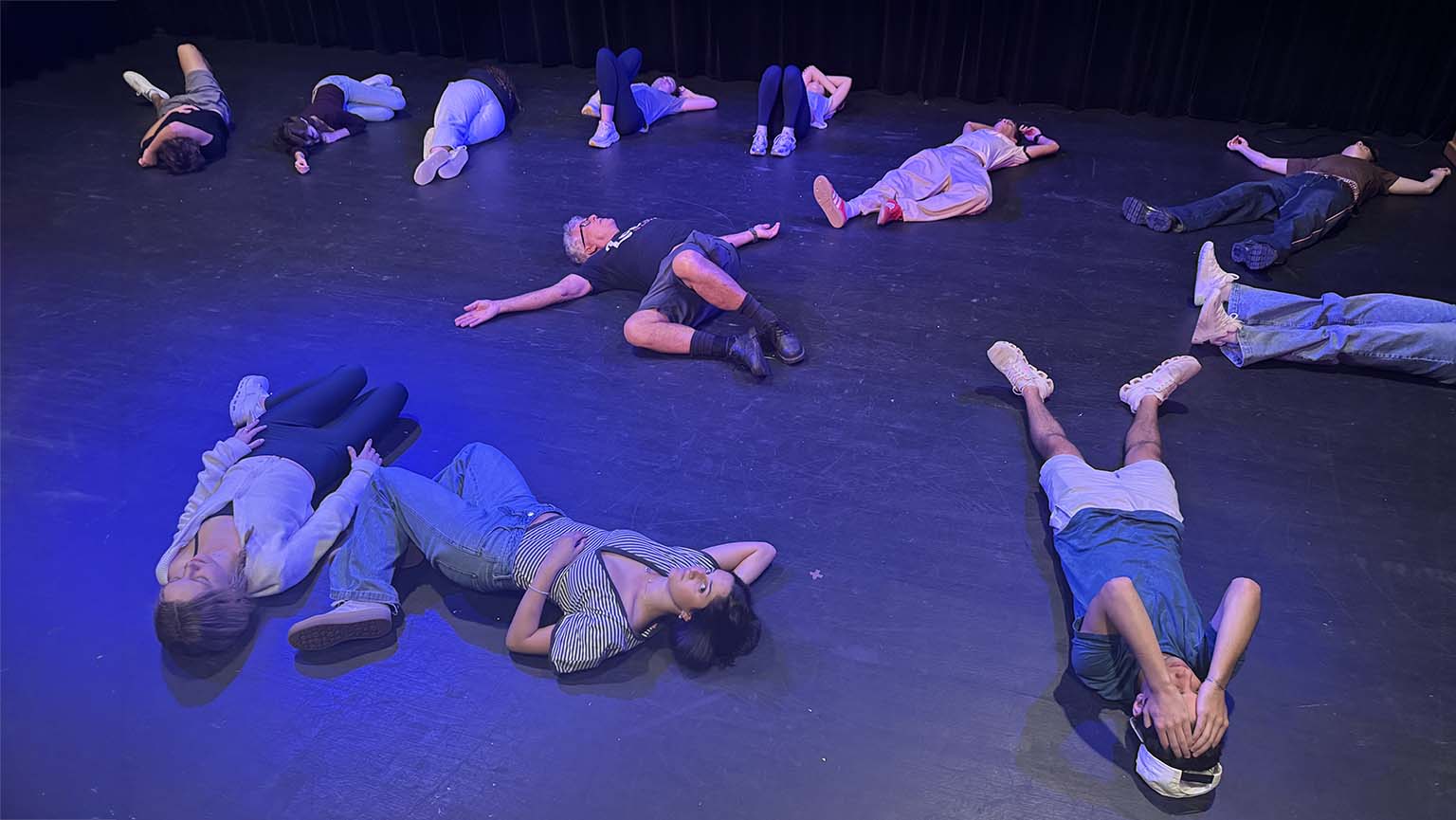
During the workshop, Miller led students through exercises exploring the body, movement, storytelling, and performance. One exercise asked students to run across the room as though they were playing soccer while imagining that the ball was on fire and they were being targeted by drones.
For Diego Andrés Ramos Rivera ’30, a triple major in digital journalism, international studies, and Spanish, with a minor in Latinx, Latin American, and Caribbean Studies, the experience offered a new perspective on the stories he has to tell.
“My biggest takeaway from working with Tim Miller was understanding that our life experiences are the stories we are the only ones able to tell,” Ramos Rivera said. “We have so many stories and we do not know the impact that they may have on other people.”
The opportunity to work directly with a professional artist aligns with the Arts Institute’s mission to bring the arts into students’ experiences, both inside and outside the classroom.