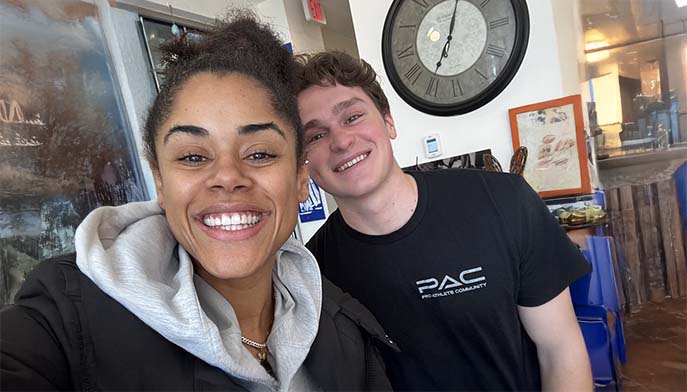
For Lanyon Henwood ’25, the transition from college athlete to life beyond competition is not just personal, it is professional.
A former rower on Fairfield’s men’s crew team and now a graduate student in the Industrial-Organizational Psychology program in the John Charles Meditz College of Arts and Sciences, Henwood is completing his graduate fieldwork experience with the national Pro Athlete Community (PAC), a career-focused private membership platform designed to support professional athletes as they navigate life after sport.
Real-Work Experience
At PAC, Henwood contributes to initiatives focused on leadership development, member experience, and organizational growth. His project-based work ranges from building internal competitor repositories to helping design leadership coaching frameworks and structured member journey maps.
“I’ve been able to apply so many IO psychology concepts,” Henwood said. “Especially in leadership development, motivation, behavior change, and program evaluation.”
One of his primary projects involves helping PAC move beyond traditional self-report assessments. Instead of relying solely on surveys, Henwood contributes to designing systems that incorporate feedback loops, engagement strategies, and structured coaching models to better capture growth and performance over time.