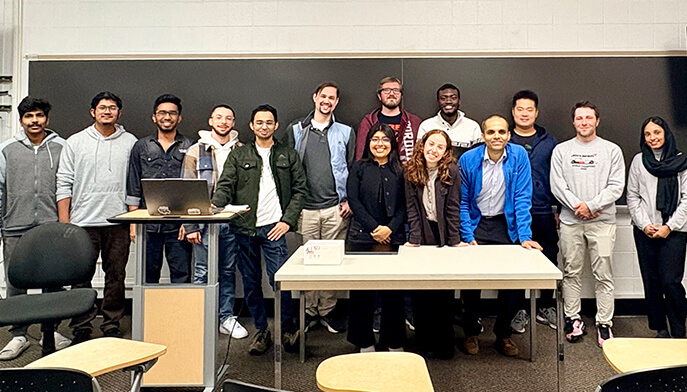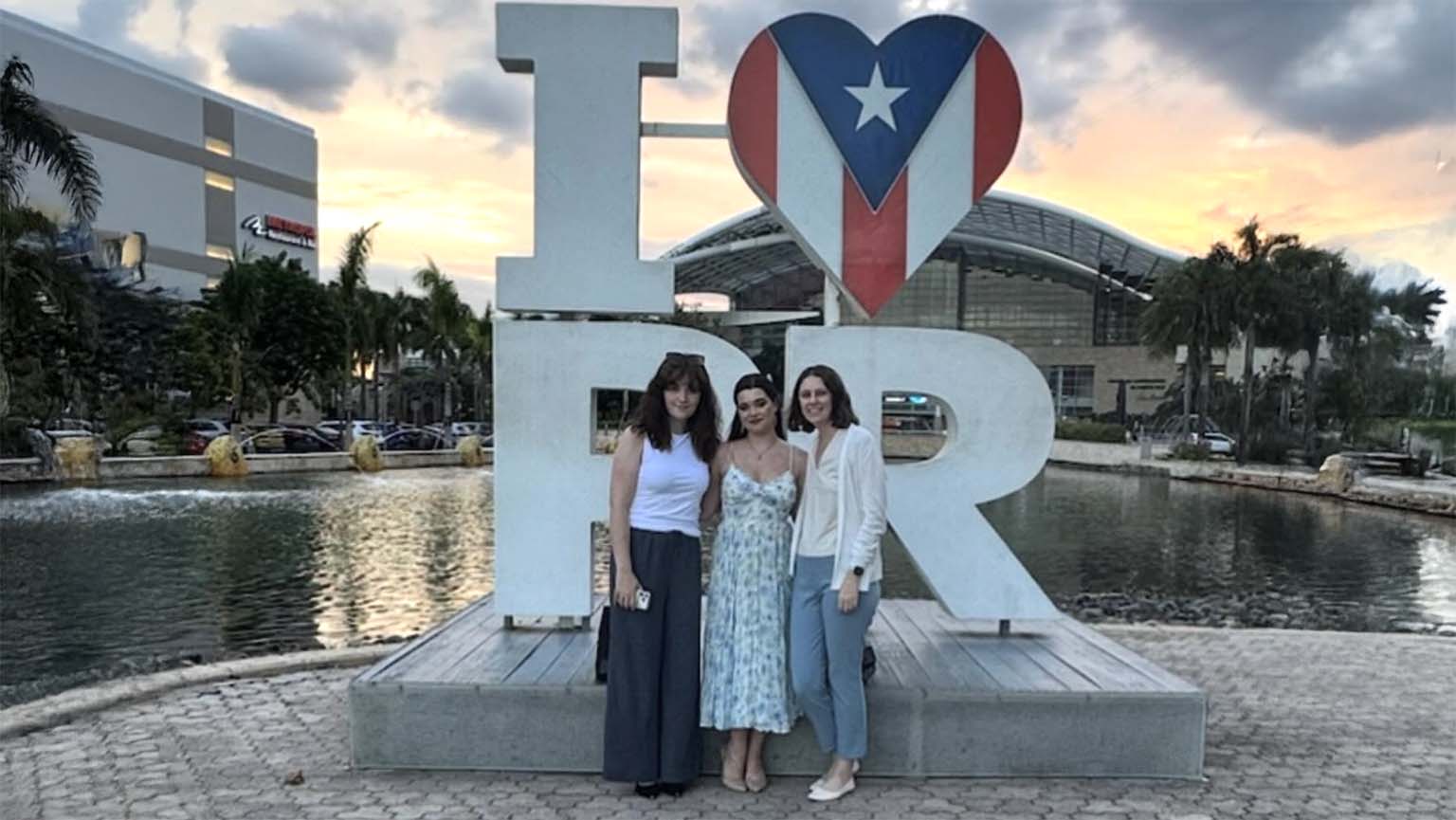
This fall, Katharine Gutkoski ’26, Elizabeth Morin ’26, and Sophia Cossitt-Levy ’27 from Fairfield University’s Women, Gender, and Sexuality Studies (WGSS) program in the John Charles Meditz College of Arts and Sciences presented original research at the National Women’s Studies Association’s (NWSA) Annual Conference in San Juan, Puerto Rico. The conference drew more than 2,300 scholars, activists, and students from around the world.
“Fairfield’s WGSS majors and minors represented our program at a workshop designed to create an AJCU solidarity network,” said associate professor of English Shannon Kelley, PhD. “They joined faculty from John Carroll University, the University of Scranton, Gonzaga University, and Loyola University Marymount. Because of their participation, Fairfield remains closely connected with Jesuit women’s studies faculty from across the nation.”
Cossitt-Levy, a double major in creative writing and WGSS, presented research inspired by a Victorian Poetry course taken in fall 2024. Her project, titled “The Rossettis and Elizabeth Siddall: A Debate on the Artist, the Muse, and the Dead Woman,” examined poetry by Dante Gabriel Rossetti, his sister Christina Rossetti, and Elizabeth Siddall, who was both Rossetti’s muse and wife. Through close readings of their work, Cossitt-Levy explored how the poets appear to engage in a literary conversation about the artist–muse relationship and the ways power and control often shape women’s roles within that dynamic.
“Their poems seem to function as a conversation about whether or not the artist and muse relationship is a harmful one, and their work speaks to the control men often have over women in these situations.” Cossitt-Levy said. She added that once she noticed this dialogue unfolding across the texts in class, she felt compelled to explore it further through research.
WGSS and theatre double-major Gutkoski presented her research, “Cafeteria Catholicism: Picking and Choosing What Teachings Matter,” which examined policies related to contraception and gender-inclusive housing across 28 Jesuit colleges and universities.