Biology Students Dive Into Marine Ecology at Shark Lab in Bimini

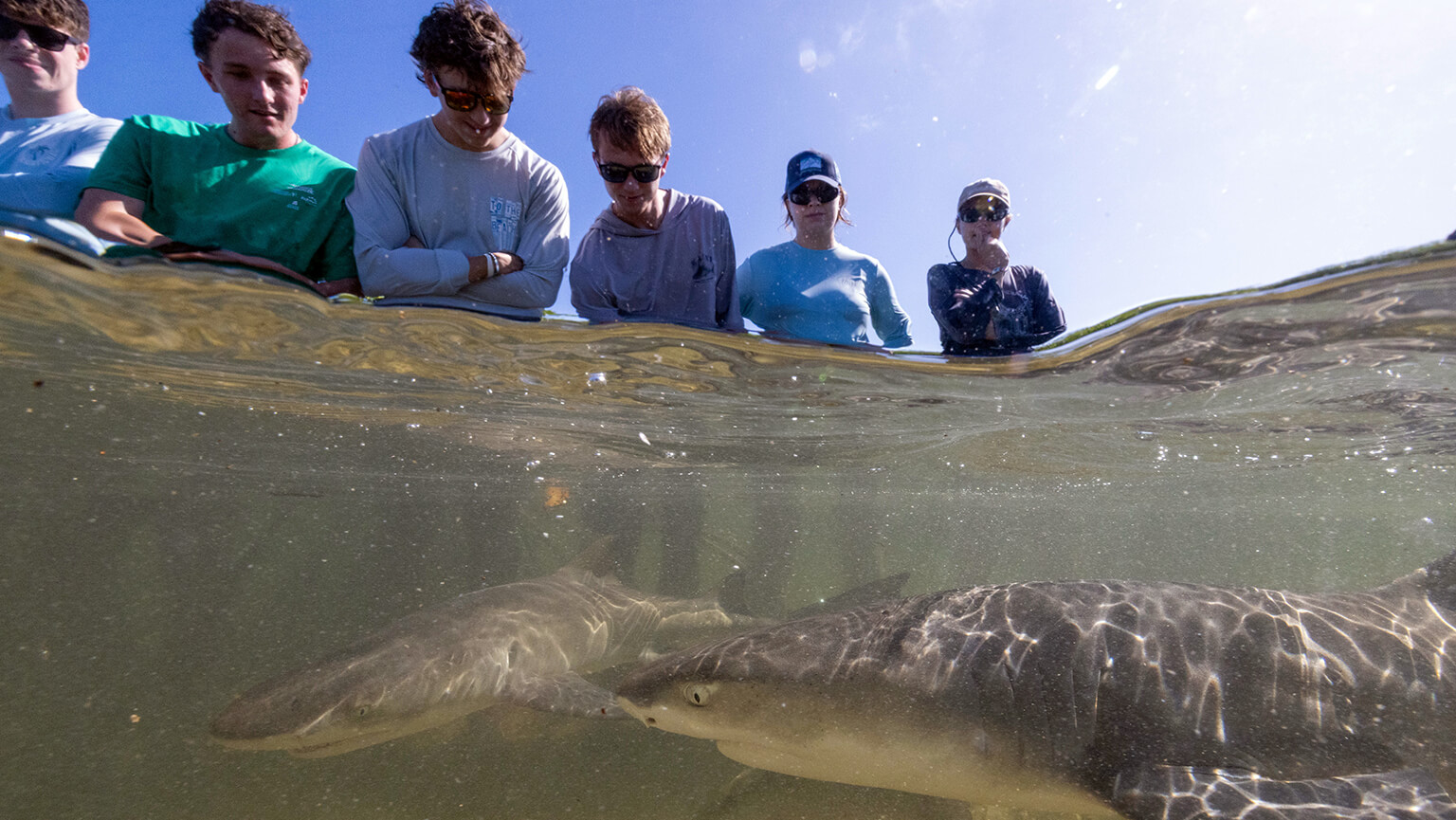
Split-level photo shows six students peering into clear blue water as lemon juvenile sharks swims below, with sunlight rippling across its back.
The students saw lemon juvenile sharks in one of the nursery habitats.
By Sara Colabella EdD’26

This summer, biology students in the  John Charles Meditz College of Arts and Sciences traveled to the Bahamas for an immersive field course at the renowned Bimini Biological Field Station. Classroom concepts came to life through firsthand encounters with sharks, stingrays, coral reefs, mangroves, and seagrass beds.
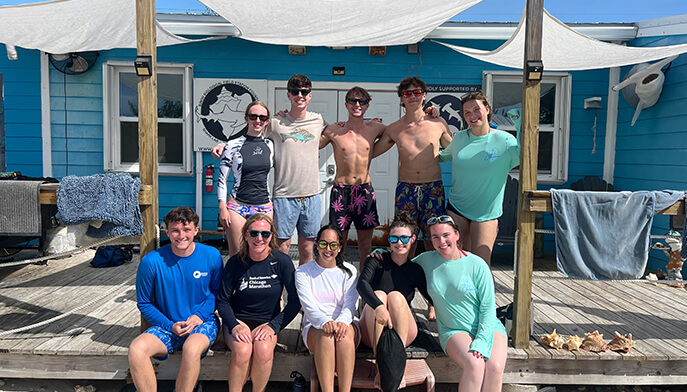
Smiling group of ten students pose on a sunny waterfront dock beside a blue beach house, wearing casual summer clothes and swimwear.
The group spent the week at the Bimini Biological Field Station in the Bahamas.

Led by Shannon Gerry, PhD, professor of biology, the weeklong program introduced students to tropical marine ecology through lectures, snorkeling excursions, and visits to a variety of marine habitats. Biology students included Sofia Carniglia ’27, Aidan Chapron ’28, Katelyn May ’28, Kendell Murray ’27, Cooper Penberth ’27, Tyler Russell ’28, Matthew Shattuck ’28, Kiera Stevenson ’27, and Jacqueline Sweeney ’27.

Developed in partnership with Global Fairfield, the course was designed to provide biology majors with a unique study abroad opportunity that combines field-based learning with cultural exploration.

For Dr. Gerry, the experience was especially meaningful. Twenty-five years ago, she interned at the Bimini Biological Field Station and was eager to share the adventure with Fairfield students.

"I wanted students to experience the same sense of wonder and discovery that I felt when I was there," Dr. Gerry said.

Students spent their mornings learning about topics such as shark ecology, fisheries management, and tropical marine ecosystems before heading into the field to observe those concepts firsthand. A lesson on lemon sharks, for example, was followed by a visit to the mangroves, where students observed juvenile sharks in one of the species' most important nursery habitats.
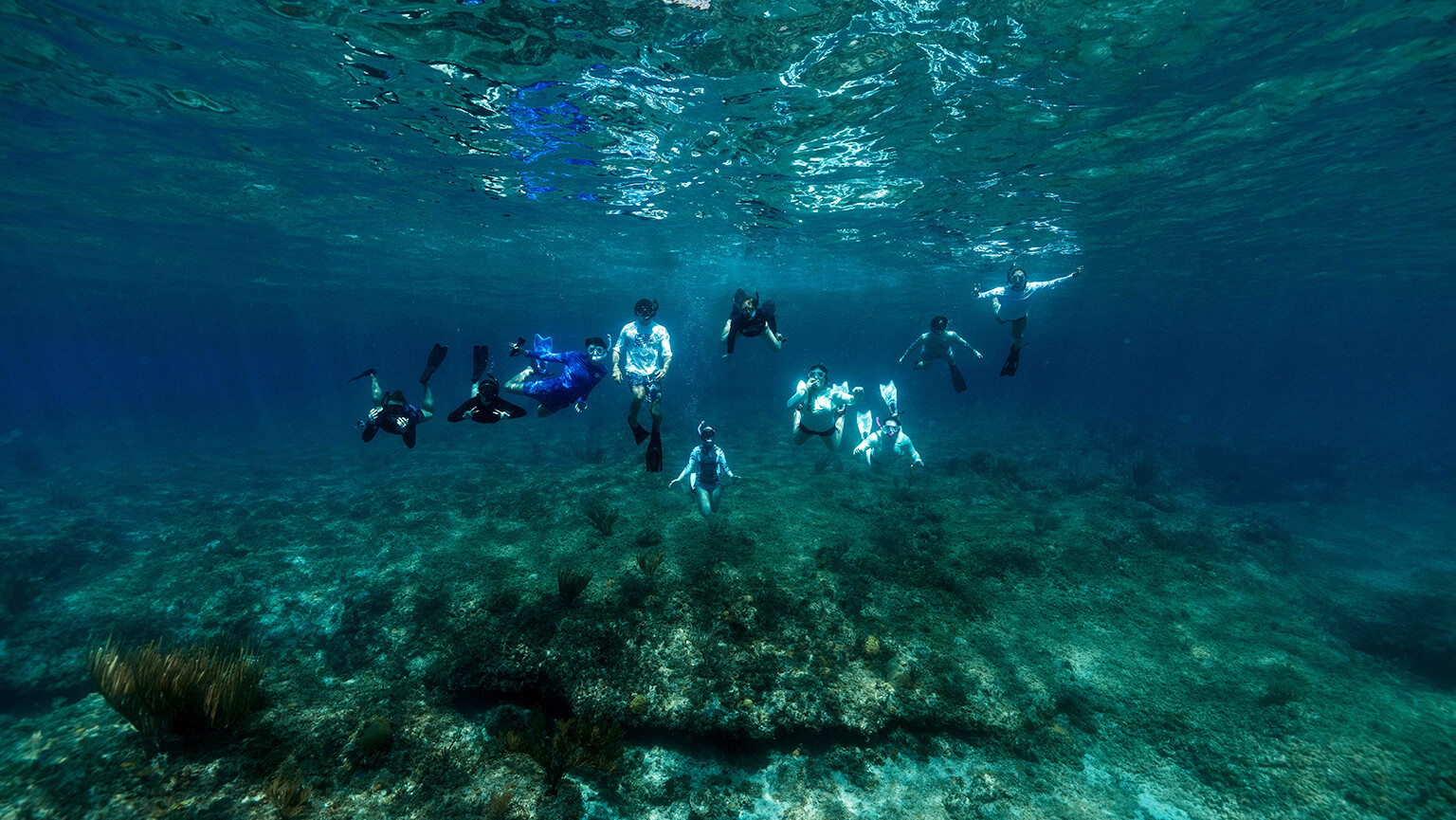
"Students would learn about the research that had been done at the Shark Lab on lemon sharks and then stand in the mangroves to observe the sharks swimming and feeding behaviors," Dr. Gerry said. "There are not many courses where you can immediately apply what you have learned in such a direct way."

For biology major Kiera Stevenson ’28, the experience provided valuable insight into a potential career path. "I am very interested in working with animals in the zoological field for my future career, but I am not sure what animals or field I exactly want to work in," she said. "This trip not only spoke to my interests but also served as a way for me to experience field research and a potential career path for me."

Among the highlights of the trip was a visit to Honeymoon Harbor, where students interacted with wild stingrays and several species of sharks. The experience also helped students develop a greater understanding of sharks and other marine life that are often misunderstood.

"Learning about the sharks beforehand and then being able to observe them naturally helped increase my understanding of these animals," said Stevenson. "Being able to learn about them and see them in the wild helped me appreciate them more. They are not mindless killing machines, but rather intelligent animals with incredible adaptations and behaviors."

In addition to marine science, students explored the culture and environmental challenges of the Bahamas, gaining insight into the role ecotourism plays in local communities and conservation efforts.

For Stevenson, the experience reinforced the importance of environmental stewardship while opening her eyes to new possibilities within the field of biology.

"This experience showed me how interesting, unique, and special marine life is, especially sharks," she said. "Going on this trip opened my eyes to the possibility of pursuing marine biology as a career and studying marine life."

Dr. Gerry said one of the most rewarding aspects was watching the students come together as a group and fully engage with their shared experiences. “They all worked together, supported one another, celebrated triumphs. Even on bumpy boat rides or a swarm of jellyfish stings, they were always smiling.”

Related Stories