Showing the Way to God

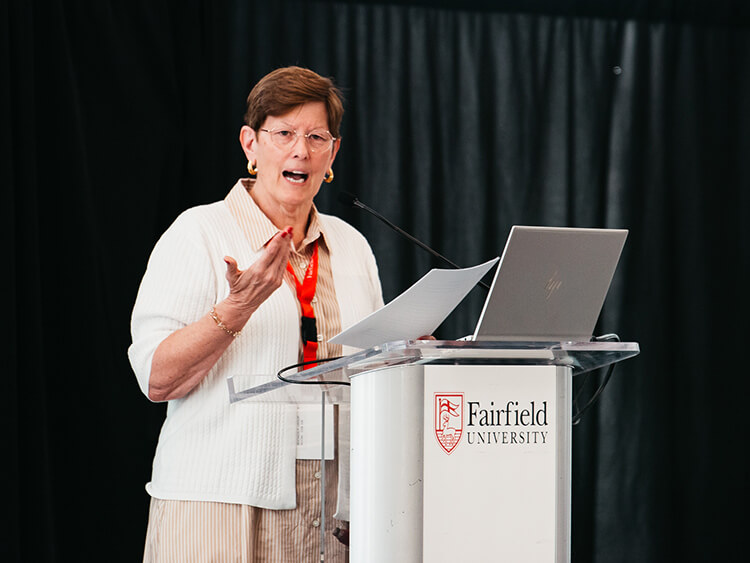
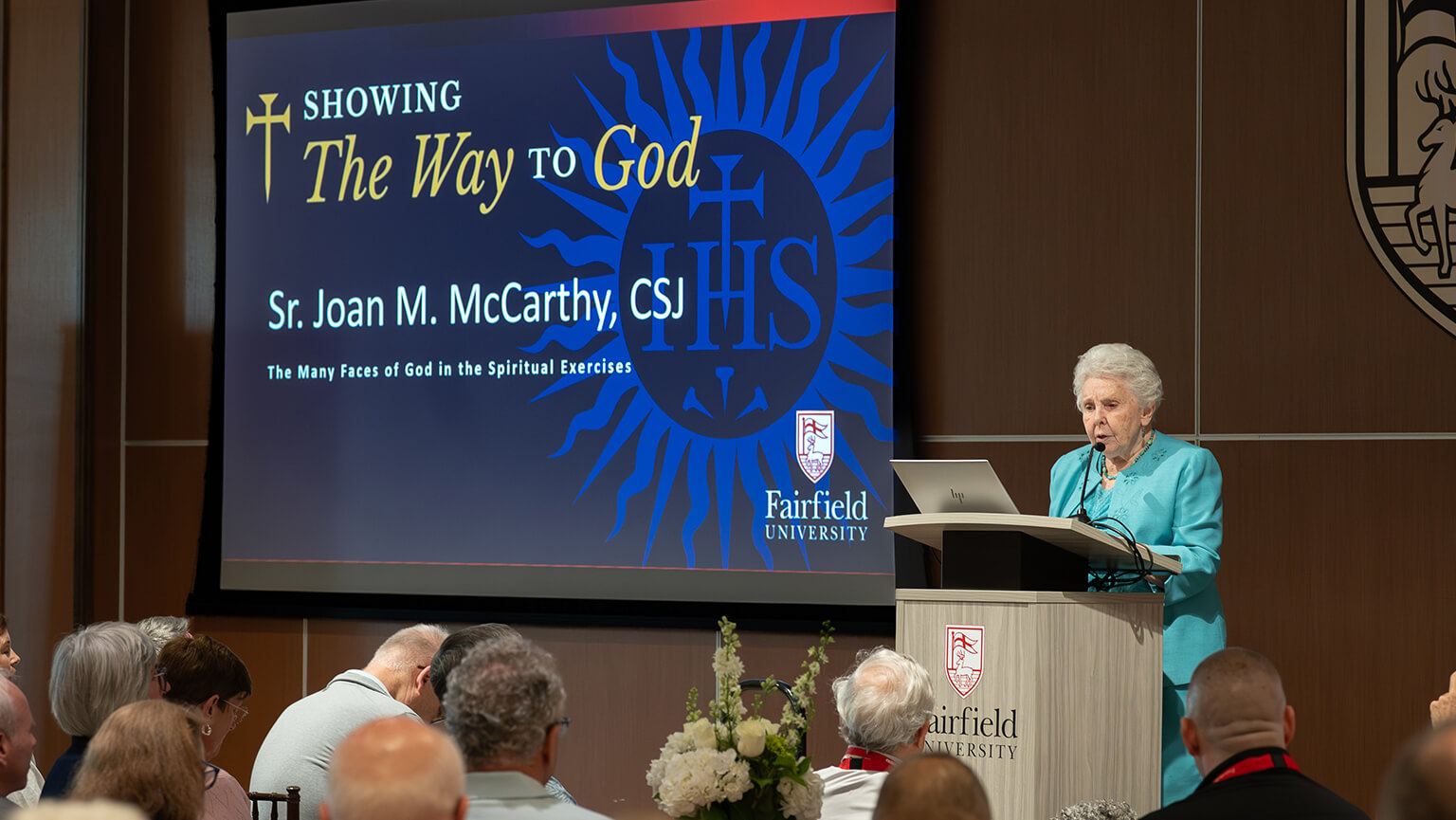
Sr. Joan McCarthy, CSJ presents a lecture titled “The Way to God,” featuring blue religious imagery, while seated attendees listen in a warm auditorium.
Sr. Joan McCarthy, CSJ, spoke of “the many faces of God” in her keynote address.
By Jeannine (Carolan) Graf ’87, MFA’25

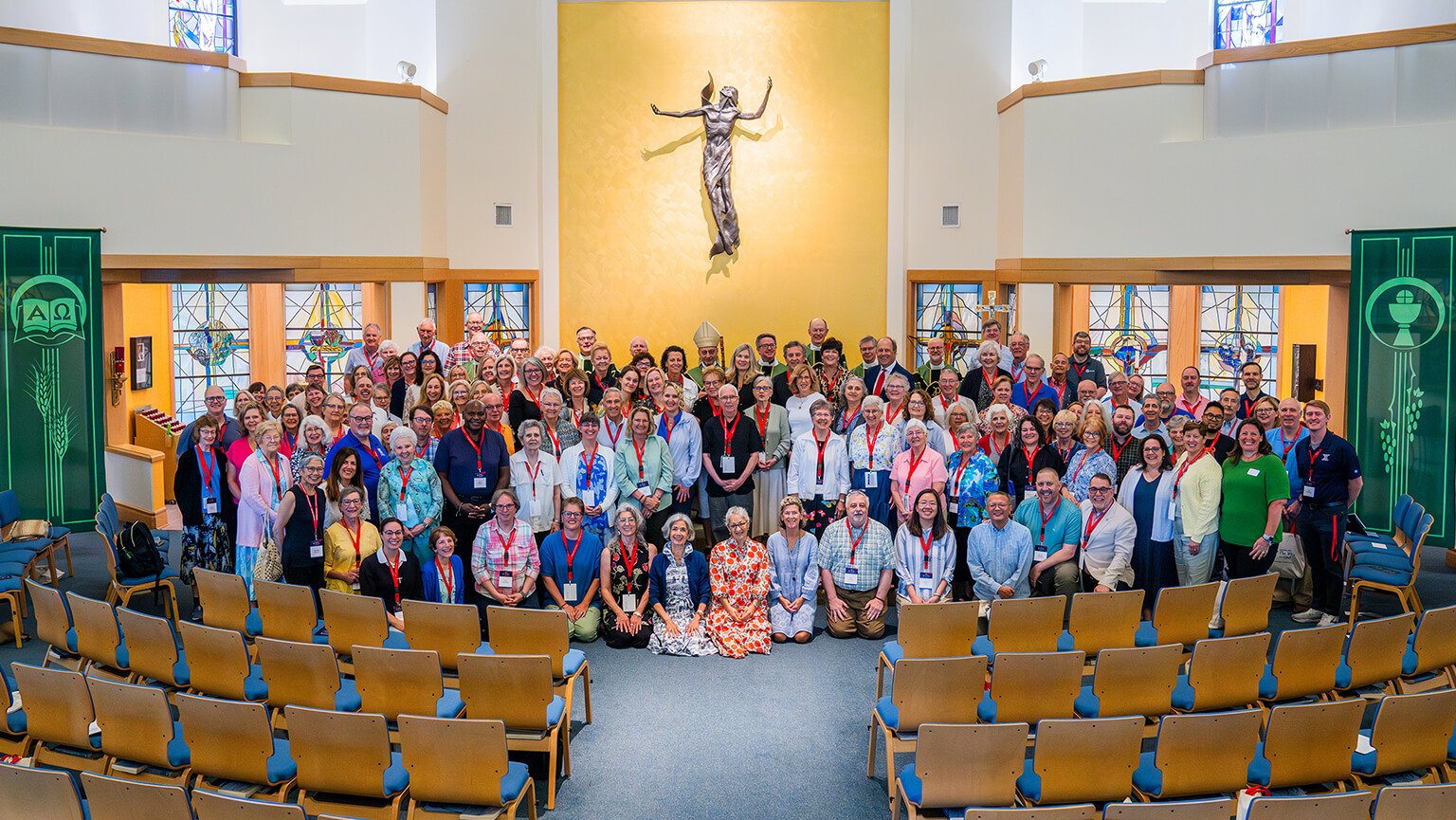
Spiritual directors gathered for a national conference at Fairfield University in June to reflect on their shared ministry, gain new perspectives, and strengthen the call to accompany others toward God.

Gratitude

Gratitude lies at the heart of the Spiritual Exercises of St. Ignatius of Loyola—a series of guided prayers, meditations, and reflections developed by St. Ignatius to help people deepen their relationship with God and discern how they are called to live. This practice of recognizing God’s gifts and responding to them in love and service set the tone for the 170 spiritual directors who traveled from Canada, Italy, 27 states, and the District of Columbia for the Murphy Center for Ignatian Spirituality’s weekend conference, Showing the Way to God, in June.

“We come from Jesuit Universities, secondary schools, spirituality centers, and parishes,” noted Marcy Haley, associate director of the Murphy Center, in her welcome remarks. “The enthusiasm for this gathering reflects our commitment to share the Spiritual Exercises with others. Through prayer, reflection, imagination, discernment, silence, and honest self-examination, the Exercises invite a person or people into deeper intimacy with God. How blessed are we to bear witness to this creative and awesome grace.”

In her opening keynote address, Sr. Joan McCarthy, CSJ, who, since 1973, has led hundreds of 30-day retreats across Canada, the U.S., and the U.K., noted that ministering the Exercises requires far more than professional competence.

“The director constantly weaves together attentive listening, psychological insight, familiarity with scripture, theological grounding, and the discernment of spirits,” she said. “Diffused through all of this is sacred mystery.”

Sr. McCarthy encouraged her fellow spiritual directors to not only contemplate their retreatants’ words and expressions, but to also be attentive to “the many faces of God” being revealed during the Exercises.
Illumination

Illumination in the Ignatian tradition, is a prayerful request for God to shine light on the events of the day, enabling us to look truthfully upon our encounters and how we responded. A Sunday celebration of Mass at Egan Chapel with the Most Reverend Frank J. Caggiano, Bishop of the Diocese of Bridgeport, began a day rich in content and community. Ali Famiglietti ’14, MA’21, a sound practitioner and intuitive guide, led an Ignatian sound bath meditation using quartz crystal singing bowls.

Workshop sessions presented ways that spiritual directors might improve, modify, or innovate how they guide directees. Topics ranged from reflecting on major themes of the Exercises through famous works of art to sharing the Exercises in Hispanic communities and in high school, parish, and group settings.

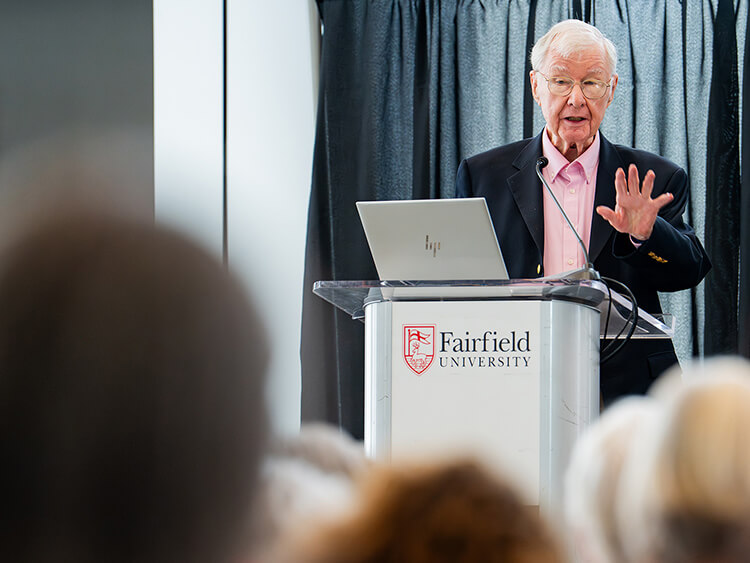
Rev. John Dardis, S.J., general counselor for discernment and apostolic planning to the Very Rev. Arturo Sosa, S.J., superior general of the Society of Jesus, traveled from Rome to attend the conference.

Fr. Dardis framed his reflection around three words—liberation, passion, and imagination—that capture what the Spiritual Exercises can offer the world today. In an age when ideologies and cultural forces can constrain human freedom, distort desire, and narrow our sense of possibility, he presented the Exercises as a way of recovering a fuller, more authentically human life.

“Surely it’s all about liberation,” Fr. Dardis said, quoting a psychologist friend. “Becoming more human like Jesus, the authentic human person.”

One conference participant summed up the graces of the day as follows: “We’re here doing what Christ and Ignatius and Pope Francis taught us to do, which is to have encounters and be curious, knowing that to see the light of God in another person is to see the face of God.”

Examination

Examination or a deliberate recollection of the day’s events, is how St. Ignatius encourages us to notice significant moments in which our relationships with God, others, and ourselves become clearer. During the conference, presentations about adapting the Exercises to confront societal issues and making them accessible to people across faith traditions sparked that spirit of attentive awareness.

Rev. Brian McDermott, S.J., special assistant to the president of Georgetown University, offered a reflection titled “America’s Original Sin of Racism and the Spiritual Exercises.” In it, he described a weeklong group retreat that emerged through communal discernment in the wake of George Floyd’s murder. Through seven iterations of this adaptation of the Spiritual Exercises, more than 100 participants in the D.C. area have examined racism and white privilege through prayer, honest conversation, and vulnerability.

“God is in love with us, not because of who we are but because of who and what God is,” said Fr. McDermott. Only by asking for the grace to experience that love at the outset of the retreat, he said, are participants able to develop the spirit of trust “that allows them to be appropriately vulnerable and honest with one another.”

Rev. Kevin O’Brien, S.J., founding vice provost and executive director of Fairfield Bellarmine, and Erin Cline, PhD, professor of interreligious studies and dialogue at Georgetown, co-presented a keynote on how the Spiritual Exercises might be shared with people of non-Christian faith traditions. Noting that 500 years ago, St. Ignatius instructed spiritual directors to respond to the circumstances, abilities, and needs of the person before them, Fr. O’Brien emphasized that adaptation has always been part of the Ignatian tradition. “Freedom is the central grace of the Exercises,” he said. “For me, everything revolves around that grace of freedom.”

Dr. Cline proposed adding a “religious tradition layer” that meets retreatants where they are, without removing the distinctly Christian character of the Exercises. She suggested directors might draw upon stories, images, or contemplative practices from a retreatant’s own tradition as bridges to unfamiliar elements of the Exercises. “This is a layer of adaptation that would allow for additions or amendments,” said Dr. Cline, “without removing entire elements or figures.” The goal, she and Fr. O’Brien stressed, is neither conversion nor a generic spirituality, but an encounter in which a director relinquishes control and allows God to work within the retreatant’s own religious experience.

Contrition

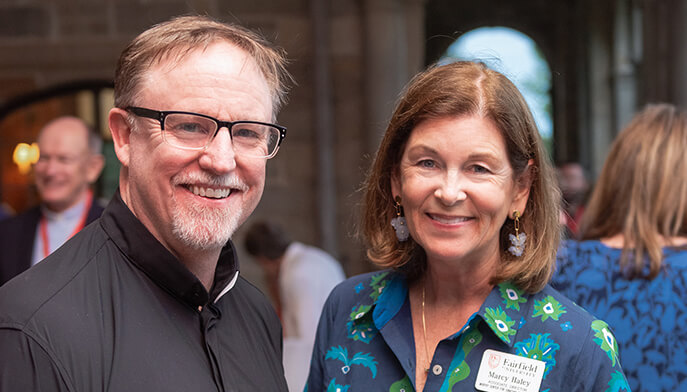
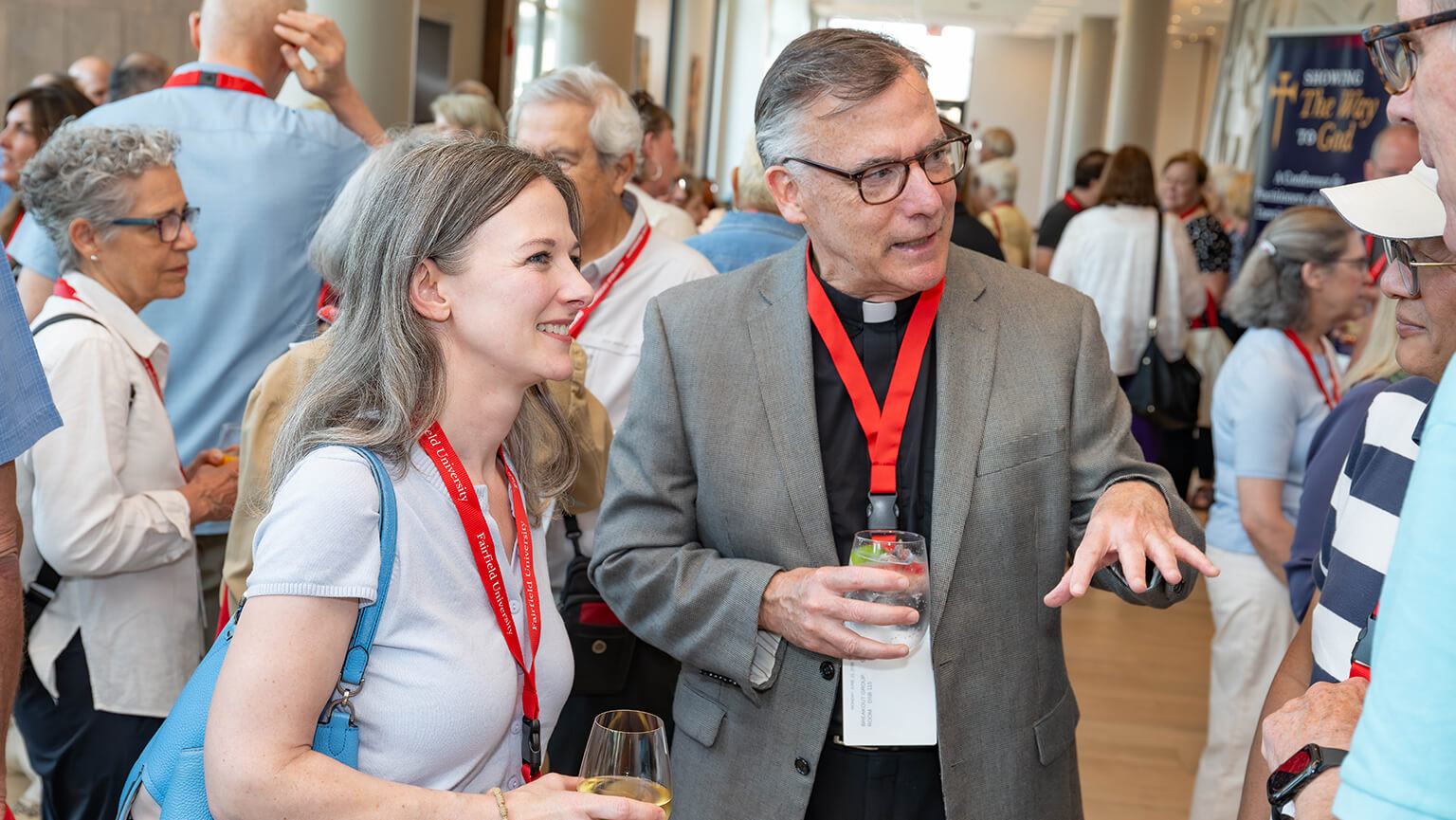
Rev. Denis Donoghue, S.J., in glasses and Marcy Haley in a blue patterned outfit pose together at a crowded indoor event, conveying warmth and camaraderie.
Rev. Denis Donoghue, S.J., and Marcy Haley hosted the first national conference of its kind from June 13 to 15.

Contrition, for directors of the Spiritual Exercises, is not self-reproach but an honest and humble awareness of the ways in which the director can get in the way of God’s work. Recognizing personal biases, acknowledging limitations, pursuing continued learning, seeking supervision, and responding to evolving pastoral needs are all essential ways in which spiritual directors must continue to grow.

Cultivating the humility to step aside and, as Ignatius taught, “to allow the Creator to deal directly with the creature,” does not mean the spiritual director is unchanged by the encounter. In the conference’s final keynote, Damian Zynda, PhD, who serves in executive Ignatian formation for the USA East Province of the Society of Jesus, reflected on the reciprocal transformation that occurs when accompanying others through the Spiritual Exercises.

“When we enter into the direction relationship, we do not stand outside it as a detached technician,” Dr. Zynda said. “Rather, we enter as a whole person—with our history, our prayers, our biases, our loves—and this affects us at every level of consciousness. Ignatius understood intuitively that the instrument of direction is not a method, but a person.”

By resisting the impulse to control another person’s encounter with God and instead remaining fully present to it, she noted, spiritual directors deepen their own relationship with God. In this sense, the humility required to “get out of the way” becomes its own path of transformation.

Hope

Hope is how St. Ignatius concludes the Examen prayer and the note upon which the conference ended. “My hope,” said Fr. Donoghue, “is that attendees carried home with them these questions: How do we, as a community, keep inviting people not only into the Exercises, but to become spiritual directors? How do we keep our community unfolding, moving forward?”

As the group gathered one final time to share the convictions they would carry forward, common themes emerged: to trust God more deeply, to remain attentive to their own ongoing evolution, and to find new ways to share the Spiritual Exercises with people of different generations, backgrounds, and faith traditions.

The spiritual directors left with new friendships and bonds, fresh insights, and shared resources. Most of all, they departed campus with the assurance that they are not undertaking this ministry alone but as part of a vast network of practitioners learning from, praying for, and encouraging one another.

Related Stories