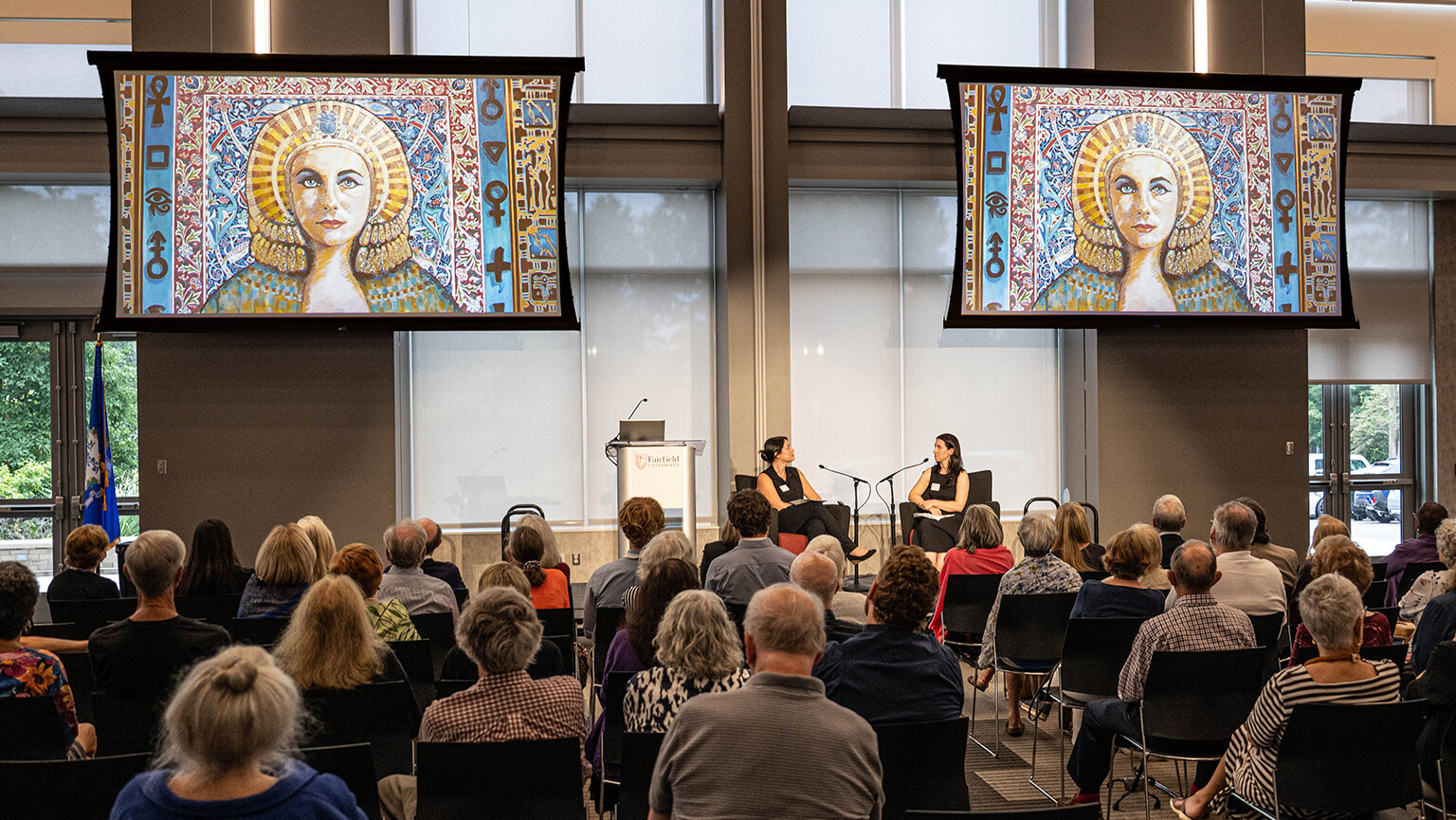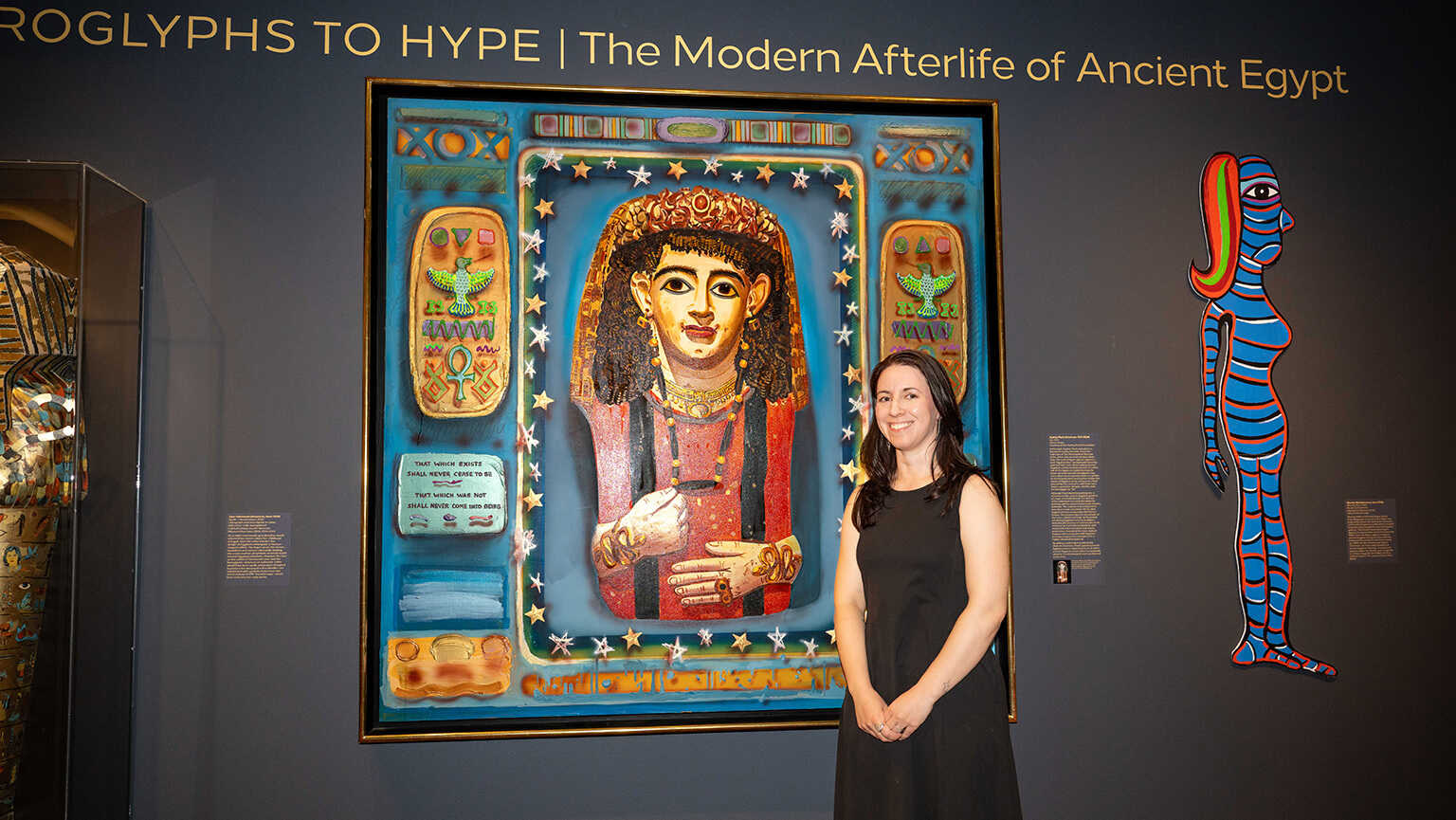
Hieroglyphs to Hype: The Modern Afterlife of Ancient Egypt, opened to the public on Thursday, Sept. 17 at the Fairfield University Art Museum's Bellarmine Hall Galleries.
The first exhibition to open on campus this fall, Hieroglyphs to Hype: The Modern Afterlife of Ancient Egypt explores the enduring fascination with ancient Egyptian art and culture (dubbed “Egyptomania” by 19th-century Europeans) through a selection of paintings, prints, photographs, and decorative art ranging from the early 19th century through the present day. These objects, from the humble to the refined, from the shamelessly commercial to the Afrofuturist, represent the range of artistic responses to—and misconceptions about—ancient Egyptian visual culture.
The exhibition examines how these objects reflect the phenomenon of “Egyptomania” over the last two centuries and positions their oversimplified or stereotypical narratives in conversation with current archaeological understandings of ancient Egyptian culture.
The exhibition is curated by Megan Paqua, Fairfield University Art Museum registrar and adjunct instructor of ancient Egyptian archaeology and art history at Fairfield, who kicked off the exhibition’s programming with an opening night conversation with Michelle DiMarzo, PhD, the museum’s curator of education and academic engagement.
Ancient Egypt as the Main Character
Paqua described "Egyptomania" as “the ongoing fascination with ancient Egypt by non-ancient Egyptians”—a shared visual language that provides a familiar point of entry into ancient Egyptian culture.
That idea helped shape her approach to the exhibition. For a work to qualify, she said “Ancient Egypt needed to be the main character. It couldn’t just be the stage where another story takes place.” At the same time, her goal was to move beyond obvious highlights like the Grand Tour or the discovery of King Tutankhamun’s tomb.
“I was interested in what modern and contemporary artists were doing,” said Paqua, whose perspective was influenced by having lived and worked in Cairo on the heels of the Egyptian Revolution and the Arab Spring. The public protest art that filled the city during that period, she explained, informed her approach to curating the exhibition.