Meditz Students Build AI-Powered Apps at First-Ever Vibe Coding Hackathon

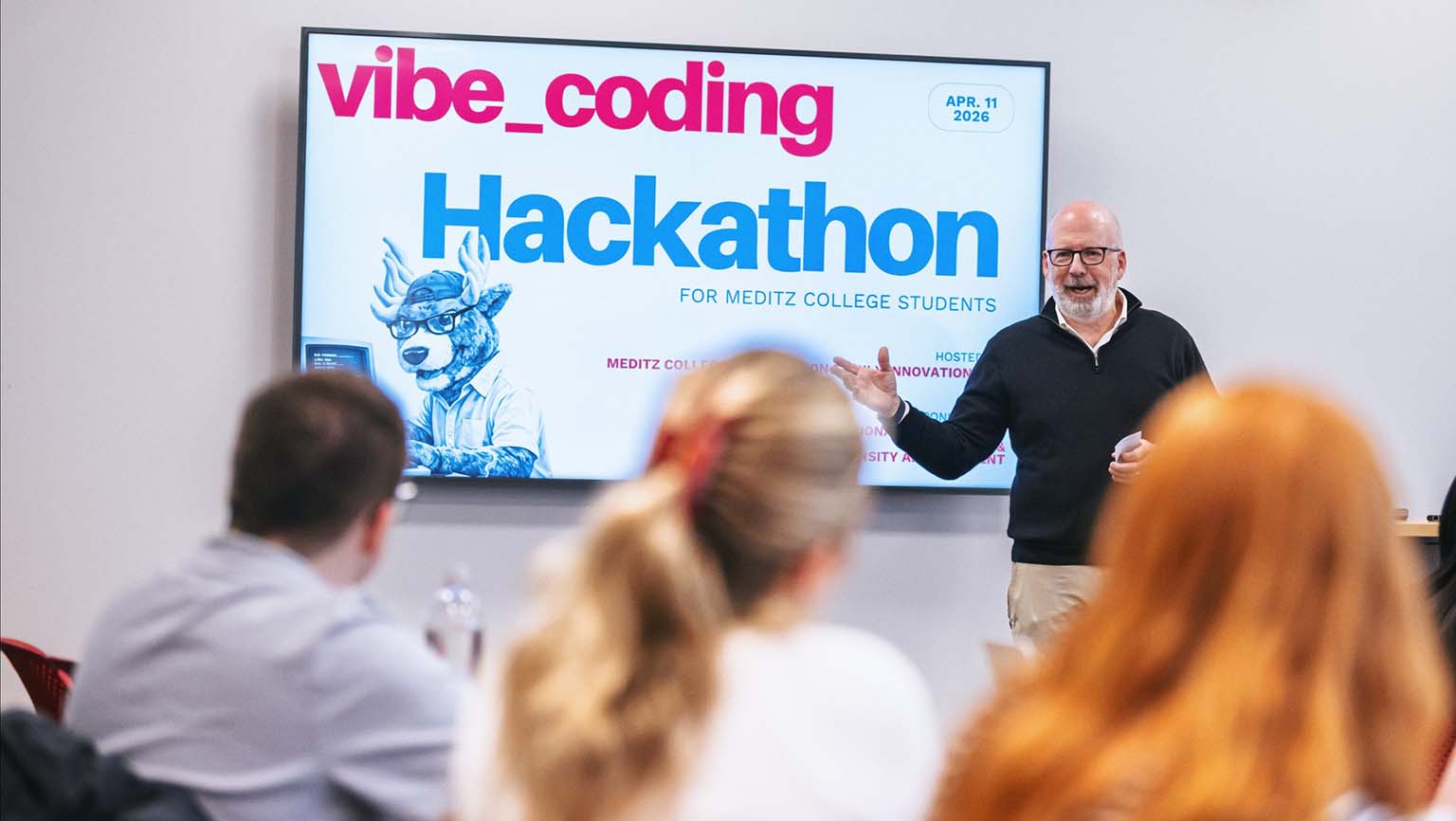
A man presenting to an audience, engaging them with his speech and visuals.
By Sara Colabella

This April, Fairfield University’s John Charles Meditz College of Arts and Sciences hosted its first-ever Vibe Coding Hackathon in the Frederickson Innovation Lab, bringing together students from across disciplines to explore the intersection of artificial intelligence and the liberal arts.

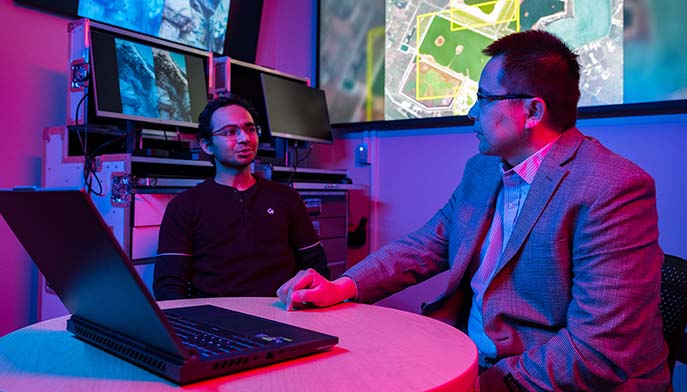
The idea for the event emerged from two key observations, according to Associate Professor Tommy Xie, PhD. “First, liberal arts students are increasingly being asked to work alongside technology in the workplace,” he said. “Second, AI-assisted coding has been widely adopted in the technology world, lowering barriers to entry and allowing individuals with little experience to create applications.”

Despite these trends, Xie noted a gap. “There has been little effort to bridge liberal arts education and AI-assisted coding,” he explained. “We weren’t trying to train software engineers; we were trying to give Meditz students, who study the humanities and sciences, the confidence and vocabulary to build with AI tools, not just use them.”

Rebecca Suffel ’28, Samuel D’Urso ’28, Sean Huvane ’26, Dean Mills ’28, Declan Quinn ’29, Maggie Freeman ’26, Grace McLinskey ’26, Katelyn May ’28, and Kathleen Morris ’26, many with little to no coding experience, spent the day transforming ideas into working prototypes using AI tools. The hackathon followed a Kaizen theme, emphasizing continuous, incremental improvement. Rather than striving for polished final products, students were encouraged to embrace iteration and experimentation. “We told students upfront: rough edges are signals, not failures. Your prototype at the end of the day should feel like the beginning of something, not a finished product. That framing takes the pressure off in a way that lets people actually learn and creat.,” Xie said.

By the end of the event, each participant had developed a functional app grounded in a real-world problem. Mills earned first place for a nonprofit CRM system designed to support donor and alumni management for Worcester Nativity School. Suffel took second place with KZN, a gamified “habit garden” that uses behavioral conditioning to encourage incremental habit-building. Morris placed third with Riley, an app inspired by her grandfather’s dementia diagnosis that helps individuals with neurological conditions manage medications and daily tasks.

Projects spanned a wide range of topics and personal interests. Huvane developed a student assignment scheduler that rewards academic consistency, while May created an interactive fetal pig dissection lab for students with ethical concerns. Freeman and McLinskey designed NextNest, an all-in-one career readiness platform, and D’Urso built Kaizen Capital, a narrative-driven prototype inspired by the hackathon’s central theme.

For Xie, this range of ideas was intentional. Traditional hackathons are often tailored for experienced programmers, but Vibe Coding flipped that model. Students described their ideas in plain language, and AI generated the code, an approach that aligns with the strengths of liberal arts students, including communication, critical thinking, empathy, and creativity.

Events like the Vibe Coding Hackathon point to a broader shift in how AI may be taught. While professional engineers remain essential for complex systems, Xie believes the skills required to engage with technology are evolving.

“What this program demonstrated, however, is that the traditional prerequisite for building software, knowing how to write code, is no longer the barrier it once was. The new prerequisites are compassion, creativity, critical thinking, domain expertise, and the judgment to direct AI responsibly,” said Xie. “The ability to describe a problem precisely, evaluate whether an AI's output actually solves it, and take responsibility for the result,”

Related Stories