Electrical Engineering

Degree

Bachelor of Science, Major

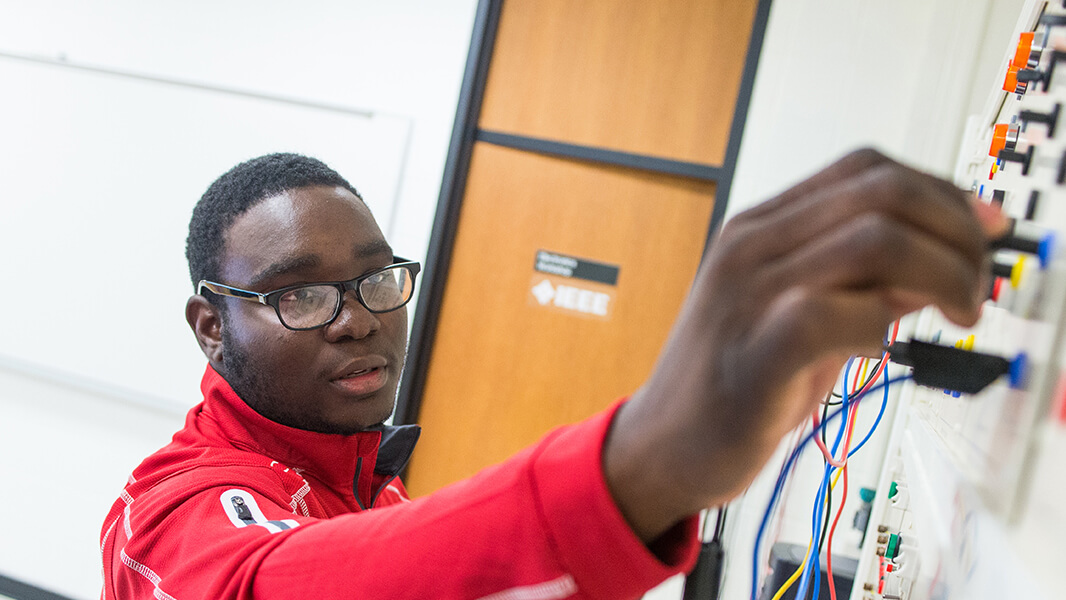
Side profile of an engineering student inserting cables into a machine on the wall.

Electrical engineering majors strive to identify, formulate, and solve complex problems by applying principles of engineering, science, and mathematics.

What You'll Learn and Do

Create solutions with a humanitarian focus

Through applying engineering design to the world around them, students learn to produce solutions that meet specified needs with a focus on public health, safety, and welfare.

Find opportunity through industry relations

Build meaningful relationships with engineering professionals throughout your time in the program. Industry partnerships and affiliations result in a high employment rate for Fairfield’s engineering graduates in all sectors of business, government, and academia.

Learn with integrity and understand social responsibility

Recognize ethical and professional responsibilities in engineering situations and make informed judgments, which consider the impact of engineering solutions in global, economic, environmental, and societal contexts.

Go even further with a five year program

Fairfield's School of Engineering & Computing also has a master of science program that allows students to earn a combined BS/MS degree in electrical and computer engineering in just one additional year.

Two students wearing suits talking and walking in front of a building on campus.

Internship Opportunities

With great emphasis on the practical application of learned skills, engineering students are given the knowledge and competence needed to thrive outside of the classroom and in the expanse of internship opportunities that awaits them prior to graduation.

Learn More

Five-Year EE BS/ ECE MS Program

Dual-degree programs reduce the time to a master's degree by at least one year and provide credentials that will serve the student throughout one’s adult professional career. Graduates of the dual-degree program are awarded an electrical and computer engineering MS degree in addition to their electrical engineering BS degree. The dual-degree program encourages students to pursue a graduate degree in order to broaden their educational background and their career opportunities. A graduate engineering education is key to innovation and central to economic health. A graduate degree has become far more common in the workplace, and a master's-level engineering education yields a great return on your investment. Students who complete all their requirements may receive their BS degree prior to completing their MS degree.
Learn More About Eligibility and Requirements

Find Out More

Course Requirements

Contact Us

Undergraduate Admission
admis@fairfield.edu
(203) 254-4100
Resources for Student Success

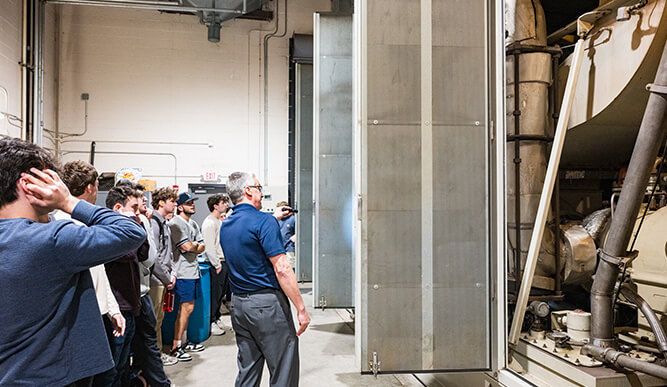
A group tours an industrial facility, watching machinery behind a large open metal door; the scene feels curious, educational, and hands-on.

Career Center

The University Career Center serves Fairfield University students with comprehensive career support services, programming and resources.
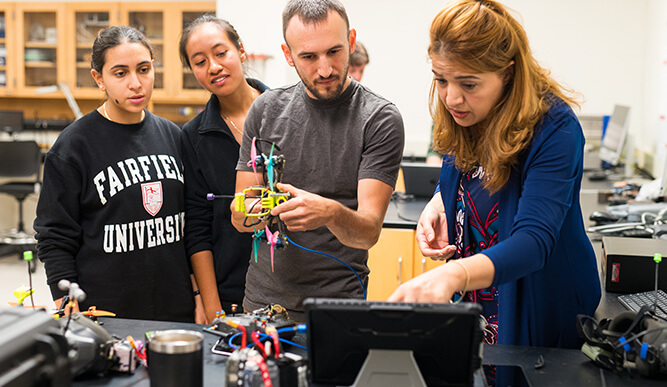
Focused students and instructors collaborate in an electronics lab, examining a colorful drone circuit amid tools and equipment.

Academic Support

Fairfield supports the scholarly success and intellectual growth of our students by providing various resources on campus including the Science Center, Writing Center, DiMenna-Nyselius Library, and more.

Electrical Engineering Faculty

The School of Engineering & Computing is home to a vibrant community of engaged faculty with deep expertise in topics like engineering design and sustainable engineering.

Meet The Faculty

Career Outlook

Career Outcomes

  • NASA
  • Nasdaq
  • Lockheed Martin
  • General Electric
  • Abbott

Job Fields

  • Robotics & Automation
  • Software Design
  • Computer Hardware
  • Power Industry
  • Systems Engineering

This major is very hands-on. The projects are a great way to learn and understand the material in the classes. Take advantage of the projects!"

– William M. ’25

Recognized for Quality and Excellence

ABET

Engineering Accreditation Commission

Fairfield University’s four-year Bachelor of Science program in electrical engineering is accredited by the Engineering Accreditation Commission of ABET, https://www.abet.org, under the General Criteria and the Electrical, Computer, Communications, Telecommunication(s) and Similarly Named Engineering Program Criteria.

Accreditation Information

Year 2021-22 2022-23 2023-24 2024-25 2025-26

Enrollment

32

28

22

32

30

Graduation

16

8

2

8

11

The Program Educational Objectives are broad statements that describe what alumni do within a few years following graduation.

The Electrical Engineering Department is committed to graduating engineers who within a few years of their graduation are expected to:

  • Apply their in-depth understanding in areas of electrical systems to solve problems in a modern technological society as productive engineers and/or enter and succeed in a graduate program.
  • Function effectively, both individually and within multidisciplinary teams.
  • Continue as lifelong learners to develop their engineering design abilities, problem-solving skills, and aptitude for innovation.
  • Practice professional ethics with social responsibility through service in the framework of a global technical community.
  • Demonstrate the organizational, leadership, and communication skills to achieve success in their chosen careers and make reasoned decisions based on a respect for diversity, and welcome it as a source for creativity, innovation, and inclusive collaboration.

Problem Solving

Identify, formulate, and solve complex engineering problems by applying principles of engineering, science, and mathematics.

Produce Solutions

Apply engineering design to produce solutions that meet specified needs with consideration of public health, safety, and welfare, as well as global, cultural, social, environmental, and economic factors.

Communicate

Communicate effectively with a range of audiences.

Recognize

Recognize ethical and professional responsibilities in engineering situations and make informed judgments, which must consider the impact of engineering solutions in global, economic, environmental, and societal contexts.

Draw Conclusions

Develop and conduct appropriate experimentation, analyze and interpret data, and use engineering judgment to draw conclusions.

Draw Conclusions

Develop and conduct appropriate experimentation, analyze and interpret data, and use engineering judgment to draw conclusions.

Apply Knowledge

Acquire and apply new knowledge as needed, using appropriate learning strategies.

Get started at Fairfield.