Biomedical Engineering

Degree

Bachelor of Science, Major

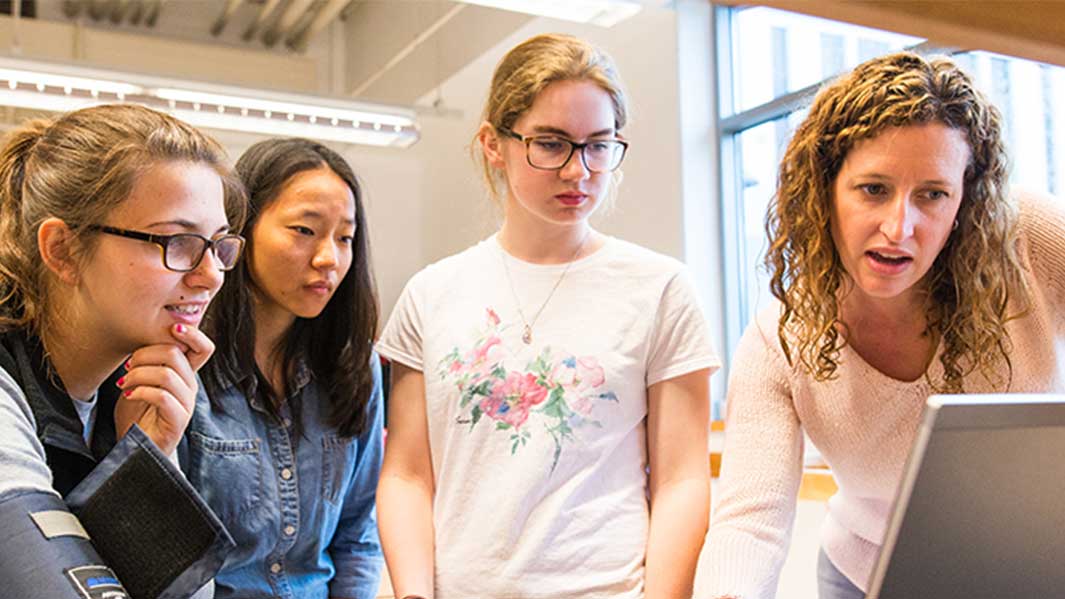
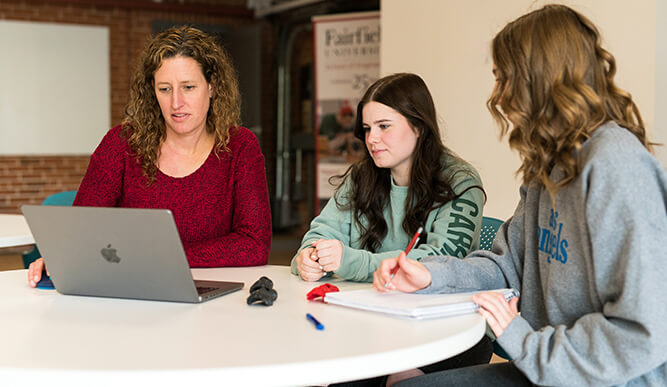
Three students huddled around looking at a computer with their teacher explaining something.

Biomedical engineering majors are taught how to make measurements on, and interpret data from, living systems. They also learn how to address problems associated with the interaction between living and non-living materials and systems.
What You'll Learn and Do

Create solutions with a humanitarian focus

Through applying engineering design to the world around them, students learn to produce solutions that meet specified needs with a focus on public health, safety, and welfare.

Find opportunity through industry relations

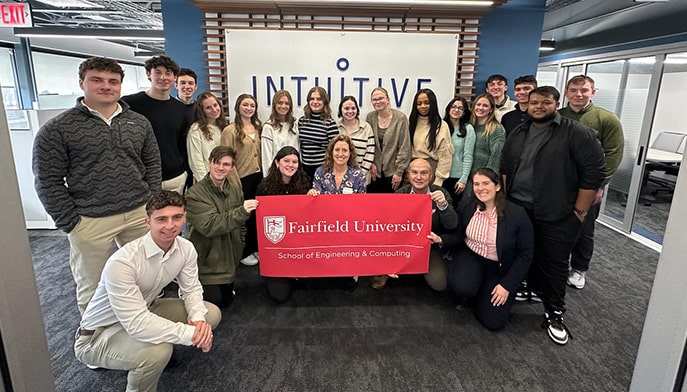
Build meaningful relationships with engineering professionals throughout your time in the program. Industry partnerships and affiliations result in a high employment rate for Fairfield’s engineering graduates in all sectors of business, government, and academia.

Learn with integrity and understand social responsibility

Recognize ethical and professional responsibilities in engineering situations and make informed judgments, which consider the impact of engineering solutions in global, economic, environmental, and societal contexts.

Rise above with research opportunities

Throughout their comprehensive curriculum, students are given opportunities to conduct innovative, in-depth research with faculty mentors. This hallmark of a solid educational experience offers students a chance to put their academic skills to the test, explore their passions, and make a difference.

Engineering professor sitting with and clarifying an abstract concept to a student as she sits at a lab computer.

Internship Opportunities

With great emphasis on the practical application of learned skills, engineering students are given the knowledge and competence needed to thrive outside of the classroom and in the expanse of internship opportunities that awaits them prior to graduation.

Learn More

Accelerated Masters

Fairfield University School of Engineering and Computing offers a five-year accelerated bachelor’s/master’s in Biomedical Engineering for undergraduates enrolled in the program. This dual degree program reduces the time to obtain a master’s degree by at least a year and provides experiential learning through research and design projects giving graduates the credentials needed to prepare for a broad range of careers. Upon completing the program, graduates gain the knowledge, confidence, and skills needed to solve the next generation of complex healthcare problems.
Learn More about Eligibility & Requirements

Find Out More

Course Requirements

Contact Us

Undergraduate Admission
admis@fairfield.edu
(203) 254-4100
Resources for Student Success

Three women collaborate around a table, reviewing a laptop and papers; focused, engaged discussion in a bright indoor workspace.

Career Center

The University Career Center serves Fairfield University students with comprehensive career support services, programming and resources.

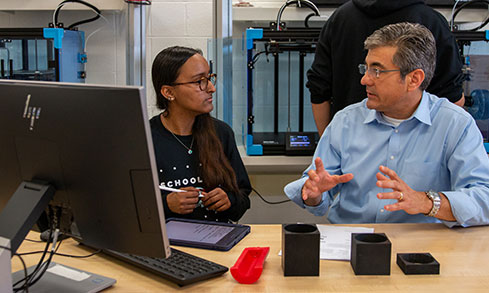
A focused woman in blue listens to a man gesturing over documents at a table, suggesting a serious workplace discussion.

Academic Support

Fairfield supports the scholarly success and intellectual growth of our students by providing various resources on campus including the Science Center, Writing Center, DiMenna-Nyselius Library, and more.
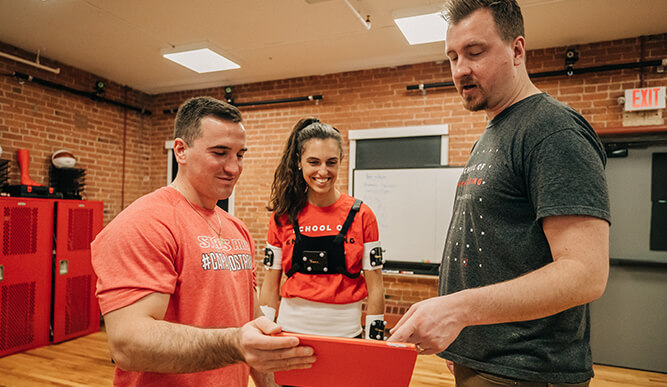
Three people in a brick-walled workshop examine a red tablet, smiling; a woman wears robotic arm components, creating an upbeat training scene.

Research

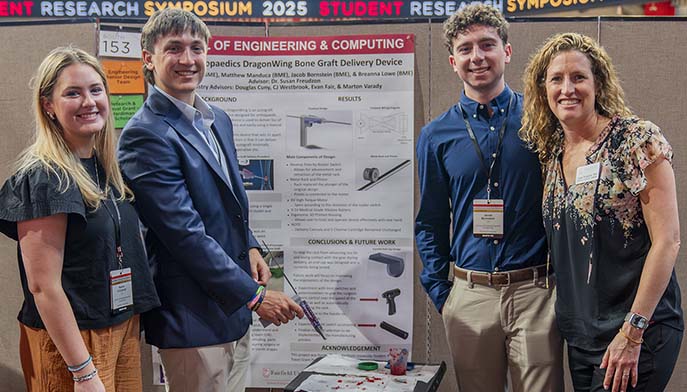
Rooted in Fairfield University’s Jesuit values, the School of Engineering & Computing prepares students to become innovative, ethical leaders. Through hands-on research and faculty mentorship, students apply their engineering and computing skills, explore their interests, and develop solutions to real-world challenges.

Biomedical Engineering Faculty

The School of Engineering & Computing is home to a vibrant community of engaged faculty with deep expertise in topics like engineering design and research.

Meet the Faculty

Career Outlook

Career Outcomes

  • Medtronic
  • Regeneron
  • Amgen
  • Kubtec
  • Abbott

Job Fields

  • Medical Device Design
  • Research and Development Engineer
  • Manufacturing Engineer
  • Quality Assurance Engineer
  • Medicine and Dentistry
  • Project Management

It’s really important for bioengineering students to have experience trying out new ideas, testing them, getting feedback, and thinking outside of the box to try something different, plus it's super fun to work on projects like these.”

– Maeve O'Connell ’25

Biomedical Engineering in the News

More Engineering News

Recognized for Quality and Excellence

Engineering Accreditation Commission

Fairfield University’s four-year Bachelor of Science program in electrical engineering is accredited by the Engineering Accreditation Commission of ABET, https://www.abet.org, under the General Criteria and the Electrical, Computer, Communications, Telecommunication(s) and Similarly Named Engineering Program Criteria.

Year 2021-22 2022-23 2023-24 2024-25 2025-26

Enrollment

36

34

44

51

48

Graduation

11

9

4

11

10

The Program Educational Objectives are broad statements that describe what alumni do within a few years following graduation.

The Biomedical Engineering Department is committed to graduating engineers who within a few years of their graduation are expected to:

  • Utilize their interdisciplinary training to have successful careers in industry, research and development and in regulatory agencies, academia, or clinical work.
  • Demonstrate the organizational, leadership, and communication skills to achieve success in their chosen careers and make reasoned decisions based on a respect for diversity, and welcome it as a source for creativity, innovation, and inclusive collaboration..
  • Employ critical thinking and problem-solving skills to support interdisciplinary teams that may include physicians, nurses, molecular biologists, physiologists, other engineers, and business professionals.
  • Utilize life-long learning skills and the ethical tools for successful adaptation to the rapidly changing field of Biomedical Engineering and emerging technology.
  • Build upon their sound training in mathematics, biological sciences, the liberal arts, and engineering to facilitate successful pursuit of advanced degrees in medicine, law, business, engineering, or related fields.

Problem Solving

Identify, formulate, and solve complex engineering problems by applying principles of engineering, science, and mathematics.

Produce Solutions

Apply engineering design to produce solutions that meet specified needs with consideration of public health, safety, and welfare, as well as global, cultural, social, environmental, and economic factors.

Communicate

Communicate effectively with a range of audiences.

Recognize

Recognize ethical and professional responsibilities in engineering situations and make informed judgments, which must consider the impact of engineering solutions in global, economic, environmental, and societal contexts.

Cooperate & Collaborate

Function effectively on a team whose members together provide leadership, create a collaborative and inclusive environment, establish goals, plan tasks, and meet objectives.

Draw Conclusions

Develop and conduct appropriate experimentation, analyze and interpret data, and use engineering judgment to draw conclusions.

Apply Knowledge

Acquire and apply new knowledge as needed, using appropriate learning strategies.

Get Started at Fairfield