On Friday, Oct. 16, Aesthetics, Objectivity, and Interpretation in Archaeological Visual Practices—a one-day interdisciplinary symposium examining the visual construction of antiquity through archaeology, art history, and photography—welcomed an impressive lineup of leading experts in their fields to Fairfield University.
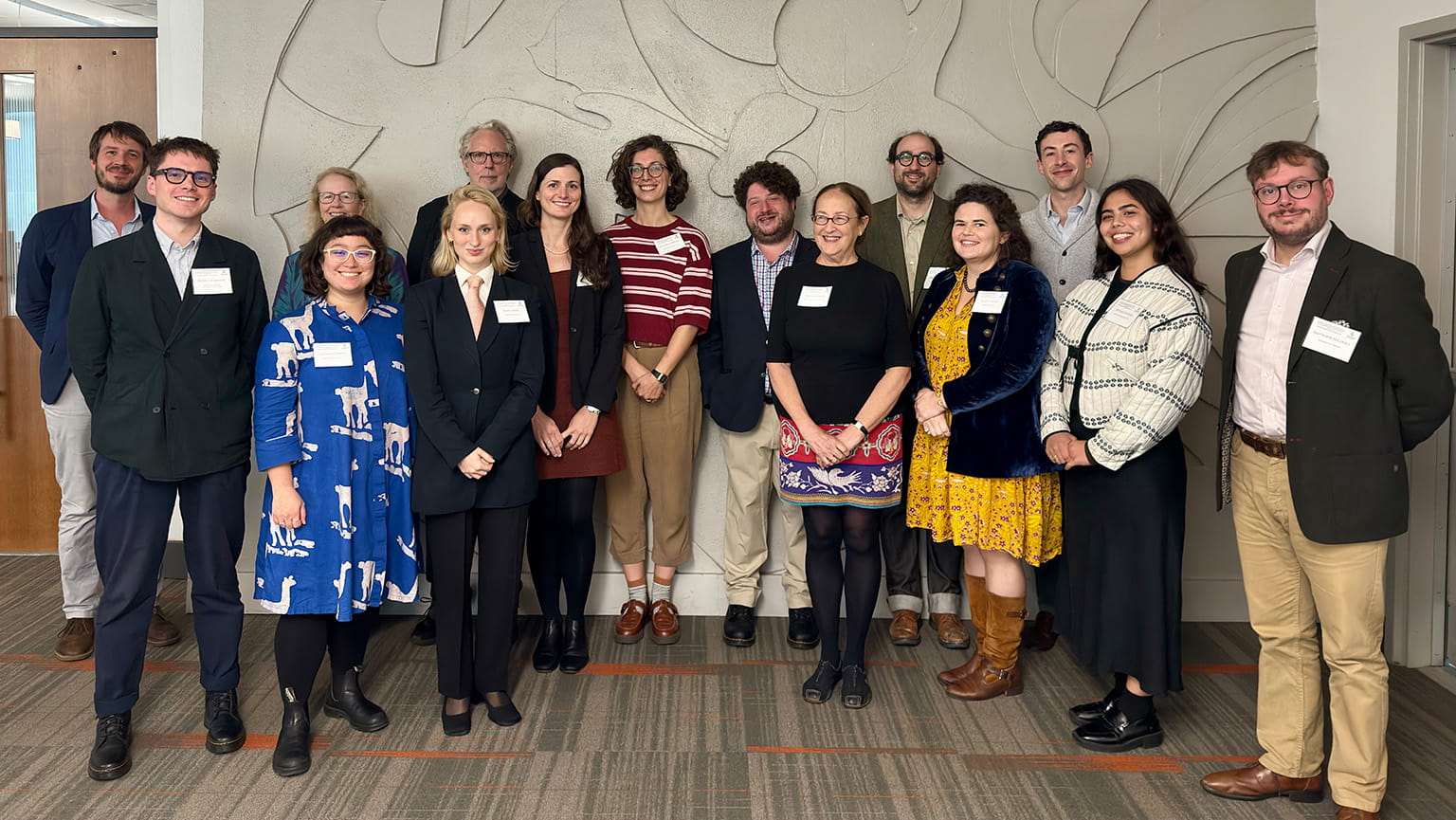
Speakers hailed from Princeton to Yale and Harvard, NYU to MIT and Oxford, and the symposium drew attendees from the University and local communities, with 90 Fairfield undergraduate students participating, as well as graduate students from NYU, Yale, Columbia, and Harvard.
The event was made possible through the collaborative support of several areas across the John Charles Meditz College of Arts and Sciences, including the Humanities Institute, the Department of Visual and Performing Arts, and the Ancient Mediterranean Studies program, in collaboration with the Fairfield University Art Museum and the current exhibition James Welling: Cento.
Fairfield Meditz faculty member Andrew Ward, PhD, assistant professor of art history and visual culture and faculty liaison for the James Welling: Cento exhibition, organized the symposium with Peter Thompson, PhD, college lecturer in classical archaeology at St John’s College, University of Oxford, and assistant curator of classical archaeology at the University of Oxford’s Ashmolean Museum.
“Andrew Ward brought something vital to the James Welling: Cento exhibition in his role as faculty liaison,” said Fairfield University Art Museum Executive Director Carey Mack Weber. “He understood immediately what this body of work meant to the histories of creative photography and archaeology, and he wasted no time building a symposium that celebrated it, while opening the floor to scholars from around the world.”
Welcoming Back Dr. Katherine A. Schwab
Fairfield Meditz Dean Richard Greenwald, PhD, delivered Friday’s opening remarks, emphasizing the importance of Fairfield Meditz’s interdisciplinary approach and how the symposium highlighted that cross-departmental collaboration. He also noted it was particularly meaningful as the symposium marked the first time Katherine A. Schwab, PhD—professor emerita of art history and visual culture, founding director of the Arts Institute, and former curator of the plaster cast collection—returned to campus to speak since her retirement in 2024 after 36 years of teaching.
Dr. Schwab opened the symposium with a keynote lecture titled “Altered States? The Shifting Impact of Our Visualizations of Antiquity,” providing a way to conceptualize James Welling’s work and to commence the symposium conversations.
“We were so pleased to welcome our former colleague, Dr. Katherine Schwab, back to campus to present the keynote lecture,” said Weber. “It was wonderful to hear her speak so eloquently about Jim’s work in this formal context.”
Aesthetics, Objectivity, and Interpretation
Symposium events were broken out into four sessions, including “The Power of an Image,” “Between Photography and Archaeology,” “The Archaeological in the Fine Arts,” and “Visualizations and the Exhibition Space.” Individual topics ranged from the critical analysis of Egyptological publishing practices by Kathryn Howley, PhD (NYU), to a digital reconstruction of Ancient Rome by Matthew Nicholls, PhD (Oxford), exploring ideas that visual interpretations, reconstructions, and other forms of documenting and capturing the ancient past are not wholly accurate—there will always be some degree of creativity, or interpretation, or academic guesswork that goes into the final product, which can then skew our understanding of ancient truth.